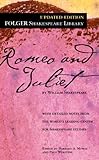
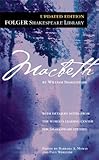
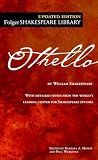
William Shakespeare was an English playwright and poet whose Hamlet, Romeo and Juliet, Macbeth, and 37 other plays constitute the most performed and studied body of dramatic work in the English language.
William Shakespeare was an actor and playwright from Stratford-upon-Avon who worked primarily in London from the late 1580s until his retirement around 1613. He was a shareholder in the Globe Theatre and produced plays that were popular entertainments for London audiences across a range of genres — comedies, histories, tragedies, and the late romances. His 37 surviving plays, 154 sonnets, and longer narrative poems have been in continuous theatrical production since his lifetime, translated into every major language, and subjected to more scholarly attention than any other body of English literature.
The question of why Shakespeare endures is not merely academic. Hamlet, Macbeth, King Lear, Othello, and A Midsummer Night’s Dream are not read and performed continuously because of institutional inertia; they survive because they continue to produce meaning in new productions and new cultural contexts. Hamlet’s meditations on action, delay, and the gap between intention and consequence; Macbeth’s exploration of ambition, guilt, and the corruption of language; Romeo and Juliet’s account of how social violence destroys private love — these are concerns that remain alive wherever human beings negotiate power, identity, and mortality.
Modern readers approaching Shakespeare on the page rather than in the theatre should know that the plays are significantly enriched by seeing them performed, and that productions vary enormously in interpretation. No Folger or Arden edition is wrong as a starting text, but encountering the plays in a good modern production — or through a strong film version such as the Olivier Hamlet or the Branagh Much Ado About Nothing — illuminates dimensions that reading alone does not. The sonnets, often treated separately, are among the finest lyric poems in the language and reward sustained attention independent of the plays.
The Greatest Writer in the English Language
William Shakespeare is, by near-universal acclaim, the greatest writer in the English language and one of the most influential figures in the history of world literature. A playwright, poet, and actor working in Elizabethan and Jacobean England, Shakespeare produced a body of plays and poems of such extraordinary range, depth, and verbal brilliance that they have remained at the centre of literary culture for more than four centuries. His works are performed, read, studied, and adapted around the globe more than those of any other author, and his influence on language, drama, and the very way we understand human nature is incalculable.
The Great Tragedies
Shakespeare’s tragedies are among the supreme achievements of world drama, plays of overwhelming emotional and philosophical power that probe the depths of human experience. Hamlet, King Lear, Macbeth, and Othello explore ambition, jealousy, madness, grief, betrayal, and mortality with a profundity that has never been surpassed, and their central figures rank among the most fully realised characters ever created. These plays confront the darkest dimensions of existence — evil, suffering, the search for meaning — and their tragic protagonists continue to speak to audiences across every culture and age.
Comedies and Histories
Shakespeare’s genius extended well beyond tragedy. His comedies, from the sparkling wit of Much Ado About Nothing to the magical enchantment of A Midsummer Night’s Dream and the bittersweet depth of Twelfth Night, combine humour, romance, mistaken identity, and keen insight into love and folly. His history plays, chronicling the English monarchy across works such as the Henry IV plays with their immortal creation Falstaff, explore power, kingship, and the making of a nation. This mastery across genres demonstrates the astonishing breadth of his dramatic imagination.
A Poet of Unmatched Power
Beyond the stage, Shakespeare was a supreme poet, and his sonnets are among the most celebrated lyric poems in the language. The 154 sonnets explore love, beauty, time, mortality, and desire with a compression and intensity that have made them perennial favourites, and lines from them are quoted endlessly. Within his plays, too, his poetry reaches extraordinary heights, and his command of imagery, rhythm, and metaphor gives his verse a beauty and resonance that have shaped the possibilities of English poetry ever since.
Shaping the English Language
Shakespeare’s impact on the English language itself is profound and pervasive. He coined or popularised an enormous number of words and phrases that remain in everyday use, and countless common expressions originate in his plays. His ability to capture human thought and feeling in memorable, quotable language has woven his words deeply into the fabric of English, so that even those who have never read him speak in his phrases. Few writers in any language have so thoroughly shaped the very medium in which they wrote.
Understanding Human Nature
Perhaps the deepest source of Shakespeare’s enduring power is his unrivalled understanding of human nature. His characters are psychologically complex, contradictory, and vividly alive, and through them he illuminated the full range of human emotion, motivation, and experience with insight that still astonishes. Critics have argued that he effectively invented modern ways of representing inner life and selfhood on the stage. This profound grasp of what it is to be human is why his work continues to feel immediate and relevant across centuries and cultures.
Reading William Shakespeare Today
Shakespeare’s influence on literature, theatre, language, and culture is beyond measure, and his works remain a living, ever-renewed presence in performance and adaptation worldwide. For newcomers, accessible starting points include the thrilling tragedy Macbeth, the enchanting comedy A Midsummer Night’s Dream, and the romance of Romeo and Juliet, ideally experienced in performance as well as on the page. For any reader seeking the foundations of English literature and an unmatched exploration of the human condition, Shakespeare is the essential and inexhaustible author, as vital today as he was four hundred years ago.
Reading Guides