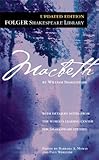
Editors Reads Verdict
Shakespeare's shortest and most concentrated tragedy moves with terrifying speed from heroism to murder to total moral dissolution. Lady Macbeth's sleepwalking scene, the dagger in the air, the banquet haunted by Banquo's ghost — the play accumulates a psychological pressure that is almost physically felt.
What We Loved
- The most compressed and intense of the great tragedies — no wasted scene, no slack moment
- The Macbeths' marriage is Shakespeare's most psychologically complex relationship
- The supernatural elements are handled with perfect ambiguity — do the witches cause the murder or merely catalyse it?
- Lady Macbeth is one of Shakespeare's greatest female characters
Minor Drawbacks
- The Porter scene's ribald comedy sits uneasily for some readers, though scholars defend it
- Malcolm's testing of Macduff can feel schematic
- Some of the witchcraft scenes are believed to have been added later by Thomas Middleton
Key Takeaways
- → Ambition once acted upon creates its own momentum — each crime requires another to cover it
- → The witches offer prophecy but not agency — Macbeth's choice to murder is his own
- → Guilt, not punishment, is tyranny's most effective internal enforcer
- → Lady Macbeth's collapse is the counterpart to Macbeth's progressive hardening — guilt works differently in each of them
- → Legitimate authority, once violated, cannot be restored by the violator — Macbeth can never be a true king
| Author | William Shakespeare |
|---|---|
| Publisher | Simon & Schuster |
| Pages | 290 |
| Published | January 1, 1606 |
| Language | English |
| Genre | Fiction, Classic Literature, Drama |
| Difficulty | Beginner |
| Best For | Anyone seeking Shakespeare's most dramatically intense and psychologically concentrated tragedy — ideal for first-time readers of Shakespeare because its pace and clarity are unmatched. |
How Macbeth Compares
Macbeth at a glance against 3 similar books readers weigh alongside it.
| Book | Author | Rating | Best for |
|---|---|---|---|
| Macbeth (this book) | William Shakespeare | ★ 4.8 | Anyone seeking Shakespeare's most dramatically intense and psychologically |
| Crime and Punishment | Fyodor Dostoevsky | ★ 4.8 | Classic Fiction |
| Hamlet | William Shakespeare | ★ 4.9 | Every reader and theatregoer — Hamlet is the central work of English literature |
| The Brothers Karamazov | Fyodor Dostoevsky | ★ 4.9 | Classic Fiction |
The Shortest and Darkest Tragedy
Macbeth, written around 1606 and the shortest of the great tragedies, is also the most concentrated — a work of almost claustrophobic intensity in which three witches, a prophecy, and a single night of murder set in motion a catastrophe of unrelenting momentum. It is the play Shakespeare wrote fastest (the scholarship suggests) and the one he got most right.
The story is simple: Macbeth, a brave Scottish general who has just won a great battle for King Duncan, encounters three witches who prophesy that he will be king. The prophecy plants a seed in soil that is already prepared — Macbeth has ambition and a wife of terrifying will — and within two scenes he has murdered the king in his own guest chamber. Everything that follows is consequence.
The Macbeths: A Marriage Defined by Crime
The relationship between Macbeth and Lady Macbeth is one of Shakespeare’s great psychological studies: a couple who are genuinely close, whose intimacy is expressed through their shared guilt and their diverging responses to it. Before the murder, Lady Macbeth is the more resolute — she calls on spirits to “unsex” her, to remove the feminine compunction that might prevent action. She plans, organises, and steadies her husband through his pre-murder terror.
After the murder, the psychological trajectories cross. Macbeth — who feared what he was about to do — progressively hardens: each subsequent murder costs him less than the first. Lady Macbeth — who seemed beyond remorse — begins to crack. Her sleepwalking scene, in which she endlessly tries to wash imaginary blood from her hands (“Out, damned spot!”), is the most vivid theatrical rendering of guilt in literature.
The Supernatural and Free Will
The witches are Shakespeare’s most carefully ambiguous supernatural creation. Do they cause Macbeth’s crime? Or do they simply see a future that his own desires are already creating? The play refuses to settle this question. The witches speak nothing false — their prophecies all come true — but the path from prophecy to fulfilment requires Macbeth’s active choice at every step. They are tempters, not compellers.
This ambiguity is philosophically precise: Macbeth cannot escape responsibility by blaming the witches, because nothing they said required him to murder. The thought was his own.
The Atmosphere of Darkness
Macbeth is Shakespeare’s darkest play literally as well as morally — more of its scenes are set at night than any other in the canon. Darkness here is both setting and symbol: the crimes committed in darkness are also crimes that require the suppression of moral light, of conscience, of clear sight. “Stars, hide your fires; / Let not light see my black and deep desires.”
Our rating: 4.8/5 — Shakespeare’s most compact and psychologically penetrating tragedy, and the fastest route to understanding what makes him irreplaceable.
The Historical Macbeth
The historical Macbeth — Mac Bethad mac Findlaích — was King of Scotland from 1040 to 1057, having killed his predecessor Duncan I in battle near Elgin. His reign of seventeen years was by the standards of the period reasonably stable, and he was known as a king who maintained order and supported the Church. He was defeated and killed at the Battle of Lumphanan by forces loyal to Duncan’s son Malcolm. The real Macbeth was not a paranoid murderer who killed his king in his own guest-chamber and descended into accelerating tyranny; he was a king who won power in the relatively conventional manner of the period, through warfare, and held it for nearly two decades.
Shakespeare’s Macbeth is not the historical Macbeth but a character constructed to demonstrate specific propositions about ambition, guilt, and the consequences of violating the sacred bond between host and guest. The play uses Scottish history as its material while being concerned with something more timeless: what happens to a man when he acts against his deepest moral understanding, and how the subsequent crimes required to cover the first follow with their own terrible logic.
Written for King James I
Macbeth was almost certainly written for performance before James I, who had become King of England in 1603 (he was already James VI of Scotland). The play flatters James on multiple levels: it dramatizes Scottish history, of which James was proud; it features the witches, about whom James had written a treatise, Daemonologie (1597); and it includes the masque of Banquo’s descendants carrying the lineage forward to a king with “two-fold balls and treble sceptres” — a compliment to James, who united the English and Scottish crowns. The emphasis on the sanctity of rightful kingship and the horrors that follow its violation was also directly relevant to the political anxieties of the period following the Gunpowder Plot of 1605.
”Out, Damned Spot”: Guilt as Psychology
The sleepwalking scene in Act V is one of the most quoted scenes in all of Shakespeare, and it is also one of the most psychologically precise. Lady Macbeth, who before the murder seemed to have suppressed all conscience — “unsex me here, / And fill me, from the crown to the toe, top-full / Of direst cruelty” — is undone by a guilt that surfaces in sleep, in the exact form that clinical descriptions of guilt and trauma have since confirmed: the repetition of the moment of crisis, the obsessive cleansing gesture, the inability to distinguish past from present. She cannot wash the imaginary blood away. The phrase “Out, damned spot” has passed into the language as shorthand for irremovable guilt — but its dramatic context makes it more specific than any shorthand can capture. She is trying to clean up the evidence, in her sleep, because the crime lives in her as a continuous present tense.
The Play’s Stage Superstition
Macbeth is the play about which the theatrical superstition is strongest: that naming it inside a theatre brings bad luck, and that the safe alternative is to call it “the Scottish play.” The origin of the superstition is obscure, and its persistence tells us less about the play than about the theatrical profession’s relationship to the kind of darkness the play deals in. What is true is that Macbeth has had an unusually dramatic production history, including accidents and incidents across the centuries, which has fed the legend. The superstition itself is now part of the play’s cultural life — a tribute, at whatever remove, to the genuine darkness the play contains.
Frequently Asked Questions
What is "Macbeth" about?
A brave Scottish general is corrupted by ambition and prophecy, murders his king, seizes the throne, and descends into a tyranny from which there is no return.
Who should read "Macbeth"?
Anyone seeking Shakespeare's most dramatically intense and psychologically concentrated tragedy — ideal for first-time readers of Shakespeare because its pace and clarity are unmatched.
What are the key takeaways from "Macbeth"?
Ambition once acted upon creates its own momentum — each crime requires another to cover it The witches offer prophecy but not agency — Macbeth's choice to murder is his own Guilt, not punishment, is tyranny's most effective internal enforcer Lady Macbeth's collapse is the counterpart to Macbeth's progressive hardening — guilt works differently in each of them Legitimate authority, once violated, cannot be restored by the violator — Macbeth can never be a true king
Is "Macbeth" worth reading?
Shakespeare's shortest and most concentrated tragedy moves with terrifying speed from heroism to murder to total moral dissolution. Lady Macbeth's sleepwalking scene, the dagger in the air, the banquet haunted by Banquo's ghost — the play accumulates a psychological pressure that is almost physically felt.
Ready to Read Macbeth?
Check the current price on Amazon.
Check Price on Amazon (paid link)Prices and availability are subject to change. See Amazon for current price.
Review last updated: