Best Books About the American West: Essential Reading
The best books about the American West — from Blood Meridian and Lonesome Dove to My Ántonia and All the Pretty Horses. Essential Western fiction and history.
The American West has produced two distinct literary traditions: the epic and the elegy. The epic — cowboys, cattle drives, frontier violence — dominates the popular imagination; the elegy — the immigrant settler, the displaced indigenous people, the irreversible transformation of landscape — is the more serious literary achievement. The best books about the West address both.
The Epic West
Lonesome Dove — Larry McMurtry (1985)
The defining novel of the American West — Call and McCrae’s cattle drive from Texas to Montana, the fullest account of the frontier era in fiction. McMurtry’s achievement is to write a novel that works simultaneously as genre (it has all the pleasures of a Western: cattle drives, Indians, rangers, whores, gamblers) and as literature (its characters are fully human, its violence is morally serious, its ending is genuinely moving). Won the Pulitzer Prize.
All the Pretty Horses — Cormac McCarthy (1992)
The first volume of McCarthy’s Border Trilogy — John Grady Cole, sixteen, rides into Mexico in 1949 in search of the world he believes the horses and the vaqueros represent. McCarthy’s West is dying even as John Grady reaches for it; the novel is an elegy for a form of masculine life and landscape that is already gone. The most accessible of McCarthy’s novels and the best starting point for his work.
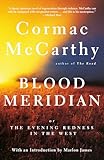
Blood Meridian — Cormac McCarthy (1985)
The most important and most demanding Western novel — the Glanton Gang on the Texas-Mexico border, Judge Holden, and the violence at the foundation of the frontier enterprise. McCarthy strips away every redemptive myth about the West and presents the historical reality: massacre, scalping, genocide. Not for casual reading; essential for serious engagement with the mythology of the West.
The Elegiac West
My Ántonia — Willa Cather (1918)
The most beautiful account of the immigrant pioneer experience — Jim Burden’s memory of Ántonia Shimerda and the Nebraska prairie of his childhood. Cather’s prose is the most lyrical in American prairie fiction; her celebration of the immigrant settlers who broke the land is the most sustained and the most moving.
Death Comes for the Archbishop — Willa Cather (1927)
Cather’s account of the Catholic Church’s establishment in New Mexico in the 1850s — Bishop Latour and his vicar Vaillant crossing the desert landscape, building churches, and encountering both indigenous and Hispanic cultures. The most spiritually serious of Cather’s novels and the one most engaged with the West as a place of sacred and human meaning.
O Pioneers! — Willa Cather (1913)
Cather’s first major novel — Alexandra Bergson’s determination to make the Nebraska prairie productive against the scepticism of the men around her, and her brother Emil’s doomed love affair. The foundational novel of the Great Plains pioneer tradition.
The Myth and the Reckoning
What makes the literature of the American West so rich is that its best books are engaged in a sustained argument with the myth they inherit. The popular West — the West of dime novels, John Ford films, and the cowboy as national hero — is a story of righteous expansion: brave settlers and lawmen taming a savage wilderness and bringing civilization to an empty land. The serious literature of the West exists largely to complicate or demolish that story. McCarthy’s Blood Meridian is the most radical demolition, replacing the heroic frontier with a historical record of massacre, scalp-hunting, and genocide so unflinching that it reads as a deliberate antidote to every Western ever romanticized. But even the books that retain the genre’s pleasures are doing this work: McMurtry’s Lonesome Dove delivers cattle drives and gunfights while insisting on the full humanity of everyone the myth flattens, and the cost of the violence the myth celebrates. Cather, working a generation earlier, mounts the quieter correction — the West not as a stage for masculine heroics but as ground broken by immigrant women and families, where the real epic is agricultural and communal rather than gunfighting. To read across this list is to watch American literature argue with American mythology, and the argument is the tradition’s deepest subject.
Landscape as Protagonist
A second thread unites these otherwise dissimilar books: in all of them, the land itself is a central character rather than mere scenery, and this is perhaps the West’s most distinctive contribution to American literature. Eastern fiction tends to unfold against a settled, humanized backdrop; Western fiction confronts a landscape vast enough to dwarf and reshape the people who enter it. In Cather, the Nebraska prairie is an almost living force — initially hostile, gradually yielding, finally beloved — and Alexandra Bergson’s heroism lies precisely in her relationship with the soil. In McCarthy, the desert is indifferent and immense, a theater of geological time against which human violence registers as both horrifying and insignificant. In McMurtry, the great distance from Texas to Montana is the novel’s true subject, the journey across emptiness that tests and reveals every character. This preoccupation with landscape is not decorative; it reflects the actual experience of a region defined by scale, aridity, and the encounter between human ambition and natural limit. The West taught American writers to render place as destiny, and the lesson produced some of the most powerful descriptive prose in the language.
Whose West Is Missing
An honest reading list must acknowledge what even this serious tradition tends to marginalize. The canonical literature of the West, including most of the books here, is overwhelmingly the story of white settlement, with Indigenous peoples and Hispanic communities present largely as the objects of that settlement rather than as the authors of their own narratives. Readers who want the West told from inside the cultures it displaced have an essential further shelf waiting. N. Scott Momaday’s House Made of Dawn and the broader Native American Renaissance — Leslie Marmon Silko’s Ceremony, James Welch’s Winter in the Blood — render the West as homeland and survival rather than frontier. The Chicano literary tradition, from Rudolfo Anaya’s Bless Me, Ultima onward, recovers the Hispanic Southwest that long predated Anglo arrival. And contemporary writers continue to expand the map, complicating the gendered and racial assumptions of the classic Western. The books on this list are the indispensable foundation, the great works that both built and interrogated the myth; but the fullest understanding of the West as a literary subject comes from setting them alongside the voices the frontier story was told over. Begin here, then keep reading outward.
Reading Order
Start accessible: Lonesome Dove → All the Pretty Horses → My Ántonia.
McCarthy focus: All the Pretty Horses → No Country for Old Men → Blood Meridian.
Complete: My Ántonia → O Pioneers! → Death Comes for the Archbishop → Lonesome Dove → All the Pretty Horses → Blood Meridian.
Frequently Asked Questions
What is the best novel about the American West to start with?
Lonesome Dove (1985) by Larry McMurtry is the best starting point — a Pulitzer Prize-winning epic cattle drive from Texas to Montana, two aging Texas Rangers (Call and McCrae), and the fullest account of the Old West in fiction. It is simultaneously a masterpiece of genre and a literary achievement. Blood Meridian (1985) by Cormac McCarthy is the most important but least accessible — a scalping gang on the Texas-Mexico border in the 1840s, depicting the West as a theater of absolute violence. Essential, but not for the faint-hearted.
What is Lonesome Dove about?
Lonesome Dove (1985) by Larry McMurtry follows former Texas Rangers Woodrow Call and Augustus McCrae, who in the late 1870s undertake an ambitious cattle drive from Lonesome Dove, Texas to Montana — through Indian territory, drought, river crossings, and violence — intending to establish a cattle ranch in the new northern range. The novel is about the end of the frontier era — the men who built the West and what it cost them, the women and communities they left behind, and the way that the heroic mythology of the West was constructed on real suffering. Won the Pulitzer Prize.
What is Blood Meridian about?
Blood Meridian (1985) by Cormac McCarthy follows 'the kid,' a teenage runaway from Tennessee who joins the Glanton Gang — a historical group of scalp hunters operating on the Texas-Mexico border in 1849–1850. The gang is led by John Joel Glanton and presided over by Judge Holden, a hairless, seven-foot-tall philosopher of violence who is one of the most disturbing villains in American fiction. McCarthy's novel depicts the West as a place of absolute, meaningless violence, refusing any redemptive narrative. The most important American novel of its decade and the most challenging.
What is My Ántonia about?
My Ántonia (1918) by Willa Cather is narrated by Jim Burden, looking back at his childhood on the Nebraska prairie and at Ántonia Shimerda, the daughter of a Bohemian immigrant family who worked the land alongside him. Cather's novel is a celebration of the immigrant pioneers who broke the Great Plains — their courage, their labour, and the specific beauty of the landscape they cultivated — and a memorial to a way of life that was already passing when she wrote it. The most elegiac account of the frontier in American literature.