Best Books About American Political History: Essential Presidential Biographies
The best books about American political history — from Team of Rivals and The Power Broker to Alexander Hamilton and The Path to Power. Essential presidential biographies.
By Oliver Kane

American political biography is among the richest veins in nonfiction writing — a tradition that combines the drama of individuals in extreme circumstances with the analysis of power, ideology, and historical contingency. The best American political biographies use individual lives to illuminate the machinery of democracy: how power is accumulated, how decisions are made, and how the gap between political ideals and political reality is managed.
The books listed here represent the tradition at its most serious — long, rigorously researched, and committed to understanding rather than celebrating their subjects.
The Essential List
Team of Rivals — Doris Kearns Goodwin (2005)
The most widely read American political biography of the past two decades. Goodwin’s account of Lincoln’s decision to appoint his rivals as Cabinet secretaries — Seward as Secretary of State, Chase as Treasury Secretary, Bates as Attorney General — is a study of political intelligence operating at the highest level. Lincoln managed men who despised him because they were more capable than anyone else available; he tolerated their contempt and used their abilities while maintaining a vision of the war’s purpose that none of them initially shared. The most accessible entry point into serious American political biography.
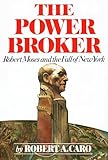
The Power Broker — Robert Caro (1974)
The greatest work of American political biography. Robert Moses — who never won an elected office but held more power over New York’s physical landscape than any governor or mayor — accumulated authority through the control of public authorities, the manipulation of bond financing, and the exploitation of bureaucratic structures that gave him independence from democratic accountability. Caro’s account of how Moses exercised this power — displacing communities, destroying neighbourhoods, building highways that served the white middle class and excluded the poor — is simultaneously a study of urban power and an indictment of the damage it can do. Won the Pulitzer Prize.
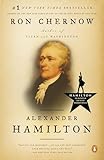
Alexander Hamilton — Ron Chernow (2004)
Chernow’s biography of the founding father who designed the American financial system — Treasury Secretary under Washington, architect of the national bank, author of most of the Federalist Papers — is the most comprehensive account of Hamilton available and the basis for the Lin-Manuel Miranda musical. Hamilton’s story is the quintessential American immigrant narrative: illegitimate birth in the Caribbean, self-made rise through talent and ambition, outsized influence on the new nation’s institutions, and death in a duel with Aaron Burr at fifty-one. The standard biography of one of the most consequential founding fathers.
Master of the Senate — Robert Caro (2002)
The third volume of Caro’s LBJ biography and, by many measures, his greatest achievement — the story of Lyndon Johnson’s transformation of the United States Senate from a body that blocked civil rights legislation into one that could pass it. Caro traces the history of the Senate, the mechanics of Southern filibustering, and Johnson’s extraordinary manipulation of his colleagues — simultaneously bullying, flattering, threatening, and cajoling — to achieve what no majority leader before him had managed. The most focused and formally accomplished of the LBJ volumes.
The Path to Power — Robert Caro (1982)
The first volume of the LBJ biography covers Johnson’s childhood in the impoverished Texas Hill Country, his years at Southwest Texas State Teachers College, his early political career, and his first successful congressional campaign. Caro establishes the sources of Johnson’s extraordinary political ambition — a father who fell from local prominence and a childhood of humiliating poverty — and the ruthlessness that ambition produced. Essential context for understanding the Senate years and the presidency.
Washington: A Life — Ron Chernow (2010)
Chernow’s Pulitzer Prize-winning biography of the first president is the definitive modern account of Washington’s life — from his origins as a Virginia tobacco farmer through his military career, the Constitutional Convention, his two presidential terms, and his return to Mount Vernon. Chernow’s Washington is neither the marble icon of myth nor the revisionist subject of later debunking: he is a man of extraordinary self-discipline, limited formal education, genuine political wisdom, and profound moral compromise on the question of slavery. The most balanced and comprehensive Washington available.
John Adams — David McCullough (2001)
McCullough’s biography of the second president is the most readable of the major founding father biographies — shorter and more narrative-driven than Chernow’s Hamilton or Washington. Adams’s story is one of the founding era’s most compelling: brilliant, principled, vain, and underappreciated, he served as vice president, president, and diplomat without accumulating the mythic status of Washington, Jefferson, or Hamilton. McCullough’s account of Adams’s relationship with Thomas Jefferson — rivals, then enemies, then reconciled correspondents who died on the same day — is one of the great closing chapters in American political biography.
Understanding the American Experiment
American political history is, at its core, the history of an experiment — the bold and unprecedented attempt to found a nation on a set of ideas about freedom, equality, and self-government — and the books on this list illuminate this experiment in all its complexity, its triumphs and its failures, its ideals and its betrayals, offering an understanding of America that is essential to comprehending the nation and its place in the world. The United States was founded as a deliberate experiment, an attempt to create a nation not on the traditional bases of shared blood, religion, or ancient territory but on a set of propositions about human freedom, equality, and the right of people to govern themselves, and American political history is the story of this experiment, its development, its tests, and its ongoing and unfinished course. The books on American political history illuminate this experiment, tracing the founding of the nation on its revolutionary ideas, the development and testing of its institutions and ideals, the great crises and conflicts that have threatened and reshaped it, and the long and ongoing struggle to realize, more fully and for more people, the ideals on which the nation was founded. This understanding of the American experiment is essential to comprehending the United States, for the nation cannot be understood apart from the experiment in self-government and the ideals of freedom and equality on which it was founded and around which its history has revolved. The books on this list offer this understanding, illuminating the American experiment in all its complexity, its noble ideals and its grievous failures, its triumphs and its betrayals, and providing the historical understanding essential to comprehending the nation, its development, and its ongoing struggle to realize its founding ideals. To understand American political history is to understand the American experiment, the bold attempt to found a nation on ideas, and the books on this list illuminate this experiment, offering an understanding of America essential to comprehending the nation and its history.
The Recurring Battles
A striking insight that emerges from the study of American political history, and one that the books on this list illuminate, is the recurrence of certain fundamental conflicts and tensions throughout the nation’s history — the recognition that many of the political battles of the present are continuations of struggles that have recurred throughout American history, and that understanding these recurring battles illuminates both the past and the present. The political conflicts of American history are not merely a succession of unrelated events but often the recurrence, in changing forms, of certain fundamental and enduring tensions that have run throughout the nation’s history. There are the recurring battles over the proper scope and power of government, the enduring tension between those who favor a stronger central authority and those who favor more limited government and greater local autonomy. There are the recurring conflicts over who is included in the nation’s ideals of freedom and equality, the long struggles to extend the promise of American freedom to those excluded from it, and the resistance to that extension. There are the recurring tensions between different regions, interests, and visions of the nation’s character and future. And there are the recurring conflicts over the balance between liberty and equality, between individual freedom and collective welfare, that have run throughout American political history. Understanding these recurring battles illuminates both past and present, for it reveals the deep continuities in American political conflict, the way that the struggles of the present often continue battles fought throughout the nation’s history, and the enduring tensions that have shaped and continue to shape American political life. The books on American political history illuminate these recurring battles, revealing the deep continuities in the nation’s political conflicts and the enduring tensions that recur, in changing forms, throughout its history. This recognition of the recurring battles is among the most valuable insights that the study of American political history offers, illuminating both the past and the present and revealing the deep and enduring conflicts that have shaped the nation’s political life throughout its history.
Lessons for Citizens
The study of American political history serves not merely to satisfy curiosity about the past but to equip citizens for the responsibilities of the present — for an understanding of the nation’s political history is essential to the informed and engaged citizenship on which a healthy democracy depends, and the books on this list offer lessons of genuine value for the citizens of today. A democracy depends on an informed and engaged citizenry, on citizens who understand their nation’s history, institutions, and political traditions, and who can bring this understanding to bear on the political questions and responsibilities of the present. The study of American political history provides exactly this understanding, equipping citizens with the historical knowledge essential to informed and engaged participation in the nation’s political life. The lessons this study offers are various and valuable. It provides an understanding of the nation’s institutions and how they developed, essential to participating in and safeguarding them. It illuminates the recurring conflicts and enduring tensions of American politics, helping citizens to understand the deeper context of present political battles. It offers the cautionary and instructive examples of the past, the lessons of past crises, failures, and achievements, that can inform present judgment. And it cultivates the historical perspective and understanding essential to thoughtful and responsible citizenship, the capacity to see present political questions in the light of the nation’s history and traditions. These lessons for citizens are among the most valuable contributions of the study of American political history, for they equip citizens with the historical understanding essential to the informed and engaged participation on which a healthy democracy depends. The books on this list offer these lessons, providing the understanding of the nation’s political history that thoughtful and responsible citizenship requires, and equipping the citizens of today with the historical knowledge and perspective essential to meeting the political responsibilities of the present. To study American political history is to prepare oneself for the responsibilities of citizenship, and the books on this list offer lessons of genuine value for the engaged citizen.
Why These Books
The best American political biographies share a commitment to understanding power — not celebrating it. Caro’s Moses and Johnson are both men whose accomplishments were inseparable from their abuses; Chernow’s Hamilton was simultaneously a visionary and a man whose personal vanity nearly destroyed his political career. What these books demonstrate is that American political history is not the story of great men rising to great occasions but of complicated people operating within systems that both enable and constrain them — and that understanding those systems requires the same patience and rigour that the subjects themselves brought to their ambitions.
Frequently Asked Questions
What is the best book about American political history to start with?
The Power Broker (1974) by Robert Caro is the single greatest work of American political biography — the life of Robert Moses, who shaped modern New York through unelected power accumulated over decades, and a comprehensive study of how power is acquired, exercised, and protected. At 1,300 pages, it requires commitment, but it is the most sustained investigation of American political power available. Team of Rivals (2005) by Doris Kearns Goodwin is the more accessible starting point — Lincoln's decision to surround himself with his political rivals during the Civil War, and a portrait of political intelligence and emotional maturity.
What is The Power Broker about?
The Power Broker (1974) by Robert Caro is the biography of Robert Moses — the New York parks commissioner, bridge authority chairman, and housing administrator who, from the 1920s to the 1960s, built more public works than any individual in American history and shaped the physical landscape of New York City and State more than any elected official. Moses never held elected office; he accumulated power through the control of public authorities and the manipulation of governors and mayors. Caro's account of how Moses exercised and protected his power is the most detailed study of political mechanics in American political writing.
What is Team of Rivals about?
Team of Rivals (2005) by Doris Kearns Goodwin follows Lincoln's decision, after winning the 1860 Republican nomination, to appoint his three main rivals — William Seward, Salmon Chase, and Edward Bates — to his Cabinet. The book uses this decision as a study of Lincoln's political intelligence: his ability to manage men more experienced and (in their own estimation) more talented than himself, to tolerate their contempt and use their abilities, and to keep them focused on the war. It is simultaneously a biography of Lincoln and a portrait of the men around him.
What are Robert Caro's LBJ books?
The Years of Lyndon Johnson is Robert Caro's multi-volume biography of Lyndon B. Johnson, of which four volumes have been published: The Path to Power (1982, covering LBJ's childhood through his first congressional run), Means of Ascent (1990, covering 1941–1948), Master of the Senate (2002, covering his Senate years and accumulation of power), and The Passage of Power (2012, covering his vice presidency and first years in office). A fifth volume covering the Vietnam War and Great Society has been long awaited. Each volume is independently worth reading; Master of the Senate is the most focused and arguably the most impressive.