Best Books of Ancient Literature: Essential Classical Texts
The best books of ancient literature — from The Iliad and The Odyssey to Medea and The Republic. Essential classical texts from Greece and Rome.

The literature of ancient Greece and Rome constitutes the foundation of the Western literary and philosophical tradition. The questions it addresses — what is justice? what does a good life require? what is the relationship between individual fate and divine will? how should we face death? — remain the most important questions available to human thought, and the texts that addressed them with the greatest formal skill and intellectual depth have never been surpassed.
Reading ancient literature is not antiquarianism but encounter with the minds that first formulated the questions that Western culture has been debating ever since. These texts are not historical curiosities but living arguments.
The Essential List
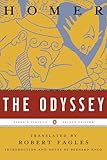
The Odyssey — Homer (c. 8th century BCE)
The foundational adventure narrative and the most immediately engaging of the ancient epics. Odysseus’s ten-year journey home from Troy — through the Cyclops, Circe, the Sirens, Scylla and Charybdis, and the land of the dead — is simultaneously the template for all subsequent quest narratives and a psychological study of a man whose most powerful characteristic is cunning rather than strength. The poem is also about home — about Penelope’s patient faithfulness and the question of what ‘homecoming’ means after twenty years’ absence. Emily Wilson’s 2017 translation is the best currently available.
The Iliad — Homer (c. 8th century BCE)
The greater of the two Homeric epics and one of the greatest works of literature ever composed. The Trojan War as experienced through the Greeks’ siege — specifically through the wrath of Achilles, its causes and its consequences — is a meditation on heroism, mortality, and the relationship between individual fate and divine will. Achilles’ choice (a long life without glory versus a short life with glory) is the foundational statement of the heroic ethos; his grief over Patroclus, and the scene in which he returns Hector’s body to Priam, are the most moving passages in ancient literature.
Medea — Euripides (431 BCE)
The most psychologically disturbing of the ancient tragedies. Medea’s decision to kill her own children rather than allow Jason to profit from them — after he has abandoned her for a politically advantageous marriage — is comprehensible within the play’s logic even as it is monstrous. Euripides’ Medea is not merely a monster but a woman who has been wronged by a man who used her and discarded her; her revenge is extreme, but the injustice that provoked it is real. The most modern of the ancient plays in its psychological complexity.
Antigone — Sophocles (c. 441 BCE)
The definitive ancient tragedy about the conflict between individual conscience and the authority of the state. Antigone, the daughter of Oedipus, insists on burying her brother Polynices in defiance of King Creon’s edict — because the gods’ law (that the dead must be buried) supersedes human law. Creon’s insistence that the state’s law is absolute, and his eventual destruction, constitute Sophocles’ argument about the limits of political authority. The most politically relevant of the ancient tragedies; it has been performed under every authoritarian regime as an act of resistance.
Oedipus Rex — Sophocles (c. 429 BCE)
Aristotle considered it the perfect tragedy, and he was right. Oedipus’s investigation into the cause of Thebes’s plague — which reveals that he himself is the cause, the man who killed his father and married his mother — is the most formally perfect narrative in ancient literature: every element is necessary, every revelation has consequences, and the catastrophe is the direct product of Oedipus’s virtues (his intelligence, his determination to know the truth) rather than his vices. The foundational text for Freud’s Oedipus complex and for every subsequent discussion of fate, free will, and self-knowledge.
The Aeneid — Virgil (19 BCE)
Rome’s answer to Homer — the story of Aeneas, the Trojan prince who survives the fall of Troy and travels to Italy, where he founds the settlement that will eventually become Rome. Virgil’s epic is more politically conscious than Homer’s: its account of Roman destiny and the costs of founding a civilization (Dido’s suicide, the death of Turnus) is simultaneously a celebration of the Roman achievement and a meditation on what that achievement requires its founders to sacrifice. The most melancholy and self-aware of the ancient epics.
The Republic — Plato (c. 380 BCE)
The most important work of political philosophy in the Western tradition. Plato’s dialogue on justice — which generates his vision of the ideal state, his allegory of the cave, and his critique of democracy — is the foundation of most subsequent political thought. Whether you agree with Plato’s conclusions (philosopher-kings, censorship of art, the suppression of democratic excess) or not, you cannot think clearly about politics without engaging with his arguments.
Meditations — Marcus Aurelius (c. 170–180 CE)
The most intimate of the ancient texts — Marcus Aurelius’s private notes to himself, never intended for publication, in which the Emperor of Rome argues himself into equanimity in the face of disappointment, ingratitude, and mortality. The Meditations are a practising Stoic’s ongoing conversation with his philosophy: not abstract theory but a practice, applied daily to the specific difficulties of a life in which the most powerful man in the world is still subject to loss, illness, and death. The most useful of the ancient texts for daily life.
Which Translations to Use
The choice of translation matters enormously for ancient texts. For Homer: Emily Wilson’s translations of The Odyssey (2017) and The Iliad (2023) are the best currently available — accurate, readable, and written with genuine poetic feeling. For Greek drama: Anne Carson’s translations of Aeschylus, and Bernard Knox’s introductions to the Penguin Sophocles, are excellent starting points. For Plato: the Hackett translations are reliable; Benjamin Jowett’s Victorian versions, though venerable, are stylistically dated. For the Aeneid: Robert Fagles’s 2006 translation is excellent.
Frequently Asked Questions
What is the best ancient text to start with?
The Odyssey by Homer is the best starting point — the story of Odysseus's ten-year journey home from Troy is the most narrative and immediately engaging of the ancient epic poems, and the standard by which all subsequent adventure stories have been measured. The Iliad is the greater poem by most assessments — darker, more tragic, more formally ambitious — but The Odyssey is more accessible. For drama, Medea by Euripides is the most powerful single ancient play and the most immediately gripping.
Should I read The Iliad or The Odyssey first?
The Odyssey first — it is more immediately engaging, its hero more relatable, its narrative more varied. The Iliad is the greater poem (and its portrait of Achilles is the greatest character study in ancient literature), but it requires more patience and is more difficult to enter cold. Read The Odyssey, then The Iliad; you will understand both better for having read them in that order. The Emily Wilson translation of both (2017 and 2023) is currently the best English version.
What is Medea about?
Medea (431 BCE) by Euripides follows Medea, a barbarian princess who used her magic to help Jason win the Golden Fleece and followed him back to Greece, where he abandons her to marry a Corinthian princess. Rather than accepting her abandonment, Medea kills Jason's new wife, her father, and her own children by Jason — destroying everything he values and leaving him with nothing. The play is the most disturbing in ancient literature and the most psychologically complex: Medea's logic (if I can't have what is mine, you will have nothing) is comprehensible even as it is monstrous.
What is The Republic about?
The Republic by Plato is a philosophical dialogue in which Socrates and various interlocutors attempt to define justice — first in the individual, then in the state. The discussion generates Plato's vision of the ideal state: ruled by philosopher-kings, with the population divided into three classes by natural aptitude. Along the way, Plato develops the allegory of the cave (the most famous image in Western philosophy), the Theory of Forms, and a critique of democracy. The most important work of political philosophy in the Western tradition and the foundation of most subsequent political thought.