Best Short Story Collections: Essential Reading List
The best short story collections ever written — from Dubliners and Nine Stories to Interpreter of Maladies and What We Talk About When We Talk About Love.

The short story is the most demanding of literary forms — it requires everything a novel requires (character, atmosphere, theme, style) and allows far less time to establish them. The best short story collections are not assemblies of fragments but unified works in which the individual stories illuminate each other and build something greater than any single story could achieve.
The collections below represent the highest achievements in the form, from Joyce’s portrait of a city to Carver’s minimalist portraits of American working-class life to Borges’s philosophical puzzles.
The Foundational Collections
Dubliners — James Joyce (1914)
The most celebrated short story collection in English. Fifteen stories set in Dublin — moving from childhood through adolescence, maturity, and public life — unified by Joyce’s concept of ‘moral history’: a truthful account of a city at a particular moment. Each story ends with what Joyce called an ‘epiphany’: a moment of sudden revelation, usually ambiguous, through which the character’s situation becomes visible.
The final story, “The Dead” — Gabriel Conroy’s dawning understanding of what he does not know about his wife, about Ireland, about himself, set against a dinner party and a snowfall — is widely considered the finest short story in English and the primary argument for reading Joyce.
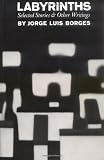
Labyrinths — Jorge Luis Borges (1962)
The most influential short story collection in world literature. Borges’s stories — most between five and fifteen pages — construct intellectual puzzles that are simultaneously philosophical arguments, science fiction premises, detective stories, and meditations on the nature of literature, time, and identity. He invented a mode of fiction — philosophical, playful, self-referential, concerned with infinities and paradoxes — that shaped everything from magical realism to postmodern fiction to contemporary literary science fiction.
Essential stories: “The Garden of Forking Paths,” “Pierre Menard, Author of the Quixote,” “The Library of Babel,” “Tlön, Uqbar, Orbis Tertius.”
The American Tradition
Nine Stories — J.D. Salinger (1953)
Salinger’s most sustained fiction — nine stories that extend the world of The Catcher in the Rye into shorter, stranger forms. The Glass family stories (“A Perfect Day for Bananafish,” “Franny,” “Zooey,” “Raise High the Roof Beam, Carpenters”) are among the most beloved in American literature, but the collection’s finest story may be “For Esmé — with Love and Squalor,” about a soldier’s conversation with a young English girl before the D-Day invasion and his recovery from the war’s aftermath.
What We Talk About When We Talk About Love — Raymond Carver (1981)
The collection that defined American minimalism. Carver’s stories are stripped to the essential: flat dialogue, working-class characters, situations of quiet desperation or unexplained crisis, endings that refuse to resolve. The title story — four people talking about love over gin, the conversation gradually revealing what none of them can say directly — is the most discussed short story in late twentieth-century American literature. Carver’s influence on subsequent short fiction is incalculable.
Contemporary Collections
Interpreter of Maladies — Jhumpa Lahiri (1999)
Winner of the Pulitzer Prize for Fiction in 2000. Nine stories about Indian and Indian-American characters negotiating between cultures — the specific loneliness of people who belong fully to neither the country they left nor the country they arrived in, rendered in prose of unusual precision and quietness. Lahiri’s method is accumulation and understatement: the stories build their emotional weight slowly, and the endings resonate long after.
Why the Short Story Is the Hardest Form
There is a widespread assumption that short stories are easier than novels — shorter, therefore simpler, a place for beginners to start before attempting something serious. The collections on this list demonstrate the opposite, and understanding why illuminates the particular genius of the form. The short story is arguably the most demanding of all literary forms precisely because of its compression. It must accomplish nearly everything a novel accomplishes — establish character, create atmosphere, develop theme, achieve emotional impact — but with a fraction of the space and time. A novelist can take a hundred pages to make a reader care about a character; the short story writer has a handful. Every word must carry weight; there is no room for the digression, the slow build, the gradual accumulation that the novel permits. This demand for absolute economy is why the form has attracted some of literature’s most exacting craftsmen and why mastering it is so rare. Joyce compresses the moral history of an entire city into fifteen brief stories; Carver strips language to its barest essentials and achieves devastating effect through what he leaves unsaid; Borges builds entire philosophical universes in five pages. The short story rewards a kind of precision and concentration that the novel, for all its grandeur, does not require, and the writers who excel at it possess a particular mastery of implication, suggestion, and the art of the telling detail. To read these collections is to witness writers operating under the most severe formal constraints and turning those constraints into sources of extraordinary power.
The Collection as a Unified Work
A crucial insight for appreciating these books is that the finest short story collections are not random assemblages of unrelated pieces but unified works of art in which the individual stories illuminate and amplify one another, building something greater than the sum of their parts. This is what separates a great collection from a mere anthology of a writer’s output. Joyce’s Dubliners is the supreme example: its fifteen stories are deliberately arranged to move through the stages of life — childhood, adolescence, maturity, public life — and to build a cumulative portrait of a single city at a particular historical moment, so that the whole functions almost as a fragmented novel, each story a facet of one large design. Lahiri’s Interpreter of Maladies coheres around the shared theme of cultural displacement and the loneliness of those caught between worlds, the stories resonating with and deepening one another. Even Borges’s Labyrinths, for all the apparent variety of its puzzles, returns obsessively to a consistent set of preoccupations — infinity, time, identity, the nature of fiction itself — that bind the collection into a coherent vision. Reading these books cover to cover, in their intended order, yields an experience quite different from dipping into individual stories, because the arrangement, the recurring themes, and the accumulating resonances create meaning that no single story could achieve alone. The great collection asks to be read as a whole, and rewards that reading with a unity and depth that reveal short story writing at its most ambitious.
A Form for Modern Reading
Beyond their literary achievements, the books on this list make a compelling case for the short story as an ideal form for contemporary reading life, and for rediscovering a mode that suits the rhythms of modern existence unusually well. The short story offers a complete artistic experience in a single sitting — a beginning, middle, and end, a full emotional and intellectual journey, achievable in the fragmented pockets of time that characterize busy modern life. Where a novel demands sustained commitment across days or weeks, a story can be read on a commute, before sleep, in a lunch break, and yet deliver a complete and lasting impact. This accessibility makes collections an ideal way to sample a writer’s work, to discover new voices, and to maintain a reading habit amid the time pressures that defeat longer projects. But the form’s suitability to modern reading is not merely a matter of convenience; the short story’s intensity, its capacity to deliver a concentrated jolt of insight or feeling, suits an age of fragmented attention while also offering a salutary discipline against it, rewarding the focused engagement that distraction erodes. The collections gathered here — from Joyce’s foundational achievement to Lahiri’s contemporary mastery — represent the highest reaches of the form and the perfect entry point for readers seeking to rediscover it. They prove that the short story is not a lesser form or a stepping stone to the novel but a major art in its own right, capable of effects no other form can achieve, and ideally suited to the way many of us actually read today.
Reading Order
Start here: Nine Stories (most accessible) → Interpreter of Maladies → Dubliners.
For literary ambition: Dubliners → What We Talk About When We Talk About Love → Labyrinths.
Themed sequence: Dubliners (city, society) → Interpreter of Maladies (diaspora, belonging) → What We Talk About (love, miscommunication).
Frequently Asked Questions
What is the best short story collection of all time?
Dubliners by James Joyce is the most celebrated short story collection in English — the fifteen stories build a portrait of a city and a culture through precisely observed moments of revelation, and 'The Dead' is almost universally considered the finest short story in the English language. Labyrinths by Jorge Luis Borges is the most influential collection in world literature — Borges invented a mode of intellectual fiction that has shaped everything from magical realism to postmodern fiction. For American short fiction, What We Talk About When We Talk About Love by Raymond Carver defined minimalism and influenced a generation of writers.
What is the best Raymond Carver story?
Cathedral (from the 1983 collection of the same name) is generally considered Carver's finest story — a man whose wife invites a blind friend to visit over his objections finds himself, by the story's end, attempting to describe a cathedral to a man who has never seen one, and the experience opens something in him that the story renders with great precision and generosity. What We Talk About When We Talk About Love (the title story of the 1981 collection) is the most discussed — four people talking about love until what they're talking about becomes increasingly unclear — and the most representative of Carver's minimalist method.
What is Interpreter of Maladies about?
Interpreter of Maladies by Jhumpa Lahiri (Pulitzer Prize, 2000) is a collection of nine stories about Indian and Indian-American characters navigating between cultures — the experience of immigration, of return, of the specific loneliness of people who belong fully to neither the country they left nor the country they arrived in. Lahiri's prose is precise and quiet; her stories operate through accumulation and understatement. The title story follows an Indian interpreter who serves as a tourist guide to a visiting Indian-American family, and the gap between what the two parties expect from each other is the story's central subject.
What are the best short story collections for beginners?
Nine Stories by J.D. Salinger is the most accessible of the classic collections — the stories are clear, emotionally immediate, and reward close reading without demanding the specialist knowledge that Dubliners or Labyrinths benefit from. Interpreter of Maladies is the best recent collection for new readers — beautifully written, emotionally clear, and immediately absorbing. What We Talk About When We Talk About Love demonstrates minimalism's power with stories that are short enough to read in a sitting and reward multiple readings.