Where to Start with Carl Sagan: A Reading Guide
Where to start with Carl Sagan — whether to begin with Cosmos, Pale Blue Dot, or The Demon-Haunted World. A complete reading guide to the astronomer and science communicator.
By Elena Marsh
Carl Sagan (1934–1996) was the American astronomer, astrophysicist, and science communicator whose Cosmos television series (1980) and accompanying book became the most widely watched public television series in American history and the most widely read science book of its era. Sagan was Professor of Astronomy and Space Sciences at Cornell University, a key figure in the development of the SETI programme, and the most influential popular science communicator of the twentieth century. His work combined genuine scientific expertise with an extraordinary capacity for wonder — the sense that the universe’s vastness and indifference makes human life more rather than less precious. He died in 1996 at sixty-two.
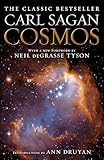
Where to Start: Cosmos (1980)
The essential Sagan — and one of the great works of popular science in any language. Cosmos is structured as a journey: from the subatomic to the galactic, from the earliest stirrings of life on Earth to the civilisations that might exist elsewhere in the universe, from the ancient Greeks’ first attempts to understand nature to the space age Sagan was living through. Each chapter takes a specific starting point — the life of Johannes Kepler, the library of Alexandria, the chemistry of the human brain — and opens outward into the universe.
Sagan’s voice is the defining quality: precise and lyrical simultaneously, alive with genuine reverence for the scale and complexity of what exists. He combines scientific explanation with philosophical reflection in a way that is not merely popular science but a sustained argument about why understanding the cosmos matters — morally, practically, spiritually (in a rigorously secular sense). The famous closing lines about ‘star stuff’ and our cosmic kinship are earned, not rhetorical.
Cosmos is dated in some of its specific science — it was written before the Hubble telescope, before the confirmation of exoplanets, before modern genomics — but its method and its spirit are not dated at all. It remains the best introduction to both astronomy and to Sagan’s particular way of seeing.
Pale Blue Dot (1994)
Sagan’s most meditative book — structured around the 1990 Voyager 1 photograph of Earth taken from beyond Neptune’s orbit. In the photograph, Earth is a pale blue dot in a sunbeam, almost invisible against the vastness of space. Sagan uses the image as a point of departure for reflections on the history and future of space exploration, the argument for human expansion beyond Earth, and the moral implications of our apparent cosmic solitude. His most personal work; the penultimate chapter contains what many readers consider his finest writing.
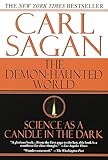
The Demon-Haunted World (1995)
Sagan’s defence of scientific thinking — a sustained argument against the pseudoscience, superstition, and uncritical credulity that he saw as increasingly threatening in American public life. The ‘baloney detection kit’ (a set of tools for evaluating extraordinary claims) is the book’s most quoted section, but the argument runs much deeper: Sagan is concerned with why humans are drawn to magical thinking, what needs that thinking serves, and how scientific literacy can provide the same wonder without the intellectual abdication. More urgent now than when it was written.
Contact (1985)
Sagan’s only novel — a scientifically rigorous science fiction story about the detection of an alien signal and what happens when humanity receives it. The novel is primarily about the conflict between scientific and religious frameworks for understanding extraordinary events; the central character, Ellie Arroway, is one of the finest portraits of a working scientist in fiction. The Jodie Foster film adaptation is excellent and largely faithful; both are worth your time.
Why Cosmos Is the Ideal First Book
For a reader new to Carl Sagan, Cosmos is the ideal first book because it is his most famous and beloved work and the fullest expression of his distinctive gifts, the sense of wonder, the lyrical clarity, and the passionate celebration of science and the universe. Cosmos takes the reader on a sweeping journey through the universe and the history of science, exploring the cosmos, the origins of life, and humanity’s place in the grand scheme, all in Sagan’s wonder-filled, eloquent voice. As an entry point it is ideal, for it is his best-known book and a perfect example of his inspiring, accessible science writing. It welcomes the newcomer with its sweeping vision, its lyrical clarity, and its sense of wonder, drawing the reader into the cosmos as Sagan reveals it. It is his most famous work and the one that best represents his gifts, so the new reader encounters Sagan at his most characteristic. For the newcomer, then, Cosmos is the natural and ideal starting point.
What to Expect as a New Reader
As a new reader, you can expect Cosmos to be a sweeping, wonder-filled, and eloquent celebration of science and the universe. You can expect a grand journey, for Sagan takes the reader through the universe, the history of science, the origins of life, and humanity’s place in the cosmos. You can expect a sense of wonder, for Sagan conveys awe and excitement about the universe and our place in it. You can expect lyrical clarity, for Sagan writes with beauty, eloquence, and accessibility. You can expect a passionate celebration of science, reason, and exploration. You can expect reflection on humanity, our smallness and our potential, and the importance of science and skepticism. You can expect an inspiring, accessible, and uplifting read. Expect, in short, a sweeping, wonder-filled, and eloquent celebration of science and the universe, a superb introduction to Sagan’s gifts.
Going Deeper After Your First Book
Once Cosmos has introduced you to Sagan’s gifts, the reader who wishes to go deeper can explore his other books, which continue his sense of wonder, his lyrical clarity, and his passionate celebration of science and reason. His acclaimed work championing science and skepticism as a candle against superstition is a beloved defense of critical thinking, while his other books explore the search for extraterrestrial life, the future of humanity, and the wonders of the cosmos, and his novel imagines humanity’s first contact with an alien civilization. Reading these after Cosmos deepens your appreciation of Sagan’s distinctive gifts, the sense of wonder, the lyrical clarity, and the passionate celebration of science. His characteristic spirit runs through his work, and the reader inspired by Cosmos will find it across his books. Building your reading journey through Sagan is a matter of following his writing from Cosmos into his other books. The reader who begins here and continues will find one of the most beloved and inspiring popularizers of science.
Reading Carl Sagan
Begin with Cosmos for the full statement of Sagan’s vision; read Pale Blue Dot for his most personal and most philosophical reflection. The Demon-Haunted World is essential for anyone interested in scientific thinking as a cultural practice. Contact is the best entry point for readers who prefer narrative. All of Sagan’s books reward re-reading; the quality of thought and prose improves with attention.
Frequently Asked Questions
Where should I start with Carl Sagan?
Cosmos (1980) is the essential starting point — Sagan's companion to his landmark television series, an account of the universe, human history, and the place of intelligent life in the cosmos. Cosmos is one of the bestselling science books ever published and remains Sagan's most comprehensive statement of what he believed: that the universe is vast and ancient and indifferent, that we are a species with cosmic potential and terrestrial smallness, and that science is the most powerful tool humans have developed for understanding reality. The Demon-Haunted World is the alternative for readers primarily interested in critical thinking and the threat of pseudoscience.
What is The Demon-Haunted World about?
The Demon-Haunted World: Science as a Candle in the Dark (1995) is Sagan's defence of scientific thinking against pseudoscience, superstition, and uncritical credulity. He addresses UFO abductions, faith healing, astrology, and other beliefs that lack scientific foundation, arguing that the same tools — skepticism, evidence, the willingness to be wrong — that make science work can be applied to any domain of inquiry. The 'baloney detection kit' chapter is among the most quoted passages in popular science writing. Sagan's tone is concerned rather than contemptuous; he writes with compassion for the need for wonder that pseudoscience exploits.
What is Pale Blue Dot about?
Pale Blue Dot (1994) is a meditation on human smallness and significance prompted by the famous 1990 Voyager 1 photograph of Earth from 6 billion kilometres away — a pale blue dot in a sunbeam. Sagan uses the image as a starting point for a wide-ranging reflection on the history and future of space exploration, the argument for why we should go to Mars, and the implications of our cosmic insignificance for how we treat each other. His most personal and most directly philosophical book.
Is Contact a science fiction novel?
Contact (1985) is Sagan's only novel — a science fiction story about SETI researcher Ellie Arroway, who detects an alien signal and is part of the team that decodes it and eventually makes the first human contact with an extraterrestrial intelligence. The novel is unusual science fiction in that the science is scrupulously accurate and the story is primarily about the conflict between scientific and religious explanations for extraordinary events. The Jodie Foster film adaptation (1997) is faithful; both are excellent. Contact is the best entry point for readers who prefer narrative to essay.