Where to Start with George R.R. Martin: A Reading Guide
Where to start with George R.R. Martin and A Song of Ice and Fire — how to begin with A Game of Thrones and what to expect from the epic fantasy series. A complete guide.
George R.R. Martin (born 1948) is the American fantasy novelist who — with A Song of Ice and Fire, beginning in 1996 — transformed epic fantasy by applying the psychological realism, political intelligence, and moral ambiguity of literary fiction to a secondary world of extraordinary scope and invention. His series, set in the continent of Westeros, features a rotating cast of point-of-view characters across five published novels and is the primary source of the HBO television series Game of Thrones (2011–2019). The series remains unfinished; two further novels are planned. It is the most widely read fantasy series of the twenty-first century and has permanently shaped what readers expect from the genre.
Where to Start: A Game of Thrones (1996)
The only starting point — and one of the most important fantasy novels published in the past century. The Iron Throne of the Seven Kingdoms of Westeros stands vacant; King Robert Baratheon asks his old friend Eddard Stark, Lord of Winterfell, to serve as Hand of the King and come south to the capital. Eddard agrees, bringing his daughters with him, and begins to discover a court built entirely on concealment and violence. In the north, beyond the Wall, something ancient is stirring.
The genius of Martin’s opening is the management of expectations. The reader who knows fantasy knows the shape of this story: the honourable lord, the dangerous court, the supernatural threat, the children who will become heroes. Martin delivers all of this and then refuses its conventional resolution. Characters die. The honest do not reliably triumph. The structural promises of heroic fantasy are honoured and then revoked. The multiple POV structure — Eddard, Catelyn, Sansa, Arya, Jon, Daenerys, Tyrion — allows Martin to show how the same events look to characters with completely different information and interests. Tyrion Lannister, introduced as a supporting antagonist, becomes one of the most beloved characters in the genre.
A Clash of Kings (1998)
The second book — and the one where the political complexity of Westeros fully emerges. King Robert is dead; five kings now claim the throne. The War of the Five Kings is the political and military spine of the novel; Stannis Baratheon’s alliance with the Red Priestess Melisandre introduces a genuinely unnerving supernatural element. Arya’s storyline deepens significantly. The scope expands; the world becomes more fully imagined. Best read directly after the first book.
A Storm of Swords (2000)
The third book — and by most accounts the best in the series. The accumulated tension of the first two novels is discharged through a series of events so dramatic that the novel has become the defining example of subverting reader expectation in fantasy. The political plotting is densest here; the character development of Tyrion, Jaime, and Sansa is most fully realised. The Red Wedding is the most celebrated and most harrowing single sequence in the series. Many readers regard it as among the finest novels in the genre.
A Feast for Crows (2005)
The fourth book — and the first where the narrative splits, following a different subset of characters than A Dance with Dragons (which covers the same time period from other perspectives). Slower-paced than the first three books, focused primarily on Cersei, Jaime, Brienne, and the Iron Islands. Less immediately thrilling but important for the world’s development and for Cersei’s emergence as one of the series’ most complex POV characters.
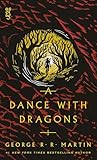
A Dance with Dragons (2011)
The fifth book — covering the same period as A Feast for Crows from the perspectives of Jon, Daenerys, Tyrion, and others. The two books should be read in publication order rather than combined. Daenerys’s storyline in Meereen and Jon’s at Castle Black are the central threads; both reach cliffhangers that remain unresolved in the published canon as of 2026.
Reading George R.R. Martin
A Song of Ice and Fire is the defining epic fantasy of the twenty-first century — a work of extraordinary ambition, psychological depth, and political imagination. Martin’s achievement is to have taken the genre’s conventions seriously enough to understand exactly what they promise, and then to have refused those promises systematically in the service of something more honest about power and violence. The series is unfinished; readers who begin knowing this can adjust their expectations accordingly. Begin at the beginning — there is no other starting point — and read at least through A Storm of Swords before making any judgement about the series.
Frequently Asked Questions
Where should I start with George R.R. Martin?
A Game of Thrones (1996) is the only starting point — the first book of A Song of Ice and Fire, the most important and most ambitious epic fantasy series of the past thirty years. Seven great houses of Westeros compete for the Iron Throne while something ancient and terrible stirs beyond the Wall in the frozen north. The novel establishes Martin's multiple-POV structure, his ruthless willingness to kill significant characters, and the political and psychological intelligence that elevates the series far above conventional fantasy. A Storm of Swords (Book 3) is generally regarded as the series' peak.
What is A Song of Ice and Fire about?
A Song of Ice and Fire is set in the fictional continent of Westeros, where seven great noble houses struggle for control of the Iron Throne following the death of King Robert Baratheon. The series follows multiple POV characters — most significantly the Stark family of Winterfell — as the political conflict is complicated by supernatural threats from beyond the Wall (the Others, also called White Walkers) and the return of dragons to the world via Daenerys Targaryen across the sea. Martin's series is distinguished by its psychological realism, its willingness to subvert conventional fantasy structures, and the sheer scale and complexity of its political imagination.
How many books are in A Song of Ice and Fire and is it finished?
Five books have been published: A Game of Thrones (1996), A Clash of Kings (1998), A Storm of Swords (2000), A Feast for Crows (2005), and A Dance with Dragons (2011). Two further books are planned — The Winds of Winter and A Dream of Spring — but as of 2026 neither has been published. The HBO television series Game of Thrones (2011–2019) completed the story, though Martin has indicated the books will differ from the show's ending. Many readers begin the series knowing it may not receive a literary conclusion in the near term.
Is A Storm of Swords the best book in the series?
A Storm of Swords (2000) is widely regarded as the best book in the series — the point where Martin's narrative control, character development, and willingness to shock converge most perfectly. It contains the most celebrated sequence in the series (the Red Wedding), multiple major character deaths, and a density of political plotting and emotional consequence that no later book has matched. A Game of Thrones establishes the world; A Clash of Kings deepens the conflict; A Storm of Swords delivers the accumulated weight of the previous two books with devastating effect. Many readers regard it as among the finest novels in epic fantasy.