Where to Start with J.K. Rowling: A Reading Guide
Where to start with J.K. Rowling — how to approach the Harry Potter series, from the Sorcerer's Stone through the Deathly Hallows, and which book is the series at its best. A complete reading guide.
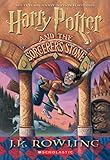
J.K. Rowling (born 1965) is a British author who began writing Harry Potter and the Philosopher’s Stone in Edinburgh cafés while on welfare benefits and published it in 1997 after being rejected by twelve publishers. The series expanded across seven volumes between 1997 and 2007, selling over 500 million copies worldwide and becoming the bestselling book series in history. The books were published in the UK as the Philosopher’s Stone (the US title, Sorcerer’s Stone, was changed by the American publisher); all subsequent volumes have the same title in both countries.
Where to Start: Harry Potter and the Sorcerer’s Stone (1997)
The essential starting point — and one of the most carefully constructed first novels in children’s fantasy. Harry Potter and the Sorcerer’s Stone begins on Privet Drive, Little Whinging, Surrey, with perhaps the most deliberately ordinary opening paragraph in literature — mundane suburban life, a family that prides itself on being perfectly normal — before introducing the first tremors of an extraordinary world pressing against the ordinary one.
Harry Potter is introduced as an eleven-year-old who sleeps in a cupboard under the stairs, wears his cousin’s too-large clothes, and has been told his parents died in a car crash. The arrival of hundreds of letters addressed specifically to him, the arrival of the half-giant Hagrid, and the revelation that he is a wizard constitute the novel’s first movement — one of the great scene-setting sequences in children’s literature.
Rowling’s world-building is the series’ foundational achievement. Hogwarts is constructed with the specificity of a place that has existed for centuries: its moving staircases, its ghosts with particular characters, its houses with particular reputations, its teachers with particular histories, its annual rhythms and traditions and secrets. The wizarding world outside Hogwarts — Diagon Alley, the Ministry of Magic, the wizarding newspaper, the sport of Quidditch — is rendered with the same consistency and detail. The world feels populated and inhabited because it is: Rowling had constructed it extensively before beginning the first novel.
The mystery structure that underpins all seven books is already present: something is wrong at Hogwarts, someone is not what they appear to be, and the solution turns on information that has been in plain sight but not noticed. The Sorcerer’s Stone mystery is the simplest in the series, but it is fairly constructed — a re-reader can find everything in place.
The Best in the Series: Harry Potter and the Prisoner of Azkaban (1999)
Prisoner of Azkaban is the consensus finest volume — the book where Rowling’s craft reached its peak before the series began its expansion into epic scale. A convicted murderer named Sirius Black has escaped from Azkaban prison, believed to be hunting Harry; Dementors — creatures that drain happiness and human warmth from their surroundings — have been stationed at Hogwarts for protection. The year’s Defence Against the Dark Arts teacher is Remus Lupin, the best teacher Harry encounters in the series.
The novel is structurally perfect in a way the larger later volumes cannot be. Its mysteries nest inside each other, its red herrings are genuinely misleading, and the time-turner resolution — which requires everything that has happened in the final hundred pages to have been arranged in advance — is constructed with the rigour of a double-bind puzzle. The themes of false accusation, institutional injustice, and the failure of the legal system to protect innocent people are handled with more genuine moral weight than the lighter early books.
Why Harry Potter and the Sorcerer’s Stone Is the Place to Begin
For a reader new to J.K. Rowling, Harry Potter and the Sorcerer’s Stone is the place to begin, for it is the opening of the beloved series that introduced a magical world to millions of readers. The novel introduces an orphaned boy who discovers, on his eleventh birthday, that he is a wizard, and follows his first year at a school of witchcraft and wizardry, where he finds friendship, wonder, and the first hints of a great danger. As a first book, it is the natural and essential starting point: warm, accessible, and enchanting, it opens a world that deepens and darkens across the series. It welcomes the newcomer with its endearing hero, its richly imagined magical world, and its blend of warmth, humor, and adventure, while planting the seeds of the larger story to come. Because it is the foundation of the whole series, it lets the new reader enter the wizarding world where it begins. For the newcomer, then, Harry Potter and the Sorcerer’s Stone is the place to begin.
What to Expect When You Open It
As a new reader, you can expect Harry Potter and the Sorcerer’s Stone to be a warm, enchanting, and accessible fantasy adventure. You can expect an endearing hero, for the orphaned Harry discovers he is a wizard and begins a new life. You can expect a richly imagined magical world, hidden alongside our own, full of wonder, invention, and delight. You can expect warmth and humor, for the book is charming, funny, and full of heart. You can expect friendship, for Harry’s bonds with his new friends are central. You can expect adventure and mystery, for his first year brings secrets, danger, and a building threat. You can expect the gentle beginning of a series that grows richer and darker. You can expect a captivating read for children and adults alike. Expect, in short, a warm, enchanting, and accessible fantasy adventure, the perfect first step into the wizarding world.
Where to Go From Here
Once Harry Potter and the Sorcerer’s Stone has drawn you into the wizarding world, the natural path is to read the series in full, following Harry and his friends through their years at the school of magic as the story grows richer, darker, and more ambitious across its seven books toward an epic conclusion. The series is best read in order, for it tells a single, building story, with each book deepening the world, the characters, and the stakes. Beyond the seven core books, the reader can explore the related works set in the same world, including the companion volumes and the later stories, as well as Rowling’s writing for adults under her own name and a pen name. The characteristic strengths of the series, the imaginative world, the warm storytelling, and the blend of magic, adventure, and heart, deepen as it goes. Building your reading journey is simply a matter of reading the Harry Potter series in order, from first book to last. The reader who begins here will have one of the most beloved fictional worlds ever created to immerse themselves in.
The Series in Full
The complete reading order — all seven books must be read in sequence:
- Harry Potter and the Sorcerer’s Stone (1997) — foundation and introduction
- Harry Potter and the Chamber of Secrets (1998) — deepens the Hogwarts mythology
- Harry Potter and the Prisoner of Azkaban (1999) — the series at its best
- Harry Potter and the Goblet of Fire (2000) — the series’ darkening turn
- Harry Potter and the Order of the Phoenix (2003) — longest, most difficult, most political
- Harry Potter and the Half-Blood Prince (2005) — the war deepens
- Harry Potter and the Deathly Hallows (2007) — the conclusion
For the full J.K. Rowling bibliography, reviews, and biography, visit the J.K. Rowling author page on Editors Reads.
Affiliate disclosure: Links to Amazon on this page are affiliate links. We earn a small commission at no extra cost to you.
Frequently Asked Questions
Where should I start with J.K. Rowling?
Harry Potter and the Sorcerer's Stone (1997, US edition; Philosopher's Stone in UK) is where you start — it is the series' beginning, and Rowling's world-building is so carefully constructed that the books must be read in order to appreciate the accumulation of detail and consequence. The first book is the shortest (309 pages) and most accessible, written for younger readers before the series grew with its audience.
What is the best book in the Harry Potter series?
Harry Potter and the Prisoner of Azkaban (Book 3) is widely considered the finest entry — the book where Rowling's craft fully matured. The plotting is airtight, the mystery involving Sirius Black and Peter Pettigrew is the series' best-constructed, the themes of false accusation and systemic injustice are handled with genuine depth, and the time-turner climax is one of the most satisfying plot resolutions in children's literature. It is the last book in the lighter-toned early series before the darkness of Goblet of Fire changes the register.
At what age does the Harry Potter series become darker?
The series grows significantly darker from Goblet of Fire (Book 4) onward. The first three books are primarily adventure stories for younger readers; Goblet of Fire introduces genuine mortality, moral ambiguity, and political danger in ways the earlier books did not. Order of the Phoenix (Book 5) is the longest and most tonally difficult, dealing with teenage anger, institutional betrayal, and trauma. The final two books are essentially war novels. Parents reading with younger children should be aware of this progression.
What should I read after Harry Potter?
After Harry Potter, Ursula K. Le Guin's A Wizard of Earthsea offers a deeper and more morally serious fantasy about a young wizard's education — the comparison is instructive. Philip Pullman's His Dark Materials trilogy is the most direct peer in terms of ambition and scope for children's fantasy. Brandon Sanderson's Mistborn series provides a similar progression from accessible to epic for adult readers ready for more complexity.


