Where to Start with Will Guidara: A Reading Guide
Where to start with Will Guidara — how to approach Unreasonable Hospitality, his essential account of radical customer care and the world's best restaurant. A complete reading guide.
By Marcus Webb
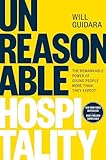
Will Guidara (born 1979) is an American restaurateur who was co-owner of Eleven Madison Park in New York City alongside chef Daniel Humm from 2006 until 2019, during which time the restaurant rose from an accomplished but unremarkable establishment to being named the World’s Best Restaurant in 2017. Unreasonable Hospitality (2022) is his account of how that transformation happened — and what it might mean for any organization whose work involves making people feel something.
Where to Start: Unreasonable Hospitality (2022)
The essential Guidara — and one of the most inspiring business books of recent years. Unreasonable Hospitality is built on a distinction that is easy to state and genuinely difficult to execute: service is the technical act of delivering correctly (the right dish, the right temperature, the right timing), while hospitality is the emotional act of making people feel that you care about them specifically. Every great restaurant is technically excellent; what differentiates the transcendent ones is hospitality.
When Guidara and Humm took over Eleven Madison Park in 2006, the restaurant already had three Michelin stars — the technical execution was world-class. What it lacked was any sense that the people behind the technical execution cared about the individual human beings sitting at the tables. Guidara’s project over the following decade was to add that dimension without losing the technical excellence, and Unreasonable Hospitality is the story of how he did it.
The concept of unreasonable hospitality is illustrated through specific, memorable stories. A table of Danish tourists mentions offhand during dinner that they have never eaten a New York street hot dog. Guidara sends a runner out mid-service to get four dirty-water dogs from a street cart; they arrive as a surprise course. A woman celebrating a milestone tells them she had always wanted to dine at a specific restaurant that had closed years earlier — Guidara tracks down the original recipes, consults the chef, and recreates the dishes for her table. These gestures are unreasonable in the sense of exceeding any rational cost-benefit calculation. They are also the moments that guests describe for years afterward, that generate the loyalty and word-of-mouth that no Michelin star can produce by itself.
The organizational implication is the book’s most practically useful insight: unreasonable hospitality requires specific systems, not just good intentions. Guidara invested in team members whose job was to research guests before they arrived and identify opportunities for meaningful personalization. This was not expensive relative to the value it produced; it was a deliberate choice to treat hospitality as a function that required investment and structure, not just goodwill.
The book closes with a direct argument for applying these principles outside restaurants — in healthcare, professional services, retail, education, or any context where another person’s experience is in your hands. The argument is persuasive because it is earned.
Why Unreasonable Hospitality Is the Ideal First Book
For a reader new to Will Guidara, Unreasonable Hospitality is the ideal and essential first book because it is his singular major work, an influential and inspiring book on hospitality and service, and the fullest expression of his distinctive philosophy. Drawing on his experience leading one of the world’s finest restaurants, Guidara presents in Unreasonable Hospitality his philosophy of giving people more than they expect, of extraordinary, thoughtful, and generous service, and shows how the pursuit of unreasonable hospitality can transform a business and the experiences it creates. As an entry point, it is the natural and essential place to begin, for it is Guidara’s defining work, the comprehensive and inspiring account of his philosophy of hospitality. It welcomes the newcomer with its inspiring philosophy, its memorable stories, and its practical wisdom, drawing the reader into a transformative vision of service and care. It is his singular major book and the fullest expression of his philosophy, so that the new reader encounters Guidara’s central idea directly. For the newcomer interested in hospitality, service, or business, then, Unreasonable Hospitality is the natural and ideal starting point.
What to Expect as a New Reader
As a new reader, you can expect Unreasonable Hospitality to be an inspiring, memorable, and practically wise book on hospitality, service, and care. You can expect Guidara’s central philosophy, the idea of unreasonable hospitality, of giving people more than they expect through extraordinary, thoughtful, and generous service, and of treating the creation of memorable experiences as an art. You can expect memorable stories, for Guidara draws on his experience leading one of the world’s finest restaurants to illustrate his philosophy with vivid, often delightful examples of extraordinary service. You can expect practical wisdom, for the book shows how the pursuit of unreasonable hospitality can transform a business, its culture, and the experiences it creates, with lessons applicable far beyond restaurants. You can expect an inspiring and engaging account of the power of generosity, care, and going beyond expectations. Expect, in short, an inspiring, memorable, and practically wise book on hospitality, service, and care, a transformative introduction to Guidara’s philosophy.
Going Deeper After Your First Book
Once Unreasonable Hospitality has introduced you to Guidara’s philosophy of service, the reader who wishes to go deeper can explore the wider literature on hospitality, service, leadership, and creating extraordinary experiences to which his work connects, as well as his ongoing work and speaking, applying the philosophy that his book provides. The themes of Unreasonable Hospitality, extraordinary service, generosity, care, and the creation of memorable experiences, connect to a broader conversation about hospitality, customer experience, and leadership, and the reader inspired by Guidara’s philosophy can pursue these ideas further and apply them in their own work. Reading and applying further deepens your engagement with the art of hospitality and service. Guidara’s philosophy of giving more than expected offers an inspiring and applicable vision, and the reader who has absorbed it is well equipped to bring it to their own work. Building your reading journey from Unreasonable Hospitality is a matter of applying its philosophy and pursuing its themes through the wider literature on service and leadership. The reader who begins with Unreasonable Hospitality will have an inspiring foundation for thinking about hospitality, service, and creating extraordinary experiences.
Reading Will Guidara
Unreasonable Hospitality is Guidara’s only book. It stands alone and requires no prior reading.
For the full Will Guidara bibliography, reviews, and biography, visit the Will Guidara author page on Editors Reads.
Affiliate disclosure: Links to Amazon on this page are affiliate links. We earn a small commission at no extra cost to you.
Frequently Asked Questions
Where should I start with Will Guidara?
Unreasonable Hospitality (2022) is Guidara's only book — the account of how he and chef Daniel Humm transformed Eleven Madison Park from a technically accomplished but emotionally cold restaurant into the World's Best Restaurant through a radical commitment to making guests feel seen and cared for. One of the most inspiring and practically useful business books of recent years; the central insight applies far beyond restaurants.
What is Unreasonable Hospitality about?
Unreasonable Hospitality makes a central distinction between service (the technical act of delivering correctly) and hospitality (the emotional act of making people feel genuinely cared for). Excellence in service is the floor, not the ceiling — the best restaurants are technically perfect, but what makes them transcendent is hospitality. Guidara's book is built around specific stories of unreasonable gestures: personalized, excessive-seeming acts that made guests feel seen in ways that no amount of technical perfection could produce.
Is Unreasonable Hospitality only for the hospitality industry?
Unreasonable Hospitality ends with an explicit argument that its principles apply in any context where another person's experience is in your hands: healthcare, retail, professional services, education, customer-facing roles of any kind. The fine dining context provides vivid and unusual examples, but the core insight — that making people feel genuinely cared for is the most durable competitive advantage — translates directly. The book has been widely adopted outside the restaurant industry.
What should I read after Unreasonable Hospitality?
After Unreasonable Hospitality, Danny Meyer's Setting the Table covers the philosophy of hospitality from the perspective of another legendary New York restaurateur with complementary depth. Daniel Coyle's The Culture Code provides the research framework behind how great organizational cultures develop — relevant to Guidara's account of building EMP's culture. For the customer experience application specifically, Chip and Dan Heath's The Power of Moments covers the psychology of memorable experiences and what makes them stick.