Editors Reads Verdict
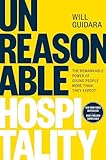
Guidara's account of building Eleven Madison Park into a world-leading restaurant through radical hospitality is one of the most inspiring and practically useful business books in years — the central insight that making people feel cared for is a competitive differentiator applies far beyond restaurants.
What We Loved
- The 'unreasonable hospitality' concept has genuine cross-industry applicability
- Guidara's narrative is compelling — the restaurant story is fascinating in its own right
- Practical frameworks emerge naturally from the stories rather than being imposed
- The emotional honesty about failure and partnership is rare in business memoirs
Minor Drawbacks
- The fine dining context can make some examples feel inaccessible
- Some readers may want more structured frameworks and less narrative
- The Eleven Madison Park story is unusual enough that translation requires effort
Key Takeaways
- → Hospitality is about making people feel seen, not merely served
- → Excellence in technical execution is the floor, not the ceiling
- → The moments people remember are almost never the expected elements
- → Unreasonable gestures — deeply personal, seemingly excessive — create permanent loyalty
- → Culture is built through stories, and leaders create the stories that become culture
| Author | Will Guidara |
|---|---|
| Publisher | Penguin Business |
| Pages | 288 |
| Published | October 25, 2022 |
| Language | English |
| Genre | Business, Leadership, Memoir |
| Difficulty | Beginner |
| Best For | Business leaders, entrepreneurs, hospitality professionals, and anyone responsible for customer experience who wants to understand what radical care looks like in practice. |
How Unreasonable Hospitality Compares
Unreasonable Hospitality at a glance against 3 similar books readers weigh alongside it.
| Book | Author | Rating | Best for |
|---|---|---|---|
| Unreasonable Hospitality (this book) | Will Guidara | ★ 4.6 | Business leaders, entrepreneurs, hospitality professionals, and anyone |
| $100M Offers | Alex Hormozi | ★ 4.6 | Entrepreneurs, small business owners, and sales professionals looking to |
| Setting the Table | Danny Meyer | ★ 4.3 | Entrepreneurs, leaders, and anyone in service or hospitality seeking a warm, |
| The Culture Code | Daniel Coyle | ★ 4.3 | Non-Fiction |
From Table 10 to Number One
When Will Guidara became co-owner of Eleven Madison Park in 2006 alongside chef Daniel Humm, the restaurant was a technically accomplished but emotionally cold three-star establishment that no one was talking about. By 2017, it had been named the World’s Best Restaurant by a prestigious industry panel. The difference, Guidara argues, was not the food — the food was already excellent. The difference was hospitality.
Unreasonable Hospitality is built around a central distinction that is simple to state and genuinely difficult to execute: service is a technical act (delivering the right dish at the right time with the right technique), while hospitality is an emotional act (making people feel that you care about them specifically). The best restaurants in the world are technically perfect. What makes them transcendent is hospitality.
The Stories That Define the Concept
Guidara’s narrative is built around specific, memorable instances of unreasonable hospitality: a table of Danish tourists who mentioned offhand that they’d never had a New York street hot dog, and Guidara sending a runner out mid-dinner service to procure four dirty-water dogs that arrived as a course. A woman celebrating a milestone who had always dreamed of dining at a specific restaurant now closed — Guidara tracked down the recipes, consulted the original chef, and recreated the dishes for her table.
These gestures were unreasonable in the sense of exceeding any rational cost-benefit calculation. They were also the moments that guests described for years afterward, that generated the word-of-mouth and loyalty that no Michelin star can produce by itself.
The Organizational Implications
Guidara’s book is not merely a restaurant memoir — it’s a serious argument about how organizations create culture and how leaders enable the kind of initiative that unreasonable hospitality requires. The EMP story involves a deliberate investment in “dreamweaver” team members whose job was to research guests and identify opportunities for personalization, a recognition that excellence requires specific systems, not just good intentions.
The chapter on his partnership with Humm — built on mutual respect, clear role division, and honest conflict — is among the most valuable in any business memoir about co-leadership.
Applicable Everywhere
The book ends with a direct argument for applying unreasonable hospitality outside restaurants — in healthcare, in retail, in professional services, in any context where another person’s experience is in your hands. That argument is persuasive because Guidara has earned it through 300 pages of specific evidence.
Guidara, Humm, and the Eleven Madison Park Story
To understand the book it helps to understand the institution at its center. Eleven Madison Park, housed in a grand art deco space off Madison Square Park in New York, was already a respected restaurant when Will Guidara and chef Daniel Humm took it over, but it was, in Guidara’s telling, a place that impressed without moving anyone. Their decade-long campaign to change that culminated in extraordinary recognition: four stars from The New York Times, three Michelin stars, and in 2017 the top position on the influential World’s 50 Best Restaurants list. Guidara grew up in the restaurant world — his father was a notable figure in the hospitality industry — and that inheritance runs through the book, which is as much a love letter to the craft of service as it is a business argument.
The partnership with Humm is one of the book’s richest threads, and Guidara is unusually candid about both its strength and its eventual dissolution. The two men split after years of acclaimed collaboration, and while the book is generous rather than score-settling, that real-world ending lends a poignancy to the chapters on co-leadership. Unreasonable Hospitality is, in this sense, a memoir of a remarkable working relationship as much as a manual, and its honesty about the difficulty of sustaining creative partnership is part of what distinguishes it from glossier business books.
Why the Book Resonated Beyond Restaurants
Unreasonable Hospitality became a genuine business-world phenomenon, widely passed around in industries far removed from fine dining — embraced by leaders in healthcare, technology, retail, and professional services. Its central reframing has clear ancestors in the broader literature of customer experience and service culture, but Guidara’s contribution is to make the case through narrative rather than abstraction. Where many business books offer frameworks first and examples second, his method is the reverse: the principles emerge from vivid, specific stories, which makes them stick. The much-repeated hot dog anecdote has become a kind of parable in management circles precisely because it dramatises an idea that a bullet point could never make memorable.
The book also taps a wider cultural appetite for the world of elite restaurants, fed by television and documentary in recent years, and Guidara uses that fascination as a doorway into a more universal argument about care and attention. The risk, which the book mostly avoids, is that the rarefied setting could make its lessons feel inapplicable; Guidara works hard to translate, repeatedly pointing past the white tablecloths to the underlying human transaction.
Who Should Read It
This is a book for leaders and anyone whose work places another person’s experience in their hands — managers, entrepreneurs, founders, and frontline service professionals alike. Readers who respond to story-driven business writing and want inspiration grounded in concrete practice will find it among the most engaging titles of its kind. Those who prefer dense frameworks, data, and step-by-step operational systems may wish for more structure and less narrative, and will need to do some of the translation work themselves to apply its lessons to a non-restaurant context. Approached as both an absorbing memoir of an exceptional restaurant and a persuasive case for treating care as a competitive advantage, it more than rewards the time.
Our rating: 4.6/5 — A brilliant and moving business narrative built on the insight that making people feel genuinely cared for is the most durable competitive advantage available.
Frequently Asked Questions
What is "Unreasonable Hospitality" about?
The former co-owner of Eleven Madison Park recounts how an obsessive commitment to making guests feel seen and celebrated transformed a failing restaurant into the best in the world.
Who should read "Unreasonable Hospitality"?
Business leaders, entrepreneurs, hospitality professionals, and anyone responsible for customer experience who wants to understand what radical care looks like in practice.
What are the key takeaways from "Unreasonable Hospitality"?
Hospitality is about making people feel seen, not merely served Excellence in technical execution is the floor, not the ceiling The moments people remember are almost never the expected elements Unreasonable gestures — deeply personal, seemingly excessive — create permanent loyalty Culture is built through stories, and leaders create the stories that become culture
Is "Unreasonable Hospitality" worth reading?
Guidara's account of building Eleven Madison Park into a world-leading restaurant through radical hospitality is one of the most inspiring and practically useful business books in years — the central insight that making people feel cared for is a competitive differentiator applies far beyond restaurants.
Ready to Read Unreasonable Hospitality?
Check the current price on Amazon.
Check Price on Amazon (paid link)Prices and availability are subject to change. See Amazon for current price.
Review last updated: