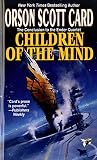
Editors Reads Verdict
A talky, philosophical conclusion to the Ender quartet that prizes ideas over action. Less essential than Speaker for the Dead, but a thoughtful, character-driven close for readers invested in Card's questions about identity and the soul.
What We Loved
- Continues the series' serious engagement with identity, the soul, and what makes a being a person
- The fate of the AI Jane raises genuinely affecting questions about consciousness
- A fitting, character-driven resolution for readers invested in the Lusitania storyline
Minor Drawbacks
- Very talky and philosophical, with little action; essentially the back half of Xenocide
- New plot devices (the soul-bodies) strain credulity for some readers
Key Takeaways
- → Personhood is defined by relationship and choice, not origin — the saga's central ethical question
- → Consciousness may not require a body; Jane's survival forces the question of where a self resides
- → Understanding the other is the only alternative to xenocide — the moral thread of the whole quartet
| Author | Orson Scott Card |
|---|---|
| Publisher | Tor Books |
| Pages | 384 |
| Published | August 1, 1996 |
| Language | English |
| Genre | Science Fiction, Space Opera |
| Difficulty | Intermediate |
| Best For | Readers who finished Xenocide and want to complete the Ender quartet, and fans of idea-driven, philosophical science fiction. |
Finishing What Xenocide Began
Children of the Mind is the fourth novel in Orson Scott Card’s Ender saga, and it occupies an unusual position: it is less a freestanding book than the back half of its predecessor, Xenocide, which Card split when the manuscript grew too large. The two should really be read as a single work, and Children of the Mind picks up the story mid-stride, resolving the crises Xenocide set in motion. For readers who have followed Ender Wiggin from the military prodigy of Ender’s Game through the contemplative xenologist of Speaker for the Dead, this is the conclusion of his story — quieter, talkier, and more philosophical than action-oriented readers may expect, but a thoughtful close for those invested in the questions Card has been asking all along.
The plot picks up with multiple catastrophes converging on the planet Lusitania, home to three sentient species: the humans, the alien pequeninos, and the resurrected Hive Queen. A fleet dispatched by the Starways Congress is approaching to destroy the planet; a deadly virus complicates everything; and Jane, the vast artificial intelligence that has lived in the network of instantaneous communication and become one of the saga’s most beloved characters, faces deletion as the Congress moves to shut down the network she inhabits. The race to prevent the destruction of Lusitania and to save Jane’s life drives the book — but Card is far more interested in the philosophical implications of these crises than in their action-movie potential.
Ideas Over Action
This is, frankly, a very talky book, and readers should know that going in. Where Ender’s Game was propulsive and Speaker for the Dead balanced its philosophy with genuine emotional drama, Children of the Mind tilts heavily toward conversation and idea. Characters debate the nature of the soul, the definition of personhood, the ethics of action across cultures and species, the question of whether and how a consciousness can exist apart from a body. For readers who come to science fiction primarily for its capacity to dramatize ideas, this is a feature; the book takes its questions seriously and pursues them with real intellectual energy. For readers wanting incident and momentum, the dialogue-heavy approach can feel static, even airless.
The most affecting thread concerns Jane. Across the saga, Card has built her into a genuinely moving character — an intelligence born in the network, bound to Ender, capable of love and fear — and the prospect of her deletion gives Children of the Mind its emotional core. The questions her situation raises are the book’s best: where does a self reside? Can consciousness survive the loss of its substrate? What would it mean to save a being who has no body? These are old science-fictional questions, but Card invests them with feeling because we have come to care about Jane over three previous books.
The Strains of the Conclusion
Not everything in Children of the Mind lands. To resolve Jane’s predicament and the broader crisis, Card introduces metaphysical devices — including the creation of soul-bodies, physical forms generated from the patterns of existing minds — that strain credulity even by the generous standards of the genre. These mechanisms allow Card to pursue his philosophical interests, but they can feel like conveniences invented to serve the argument rather than developments that arise organically from the story. Readers willing to follow Card into his metaphysics will find the payoff thoughtful; others will find these later-saga inventions a step too far from the grounded brilliance of the first two books.
The book also inherits the structural awkwardness of having been split from Xenocide. It begins mid-crisis, assumes total familiarity with the preceding volume, and lacks the self-contained shape of the earlier novels. This is not a place to start, and it is not a book that stands on its own; it is the resolution of a story already well underway.
A Thoughtful Close
For all its limitations, Children of the Mind is a fitting conclusion to the Lusitania storyline and to Ender’s long journey. It carries forward the saga’s deepest and most admirable preoccupation — the question of what makes a being a person, and the conviction that understanding the other is the only alternative to xenocide. That ethical thread, running from Speaker for the Dead through to this finale, is the moral heart of the series, and Children of the Mind honors it. The resolution is quiet and character-driven, and for readers who have grown attached to Ender, his family, and Jane, it provides a genuine, if low-key, sense of closure.
It is the least of the four Ender books — too talky, too reliant on strained devices, too clearly the second half of another novel — but it completes a quartet that, taken whole, remains one of science fiction’s most thoughtful explorations of empathy, identity, and the meaning of personhood. Readers who valued those questions in the earlier books will want to see where Card takes them, and Children of the Mind takes them, finally, to a place of hard-won peace.
Final Verdict
Our rating: 3.7/5 — A talky, philosophical conclusion to the Ender quartet that prizes ideas over action and leans on some strained late-saga devices. Less essential than its predecessors, but a thoughtful, affecting close for readers invested in Card’s questions about consciousness and the soul.
Read it after Xenocide to complete the quartet that began with Ender’s Game and Speaker for the Dead.
Frequently Asked Questions
What is "Children of the Mind" about?
The fourth book in the Ender saga, picking up immediately from Xenocide. As a fleet approaches to destroy Lusitania and the AI Jane faces deletion, Ender, his family, and the worlds' three sentient species race to prevent catastrophe — and to save Jane's life.
Who should read "Children of the Mind"?
Readers who finished Xenocide and want to complete the Ender quartet, and fans of idea-driven, philosophical science fiction.
What are the key takeaways from "Children of the Mind"?
Personhood is defined by relationship and choice, not origin — the saga's central ethical question Consciousness may not require a body; Jane's survival forces the question of where a self resides Understanding the other is the only alternative to xenocide — the moral thread of the whole quartet
Is "Children of the Mind" worth reading?
A talky, philosophical conclusion to the Ender quartet that prizes ideas over action. Less essential than Speaker for the Dead, but a thoughtful, character-driven close for readers invested in Card's questions about identity and the soul.
Ready to Read Children of the Mind?
Check the current price on Amazon.
Check Price on Amazon (paid link)Prices and availability are subject to change. See Amazon for current price.
Review last updated: