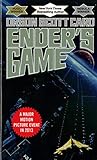
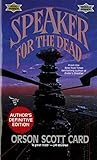
Orson Scott Card is an American science fiction author whose novel Ender's Game and its companion Speaker for the Dead are considered classics of the genre, despite controversy over his personal views.
Orson Scott Card began his career writing Mormon-inflected fiction before achieving mainstream success with Ender’s Game, published as a novel in 1985 after a shorter version appeared in Analog in 1977. The book follows Andrew “Ender” Wiggin, a child prodigy selected and trained in ruthless isolation to command humanity’s defense against an alien species called the Formics. The novel remains one of the most beloved science fiction novels of the twentieth century, widely assigned in schools and military academies, and praised for its psychological depth and its examination of the ethics of violence and manipulation.
Speaker for the Dead (1986), set 3,000 years after Ender’s Game, is a different kind of book entirely — quieter, more philosophical, focused on understanding rather than combat. Ender arrives on a colony world where humanity is struggling to comprehend a newly discovered alien species without repeating the genocide of the first war. Many readers and critics consider it the superior novel: more ambitious in its moral imagination and more fully realized as fiction. Card himself has said it is the book he always intended to write, with Ender’s Game as necessary prequel.
Card’s public advocacy of anti-gay positions has led to significant controversy and a boycott campaign around the Ender’s Game film adaptation. Readers must weigh that context as they choose. As works of science fiction, however, both Ender’s Game and Speaker for the Dead remain significant achievements — morally serious, structurally inventive, and genuinely moving in ways that few genre novels manage.
Reading Guides