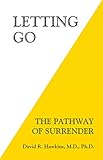
Editors Reads Verdict
Letting Go is one of the most practically effective books in the self-help genre — Hawkins's surrender technique for releasing negative emotions has helped millions move through fear, grief, and anger more quickly than traditional approaches.
What We Loved
- The surrender technique is genuinely effective and immediately applicable
- Hawkins applies the method systematically to every major life area
- More psychologically sophisticated than most books on emotional regulation
- The calibration scale provides a useful map of emotional development
Minor Drawbacks
- Hawkins's claims about consciousness calibration lack scientific validation
- The later chapters on mystical states are less practically grounded
- Some readers find the repetition across chapters frustrating
Key Takeaways
- → Suppression and expression are both less effective than surrender for processing negative emotions
- → Resistance to an emotion is what maintains it — allowing a feeling to be present without resistance dissolves it
- → The technique: notice the feeling, allow it fully, stay with it without trying to change it
- → Every negative emotion has a counterpart positive emotion that becomes available when the negative releases
- → Consistent practice of the surrender technique produces cumulative increases in baseline wellbeing
| Author | David R. Hawkins |
|---|---|
| Publisher | Hay House |
| Pages | 312 |
| Published | September 18, 2012 |
| Language | English |
| Genre | Self-Help, Spirituality |
| Difficulty | Intermediate |
| Best For | Readers seeking practical tools for emotional regulation and healing — particularly those who have found that suppressing or analysing emotions provides limited relief. |
How Letting Go Compares
Letting Go at a glance against 3 similar books readers weigh alongside it.
| Book | Author | Rating | Best for |
|---|---|---|---|
| Letting Go (this book) | David R. Hawkins | ★ 4.5 | Readers seeking practical tools for emotional regulation and healing — |
| Ask and It Is Given | Esther Hicks and Jerry Hicks | ★ 4.2 | Readers drawn to spiritual self-help, the law of attraction, and emotional |
| The Seat of the Soul | Gary Zukav | ★ 4.3 | Spiritually oriented readers interested in a serious, intellectually structured |
| You Can Heal Your Life | Louise Hay | ★ 4.3 | Readers open to a mind-body-spirit framework who are seeking tools for |
The Core Technique
David Hawkins spent decades as a psychiatrist before developing the framework he presents in Letting Go. The central technique is simple enough to describe in a few sentences: when a negative emotion arises, allow it to be fully present without trying to suppress it, escape from it, or express it externally. Stay with the feeling itself rather than the thoughts about the feeling. Allow it fully, and it will release on its own.
This is the surrender technique, and it runs counter to much conventional emotional wisdom. Hawkins identifies three habitual ways we deal with feelings — suppression (pushing them down), expression (venting them outward), and escape (numbing or distracting ourselves) — and argues that all three keep the emotional energy alive in the system. Suppression drives it underground, expression reinforces and rehearses it, and escape merely defers it. Surrender is a fourth option: instead of doing anything about the feeling, you let it run its course untouched, and it completes and dissolves of its own accord. The mechanism, in Hawkins’s account, is that resistance is what sustains an emotion; remove the resistance and the feeling has nothing to hold onto.
The Psychological Basis
Hawkins’s framework has roots in his clinical experience. He observed that patients who learned to allow rather than fight their emotional states improved more rapidly than those who struggled against them. The technique is consistent with contemporary acceptance-based therapies — Acceptance and Commitment Therapy (ACT), in particular — though Hawkins developed it within a spiritual rather than a cognitive-behavioural framework.
The Map of Consciousness
The book is structured around Hawkins’s Map of Consciousness — a hierarchy of emotional and spiritual states from shame and guilt at the bottom, through fear, anger, and pride, into courage, neutrality, willingness, and acceptance, up to reason, love, joy, and peace. Hawkins assigns each level a numerical “calibration” on a logarithmic scale from 0 to 1,000, with the level of Courage at 200 marking the crucial threshold where life energy turns from draining and self-defeating to constructive and life-affirming. As a felt map of emotional development — a way of recognising that anger is genuinely “higher” and more empowered than apathy or grief, and that one can climb the scale by surrendering each level in turn — it is intuitively useful. The specific numbers, however, should be taken as metaphor, not measurement.
The Pseudoscience Problem
Here lies the book’s central liability, and readers should be clear-eyed about it. Hawkins claimed to have derived his calibrations through “applied kinesiology” — muscle-testing, in which a person’s arm strength supposedly reveals the truth or “energy level” of a statement — a method with no scientific validity whatsoever. His broader talk of emotions broadcasting through “vibrational energy” sits uncomfortably close to the magical thinking of The Secret, and his reasoning frequently overgeneralises and confuses correlation with cause. The grandiose framework of Power vs. Force, his better-known earlier book, looms behind this one. A discerning reader has to separate the genuinely useful core — emotional acceptance — from a great deal of unsupported metaphysical scaffolding.
Practising the Method
The technique’s appeal is that it requires no special equipment, belief, or setting — only a willingness to feel. In practice, when an uncomfortable emotion arises, you turn your attention away from the story your mind is spinning about it (“this shouldn’t be happening,” “they were wrong to do that”) and toward the raw bodily sensation of the feeling itself — the tightness in the chest, the heat, the heaviness. You let it be exactly as strong as it is, neither amplifying it with thought nor pushing it away, and you stay with it. Often the feeling intensifies briefly and then, surprisingly, eases and lifts as the underlying charge releases. Hawkins describes peeling away successive layers this way — a wave of grief giving way to a deeper anger, which gives way to fear, which finally gives way to a quiet acceptance. One honest limitation critics raise is that the book is light on concrete, step-by-step exercises and tends to repeat its central idea across chapters rather than building a structured program; readers wanting a workbook will need to supply their own discipline. But the simplicity is also the point: there is genuinely not much to it beyond the willingness to stop resisting.
The Application
Hawkins applies the surrender technique to every major life domain: relationships, health, finances, career, grief, fear. The systematism is one of the book’s strengths — it demonstrates that the same basic approach applies across all forms of suffering.
Verdict
What rescues Letting Go from its dubious science is that the central practice genuinely works for a great many people. Stripped of the calibrations and muscle-testing, the surrender technique is a close cousin of the acceptance-based methods at the heart of evidence-supported therapies like Acceptance and Commitment Therapy: stop fighting the feeling, let it be fully present, and watch it lose its grip. Hawkins — a practising psychiatrist for decades before he became a spiritual teacher, who died in 2012 the same year this book appeared — writes about “unattractive” emotions with a clinical calm that normalises them rather than pathologising them, and many readers report real, lasting relief from practising what he describes. The honest approach is to take the method and leave the metaphysics. On that basis, the surrender technique alone justifies the read.
Our rating: 4.5/5 — One of the most practically effective books on emotional healing: take the surrender technique, leave the pseudoscience.
Frequently Asked Questions
What is "Letting Go" about?
Dr. David Hawkins presents a method for releasing the suppressed emotions and negative energies that underlie illness, distress, and limitation — enabling progressive liberation from internal suffering.
Who should read "Letting Go"?
Readers seeking practical tools for emotional regulation and healing — particularly those who have found that suppressing or analysing emotions provides limited relief.
What are the key takeaways from "Letting Go"?
Suppression and expression are both less effective than surrender for processing negative emotions Resistance to an emotion is what maintains it — allowing a feeling to be present without resistance dissolves it The technique: notice the feeling, allow it fully, stay with it without trying to change it Every negative emotion has a counterpart positive emotion that becomes available when the negative releases Consistent practice of the surrender technique produces cumulative increases in baseline wellbeing
Is "Letting Go" worth reading?
Letting Go is one of the most practically effective books in the self-help genre — Hawkins's surrender technique for releasing negative emotions has helped millions move through fear, grief, and anger more quickly than traditional approaches.
Ready to Read Letting Go?
Check the current price on Amazon.
Check Price on Amazon (paid link)Prices and availability are subject to change. See Amazon for current price.
Review last updated: