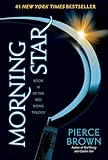
Editors Reads Verdict
Morning Star closes the original Red Rising trilogy with the emotional payoff of everything Brown has been building: high stakes, devastating losses, and a protagonist whose psychology has been permanently altered by everything he has done and sacrificed. The revolution's costs and achievements are given equal weight.
What We Loved
- The emotional costs of revolution are rendered without sentimentality or evasion
- Characters who have developed across three books receive genuinely satisfying resolutions
- Brown's writing is at its most confident and assured here
- The scale of the final conflict is matched by its emotional stakes
Minor Drawbacks
- The pacing in the early recovery sections is slow after the intense ending of Golden Son
- Some major character deaths may feel abrupt given their importance
- The resolution has elements that strain plausibility even for a space opera
Key Takeaways
- → Revolution changes the revolutionaries as fundamentally as it changes the society being transformed
- → Freedom achieved through violence creates obligations that cannot be discharged by celebration alone
- → Leadership in crisis requires accepting the deaths of people who trusted you
- → The story a rebellion tells about itself shapes what kind of society it can build afterward
- → Some personal debts can never be fully repaid, and living with that is part of surviving
| Author | Pierce Brown |
|---|---|
| Publisher | Del Rey Books |
| Pages | 544 |
| Published | February 9, 2016 |
| Language | English |
| Genre | Science Fiction, Dystopian Fiction, Fiction |
| Difficulty | Intermediate |
| Best For | Readers who have completed the first two volumes; fans of epic science fiction trilogy conclusions; anyone following the Red Rising saga. |
How Morning Star Compares
Morning Star at a glance against 3 similar books readers weigh alongside it.
| Book | Author | Rating | Best for |
|---|---|---|---|
| Morning Star (this book) | Pierce Brown | ★ 4.6 | Readers who have completed the first two volumes |
| Ender's Game | Orson Scott Card | ★ 4.7 | Science fiction readers from teenage years upward, fans of military fiction who |
| Golden Son | Pierce Brown | ★ 4.5 | Readers who have completed Red Rising |
| Red Rising | Pierce Brown | ★ 4.5 | Fans of dystopian fiction ready for something more complex than YA fare |
The Revolution, Finally
Morning Star begins with Darrow broken — not metaphorically, but literally captured, isolated, and worn down by months of imprisonment designed to strip away the myth of Darrow the conqueror. Pierce Brown is deliberate about this starting point: the revolution cannot simply proceed from Golden Son’s catastrophic ending without acknowledging what that ending cost. Darrow must be rebuilt before he can rebuild anything else.
The novel’s first act — Darrow’s extraction, recovery, and the reconstitution of both his physical capability and his psychological identity — is slower than what follows but earns the eventual scale of the final conflict by establishing exactly what has been lost and what remains.
The Weight of Leadership
Where Red Rising was a coming-of-age story and Golden Son a political chess game, Morning Star is a novel about what leadership costs. Darrow commands forces that trust him with their lives; his decisions about how to use them carry the weight of actual consequences. Brown doesn’t let victories arrive unaccompanied by losses, and the deaths that punctuate the final volume have been prepared for across three books.
This is where the series’ emotional investment pays off most fully. Characters who have been developed since the first pages — Sevro, Mustang, Roque — arrive at their endings with the weight of everything that preceded them.
Revolution’s Ambiguity
Brown is careful about the nature of the victory Darrow achieves. The revolution succeeds in dismantling the Society, but Brown has set up enough within the narrative to suggest that what follows victory will be at least as difficult as achieving it. The final pages acknowledge this without undermining the emotional satisfaction of the conclusion.
The original trilogy ends having made a genuine argument about what freedom costs and what makes it worth having — a more substantive accomplishment than most science fiction trilogies attempt.
From Broken Man to Reaper
The arc from the novel’s opening — Darrow caged, starved, and stripped of the legend that sustained him — to its climactic battles is the trilogy’s most satisfying transformation. Brown refuses to let his hero bounce back unscathed; the Darrow who eventually leads the Rising is harder, warier, and more haunted than the boy of Red Rising, carrying the dead with him into every decision. When the action finally detonates, it does so on a staggering scale: fleet engagements across the solar system, the brutal spectacle of an Iron Rain assault, the reaping of a civilization’s elite. Brown writes these set pieces with a propulsive, cinematic confidence that few in the genre match, but he never lets the spectacle float free of consequence. Every triumph is paid for, and the reader feels the price.
The Costs Made Flesh
What separates Morning Star from louder, emptier space operas is its willingness to make victory hurt. The bonds forged across three books — Darrow’s brotherhood with the savage, beloved Sevro; his fraught love for Mustang; his tangled history with Cassius and Roque — all reach their reckonings here, and Brown does not flinch from sacrifice. Major characters die, some abruptly, and the losses land with real weight precisely because they were so carefully built. The trilogy’s hardest lesson — that leadership in war means accepting the deaths of people who trusted you, and living with debts that can never be repaid — is dramatized rather than stated. This is the emotional dividend of three books of investment, and it pays out fully.
Brown’s Coming of Age as a Writer
Morning Star is also the book where Pierce Brown’s craft fully matures. The breathless, sometimes overheated prose of the debut has been disciplined into something more controlled and more affecting, capable of modulating between battlefield chaos and genuine intimacy without losing its momentum. Brown handles a sprawling cast and a solar-system-spanning conflict with a command that the earlier volumes only promised, weaving political intrigue, military strategy, and personal grief into a single propulsive narrative. The trilogy began with clear young-adult DNA — a gifted everyman, a brutal academy, a clear oppressor — and by this third volume it has grown into full-blooded adult science fiction, its concerns darker and its emotional palette far wider. That growth mirrors Darrow’s own, and it is part of why so many readers point to Morning Star as the moment the series announced itself as something major.
Why It Resonates
Beneath the spectacle, the trilogy makes a serious argument that this finale brings home: that revolutions transform the revolutionaries as profoundly as the societies they overthrow, and that freedom won through violence carries obligations a victory celebration cannot discharge. Darrow’s reckoning with the people he has used, lost, and sacrificed gives the space opera a moral weight that lingers well past the last page. It is this insistence on consequence — on the idea that the story a rebellion tells about itself shapes the world it can build afterward — that lifts Red Rising above the many derivative dystopias it is often shelved beside. The trilogy entertains ferociously, but it also means something, and Morning Star is where the meaning and the entertainment finally become one.
A Conclusion That Opens a Door
Crucially, Brown resists the temptation of a clean, triumphant ending. The Society is broken, but the novel’s final movement makes clear that building something just from the wreckage will be harder and messier than tearing the old order down — a note of mature ambiguity that elevates the whole trilogy and seeds the darker second arc that begins with Iron Gold. The flaws are real: the recovery-focused opening drags after the breakneck cliffhanger of Golden Son, a few resolutions strain plausibility even by space-opera standards, and one or two deaths feel rushed. But these are minor against the achievement. Morning Star delivers the catharsis a revolution narrative promises while honoring the cost, and it closes the original Red Rising trilogy as one of the most emotionally and dramatically satisfying conclusions in modern science fiction.
Our rating: 4.6/5 — A fitting, emotionally honest conclusion to one of science fiction’s finest recent trilogies, giving its characters endings proportional to the investment of three extraordinary books.
Reading Guides
Frequently Asked Questions
What is "Morning Star" about?
Darrow must rebuild the revolution from almost nothing, rallying allies across the solar system for a final war to dismantle the Society and free the color castes from oppression.
Who should read "Morning Star"?
Readers who have completed the first two volumes; fans of epic science fiction trilogy conclusions; anyone following the Red Rising saga.
What are the key takeaways from "Morning Star"?
Revolution changes the revolutionaries as fundamentally as it changes the society being transformed Freedom achieved through violence creates obligations that cannot be discharged by celebration alone Leadership in crisis requires accepting the deaths of people who trusted you The story a rebellion tells about itself shapes what kind of society it can build afterward Some personal debts can never be fully repaid, and living with that is part of surviving
Is "Morning Star" worth reading?
Morning Star closes the original Red Rising trilogy with the emotional payoff of everything Brown has been building: high stakes, devastating losses, and a protagonist whose psychology has been permanently altered by everything he has done and sacrificed. The revolution's costs and achievements are given equal weight.
Ready to Read Morning Star?
Check the current price on Amazon.
Check Price on Amazon (paid link)Prices and availability are subject to change. See Amazon for current price.
Review last updated: