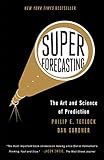
Editors Reads Verdict
A rigorous, revelatory book about the nature of prediction and the thinking habits that make some people significantly better at it. Tetlock's research is among the most important work in applied epistemology of the past twenty years.
What We Loved
- Based on genuine scientific research — the Good Judgement Project is one of the most robust studies of prediction ever conducted
- The portrait of superforecaster thinking habits is practically actionable
- Cuts through the mythology of expert prediction with empirical evidence
- The concept of Brier scores gives prediction a measurable quality that most forecasting discussions lack
Minor Drawbacks
- Some readers find the academic underpinnings slow the narrative in the middle sections
- The prescriptions for becoming a better forecaster are clear but require sustained practice — not a quick fix
- The focus on geopolitical forecasting means the lessons need active translation into business or personal contexts
Key Takeaways
- → Most expert pundits are no better at prediction than chance — and many are worse than algorithms
- → Superforecasters are characterised by intellectual humility, probabilistic thinking, and willingness to update beliefs
- → Good forecasting requires expressing predictions as specific probabilities, not vague directional claims
- → Updating your beliefs when new evidence arrives is a skill that can be practised and improved
- → The 'outside view' — base rates and reference classes — systematically outperforms 'inside view' reasoning from specifics
| Author | Philip E. Tetlock & Dan Gardner |
|---|---|
| Publisher | Crown Publishers |
| Pages | 352 |
| Published | September 29, 2015 |
| Language | English |
| Genre | Decision-Making, Psychology, Science |
| Difficulty | Intermediate |
| Best For | Analysts, strategists, executives, and anyone who makes predictions professionally or wants to improve their calibration — particularly useful for organisations that need to move from gut-based to evidence-based forecasting. |
How Superforecasting Compares
Superforecasting at a glance against 3 similar books readers weigh alongside it.
| Book | Author | Rating | Best for |
|---|---|---|---|
| Superforecasting (this book) | Philip E. Tetlock & Dan Gardner | ★ 4.4 | Analysts, strategists, executives, and anyone who makes predictions |
| The Undoing Project | Michael Lewis | ★ 4.3 | Readers interested in psychology, behavioral economics, the history of ideas, |
| Thinking, Fast and Slow | Daniel Kahneman | ★ 4.6 | Investors, doctors, lawyers, managers, policymakers, and any curious person who |
| Thinking in Bets | Annie Duke | ★ 4.3 | Business leaders, managers, and anyone who makes decisions under uncertainty |
Philip Tetlock’s first major book, Expert Political Judgment (2005), established one of the most uncomfortable findings in social science: expert forecasters — political scientists, economists, intelligence analysts — are, on average, no more accurate than dart-throwing chimpanzees when predicting complex world events. The experts who appeared most confident and were most sought after by media and government were often the least accurate. Superforecasting, written with science journalist Dan Gardner, describes what Tetlock discovered when he ran a follow-up study — a massive forecasting tournament called the Good Judgement Project — and found that a subset of ordinary people consistently outperformed professional intelligence analysts, even those with access to classified information.
These “superforecasters” were not especially educated or credentialed. What distinguished them was a set of thinking habits: they were actively open-minded rather than committed to a specific worldview; they sought out disconfirming evidence deliberately; they expressed their beliefs as specific probabilities rather than directional intuitions; they updated their forecasts readily when new information arrived; and they maintained a healthy scepticism about their own reasoning, what Tetlock calls “foxlike” thinking (drawing on Isaiah Berlin’s metaphor of the fox who knows many things vs. the hedgehog who knows one big thing deeply). The hedgehog experts — the ones with grand unified theories — were systematically worse forecasters than the foxes.
The practical framework Tetlock extracts from superforecaster behaviour is built around two concepts: the outside view and calibrated uncertainty. The outside view means starting any forecast by identifying the relevant reference class — how often does this type of event occur? — before adding case-specific details. This discipline resists the natural tendency to treat every situation as unique and to weight recent, vivid information too heavily. Calibrated uncertainty means expressing beliefs as percentages rather than categorical claims, and tracking those percentages against outcomes to measure your accuracy over time (via Brier scores). Forecasters who do this consistently improve; those who deal in vague confident assertions do not.
Superforecasting is more rigorous than most books in its genre and more empirically grounded than virtually any self-help adjacent title that makes claims about improving thinking. Tetlock’s research is genuinely consequential — it influenced how IARPA (the intelligence community’s research arm) and later several governments approach forecasting practice. The lessons transfer directly to business contexts where probabilistic forecasting about product launches, market conditions, or hiring decisions replaces gut-feel judgement. The most useful single habit the book teaches is deceptively simple: instead of saying “I think this will happen,” say “I think there’s a 65% chance this will happen,” and then check whether you were right 65% of the time across many such predictions.
Forecasting as a Trainable Skill
The most empowering claim in Superforecasting, and the one that distinguishes it from fatalistic accounts of human irrationality, is that accurate prediction is not an innate gift but a learnable skill that improves measurably with practice and the right habits of mind. This finding emerged directly from the Good Judgement Project, which did not merely identify superforecasters but demonstrated that ordinary people could be trained to forecast better through deliberate effort, feedback, and the cultivation of specific dispositions. Tetlock catalogues the practices that drive this improvement: breaking seemingly intractable questions into smaller, more tractable sub-questions; balancing the outside view of base rates against the inside view of case-specific detail; updating beliefs incrementally as evidence arrives rather than clinging to or wholesale abandoning prior positions; and, crucially, keeping score so that one can learn from being wrong. The implication is profound and optimistic. Where much popular psychology emphasises the inescapability of cognitive bias, Tetlock shows that with discipline and the willingness to track and confront one’s own errors, people can become genuinely better at anticipating an uncertain future. This reframing of forecasting from mysterious talent to teachable craft is the book’s central practical gift, and it transforms prediction from a spectator activity into something the motivated reader can actively cultivate.
The Psychology of Good Judgement
What makes the superforecasters effective, Tetlock argues, is less raw intelligence or subject expertise than a particular psychological profile, a constellation of attitudes and habits that together constitute good judgement. Chief among these is active open-mindedness, the genuine willingness to treat one’s own beliefs as hypotheses to be tested rather than possessions to be defended, and to seek out and seriously weigh information that contradicts one’s preferred conclusion. The best forecasters are intellectually humble, comfortable with uncertainty and nuance, and resistant to the seductive pull of grand, simplifying theories; in Isaiah Berlin’s terms borrowed by Tetlock, they are foxes who know many things rather than hedgehogs who know one big thing. They are curious, numerate, and reflective, inclined to think in degrees of probability rather than in black-and-white certainties, and willing to revise their views without either stubbornness or excessive volatility. Perhaps most importantly, they possess what Tetlock calls a growth mindset about forecasting itself, treating each prediction as an opportunity to learn and improve rather than as a test of their ego. This portrait of good judgement as a matter of temperament and habit, rather than credentials or confidence, quietly indicts the celebrity-pundit culture that rewards exactly the opposite traits, the confident hedgehogs with telegenic certainty and dismal track records.
Influence and Practical Application
The significance of Superforecasting extends well beyond its readership into the practical institutions of forecasting and decision-making, a rare achievement for a book of popular social science. Tetlock’s research, sponsored in part by the United States intelligence community, directly influenced how intelligence agencies, governments, and a growing number of businesses approach the problem of anticipating uncertain events, lending new credibility to disciplined, probabilistic, accountable forecasting over the vague pronouncements of experts. The book helped catalyse a broader movement toward measurement and rigour in domains where confident prediction had long gone unchecked, inspiring forecasting tournaments, calibration training, and a culture of keeping score that has spread into finance, strategy, and the rationalist community. Its practical lessons are eminently transferable: any organisation that makes consequential bets about the future, whether launching products, entering markets, or assessing risks, can apply the superforecasting habits of probabilistic reasoning, incremental updating, and honest tracking of outcomes to improve its decisions. The book’s enduring value lies in this combination of intellectual seriousness and actionable guidance. It does not merely describe why most predictions fail; it provides a tested, hopeful blueprint for predicting better, grounded in genuine research and validated by results, making it one of the most useful and credible books ever written on the subject of thinking clearly about an uncertain world.
Our rating: 4.4/5 — A rigorous, genuinely useful account of what separates the best forecasters from the rest, showing that disciplined, probabilistic, accountable prediction is a learnable skill rather than an innate gift.
Frequently Asked Questions
What is "Superforecasting" about?
Philip Tetlock's twenty-year research programme found that a small group of ordinary people — 'superforecasters' — consistently outperform intelligence analysts with access to classified information. This book explains what they do differently.
Who should read "Superforecasting"?
Analysts, strategists, executives, and anyone who makes predictions professionally or wants to improve their calibration — particularly useful for organisations that need to move from gut-based to evidence-based forecasting.
What are the key takeaways from "Superforecasting"?
Most expert pundits are no better at prediction than chance — and many are worse than algorithms Superforecasters are characterised by intellectual humility, probabilistic thinking, and willingness to update beliefs Good forecasting requires expressing predictions as specific probabilities, not vague directional claims Updating your beliefs when new evidence arrives is a skill that can be practised and improved The 'outside view' — base rates and reference classes — systematically outperforms 'inside view' reasoning from specifics
Is "Superforecasting" worth reading?
A rigorous, revelatory book about the nature of prediction and the thinking habits that make some people significantly better at it. Tetlock's research is among the most important work in applied epistemology of the past twenty years.
Ready to Read Superforecasting?
Check the current price on Amazon.
Check Price on Amazon (paid link)Prices and availability are subject to change. See Amazon for current price.
Review last updated: