Best Books About Decision-Making: Essential Reads on Thinking and Judgment
The best books about decision-making — from Thinking, Fast and Slow and Superforecasting to Nudge and The Righteous Mind. Essential reads on judgment and reason.
By Lena Fischer
Decision-making is at the centre of every consequential moment in personal and professional life — and the research of the past fifty years has established that human judgment is systematically flawed in predictable ways. The books listed here constitute the essential library on why we make the decisions we do, why we make mistakes, and what we can do to improve.
These books are united by the insight that good decision-making is a skill rather than a talent — one that can be learned and improved by understanding the cognitive mechanisms that produce systematic errors.
The Essential List
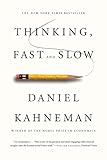
Thinking, Fast and Slow — Daniel Kahneman (2011)
The definitive account of human judgment and its systematic failures. Kahneman’s two-systems framework — System 1 (fast, automatic, intuitive) and System 2 (slow, deliberate, rational) — provides a unified theory of cognitive bias: anchoring, availability heuristic, loss aversion, optimism bias, and dozens of others. Kahneman won the Nobel Prize in Economics for research he conducted with Amos Tversky; this book synthesises a career’s worth of discoveries. The most important book about the human mind and its systematic failures.
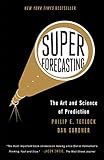
Superforecasting — Philip Tetlock and Dan Gardner (2015)
The most practically useful book about improving the accuracy of predictions. Tetlock’s decades of research established that expert forecasters are generally no more accurate than chance; his Good Judgment Project found that ordinary people with no special expertise could dramatically outperform professionals by applying specific cognitive practices. The book identifies these practices: thinking in probabilities, actively seeking disconfirming evidence, updating beliefs in response to new information, working in diverse teams, and tracking accuracy over time. The most empirically grounded guide to better thinking.
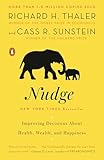
Nudge — Richard Thaler and Cass Sunstein (2008)
The founding text of ‘choice architecture’ — the idea that the way options are presented influences which option people choose, and that designing the right defaults can improve outcomes without restricting freedom. Thaler and Sunstein argue that institutional ‘nudges’ (opt-out rather than opt-in for pension schemes; healthier food placed at eye level in cafeterias) can significantly improve decisions at scale. The book inspired a generation of policy interventions and established behavioural economics as a tool of government.
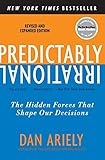
Predictably Irrational — Dan Ariely (2008)
Ariely’s accessible account of the systematic irrationalities in human behaviour — the anchoring effect of arbitrary numbers, the power of the word ‘free,’ the gap between stated and revealed preferences, the effect of social norms versus market norms. Each chapter describes an experiment and its implications; the book is written with wit and narrative clarity that makes it the most immediately engaging starting point in behavioural economics. Less rigorous than Kahneman but more readable.
The Righteous Mind — Jonathan Haidt (2012)
Haidt’s argument — that moral judgment is driven by intuition rather than reason, and that reason is primarily used to justify conclusions already reached — is one of the most important psychological insights of the past decade. The book explains why political and moral disagreements are so intractable (people are not reasoning to different conclusions; they are starting from different intuitive foundations) and what that means for the possibility of moral persuasion. Essential reading for anyone who wants to understand political polarisation.
Thinking in Bets — Annie Duke (2018)
Duke, a professional poker player and decision coach, argues that the quality of a decision should be judged by the quality of the process that produced it — not by the outcome, which is partly determined by chance. Good decisions can produce bad outcomes; bad decisions can produce good outcomes. The book teaches readers to separate decision quality from outcome quality, to think in probabilities, and to develop better feedback mechanisms for improving future decisions. The most practical of the books listed here.
Influence — Robert Cialdini (1984)
Cialdini’s account of the six principles of influence — reciprocity, commitment and consistency, social proof, authority, liking, and scarcity — remains the standard analysis of persuasion after four decades. The book is written from the perspective of a researcher who wanted to understand why he was so susceptible to salespeople; it is simultaneously a practical guide to recognising manipulation and a study of how these principles can be used ethically. Essential reading for anyone in sales, marketing, or negotiation.
The Art of Thinking Clearly — Rolf Dobelli (2013)
Dobelli’s guide to 99 cognitive biases — listed and explained concisely — is the most systematic catalogue of decision-making errors available. Each chapter is two to three pages; the book is designed to be dipped into rather than read cover to cover. Less analytically deep than Kahneman but more comprehensive as a reference guide to the specific biases that affect human judgment.
Process Over Outcome
The most important and counterintuitive lesson that the literature of decision-making teaches is the crucial distinction between the quality of a decision and the quality of its outcome — the recognition that a good decision can lead to a bad outcome and a bad decision to a good one, and that the path to better decisions lies in improving the process of deciding rather than in judging decisions solely by their results. We habitually evaluate decisions by their outcomes, praising those that turned out well and condemning those that turned out badly, but this outcome-based judgment, the literature reveals, is a profound error, for outcomes are influenced by chance and circumstance as well as by the quality of the decision, and a well-made decision can still lead to a poor result while a poorly-made decision can still succeed through luck. The path to better decision-making, therefore, lies not in judging decisions by their outcomes but in improving the process of deciding, the quality of thinking and judgment that goes into a decision, regardless of how any particular decision happens to turn out. This focus on process over outcome is liberating and clarifying, for it directs attention away from the uncontrollable element of chance and toward the controllable element of how decisions are made, and it allows for the genuine improvement of decision-making through the cultivation of better processes of thinking and judgment. The best books on decision-making teach this crucial distinction, helping the reader to evaluate and improve the quality of their decision-making process rather than judging decisions solely by their outcomes, and to recognize that the path to deciding well lies in the cultivation of sound processes of thought and judgment, regardless of the role that chance inevitably plays in determining results. This emphasis on process over outcome is among the most valuable lessons the literature offers, freeing the decision-maker from the error of outcome-based judgment and directing them toward the genuine improvement of how they think and decide.
Knowing When to Trust Your Gut
A central question that the literature of decision-making confronts, and one of practical importance to every decision-maker, is the proper relationship between intuition and analysis — the question of when to trust the rapid, instinctive judgments of the gut and when to rely instead on slow, deliberate analysis, and how to combine these two modes of thinking to decide well. Human beings possess two distinct ways of arriving at decisions: the fast, intuitive judgment that arises seemingly automatically, and the slow, deliberate analysis that weighs evidence and reasons toward a conclusion. Both have their value and their dangers, and the question of when to rely on each is among the most important in decision-making. Intuition can be remarkably effective in certain circumstances, particularly in domains where one has developed genuine expertise through long experience, and the rapid judgments of the trained gut can capture patterns and considerations that deliberate analysis might miss. But intuition can also mislead badly, particularly in unfamiliar situations, in matters where one lacks genuine expertise, or where the intuitive judgment is distorted by bias, and in these circumstances the slow work of deliberate analysis is essential. The literature of decision-making explores this complex relationship between intuition and analysis, helping the reader to understand when intuition can be trusted and when it must be checked by deliberate analysis, and how to combine the two modes of thinking to arrive at sound decisions. This guidance on the proper relationship between intuition and analysis is of great practical value, for it helps the decision-maker to know when to trust the gut and when to override it with deliberate reasoning, and to combine the strengths of both modes of thinking while guarding against their respective dangers. Knowing when to trust your gut and when to rely on analysis is among the most important practical skills in decision-making, and the literature offers valuable guidance on this crucial question.
Deciding Well Under Uncertainty
Perhaps the deepest challenge that the literature of decision-making addresses is the fundamental reality that important decisions must almost always be made under conditions of uncertainty — without complete information, without knowledge of the future, and without the ability to know in advance how things will turn out — and the literature offers valuable guidance on how to decide well despite this irreducible uncertainty. The decisions that matter most are precisely those made under uncertainty, where the relevant information is incomplete, the future is unknown, and the consequences of one’s choice cannot be foreseen with confidence, and the challenge of deciding well under such conditions is among the most important that any person faces. The literature of decision-making confronts this challenge directly, offering guidance on how to think clearly and decide soundly despite the irreducible uncertainty that surrounds important decisions. This guidance includes the importance of thinking in terms of probabilities rather than certainties, of weighing the likelihood and the magnitude of different possible outcomes rather than demanding a certainty that is unavailable; the value of considering multiple scenarios and preparing for a range of possibilities rather than betting everything on a single prediction; the wisdom of making decisions that are robust across different possible futures rather than optimal only if things turn out a particular way; and the recognition that, under uncertainty, even the best decisions carry risk, and the goal is to decide wisely in the face of the unknown rather than to achieve an impossible certainty. The literature’s guidance on deciding well under uncertainty is among its most valuable contributions, for it addresses the fundamental reality of important decision-making and offers practical wisdom for thinking clearly and choosing soundly despite the incomplete information and unknown future that surround every consequential decision. To decide well under uncertainty, accepting that certainty is unavailable while still thinking clearly and choosing wisely, is the deepest challenge of decision-making, and the literature offers valuable guidance for meeting it.
Why These Books
The research on human decision-making has produced one consistent finding: the human mind is not a rational calculating machine but a pattern-matching device optimised for speed in environments of uncertainty. The biases and heuristics that produce systematic errors in modern decision-making were adaptive in the environments in which they evolved. Understanding them does not eliminate them, but it enables us to design better decision-making processes — and to recognise, at least sometimes, when our intuitions are leading us astray.
Frequently Asked Questions
What is the best book about decision-making to start with?
Thinking, Fast and Slow (2011) by Daniel Kahneman is the essential starting point — the most comprehensive account of cognitive psychology and the systematic ways in which human judgment departs from rationality, written by the Nobel Prize-winning psychologist who discovered most of these departures. Predictably Irrational (2008) by Dan Ariely is the more accessible starting point — a series of experiments demonstrating the irrational patterns in human behaviour, written with wit and narrative clarity.
What is Thinking, Fast and Slow about?
Thinking, Fast and Slow (2011) by Daniel Kahneman describes two systems of thought: System 1 (fast, automatic, intuitive, prone to errors) and System 2 (slow, deliberate, effortful, capable of reasoning). Kahneman synthesises decades of research by himself and Amos Tversky on cognitive biases — anchoring, availability heuristic, loss aversion, optimism bias — and explains how these biases systematically distort human judgment in predictable ways. The book is the most complete account of human irrationality available and the foundation of behavioural economics.
What is Superforecasting about?
Superforecasting (2015) by Philip Tetlock and Dan Gardner reports on Tetlock's decades-long research into the accuracy of expert predictions and the Good Judgment Project, which found that ordinary people with no special expertise could outperform professional forecasters by applying a specific set of cognitive practices: thinking probabilistically, seeking out disconfirming evidence, updating beliefs in response to new information, and working in teams. The book is both a critique of expert overconfidence and a practical guide to improving the accuracy of forecasts.
What is The Righteous Mind about?
The Righteous Mind (2012) by Jonathan Haidt argues that human moral reasoning is primarily driven by intuition rather than reason — that we reach moral conclusions quickly and emotionally, and then use reason to justify what we already believe. Haidt identifies six 'moral foundations' (care, fairness, loyalty, authority, sanctity, and liberty) and argues that liberals and conservatives draw on different subsets of these foundations, which is why political disagreements are so intractable. The book is as much political psychology as moral philosophy and is the most influential recent account of the psychological roots of political division.