Editors Reads Verdict
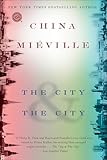
The City & The City is Miéville at his most disciplined: a tightly plotted noir detective novel whose central conceit — two cities sharing the same physical space, separated only by trained civic perception — functions simultaneously as a gripping mystery and one of contemporary fiction's most searching examinations of how ideology structures vision.
What We Loved
- The central conceit is one of speculative fiction's great recent ideas — fully realized and rigorously maintained
- The noir detective structure gives the philosophical premise propulsive narrative momentum
- Inspector Borlú is a compelling, well-drawn protagonist navigating an impossible situation
- The novel's ideas about perception and ideology resonate far beyond its fictional premise
Minor Drawbacks
- Readers expecting conventional fantasy world-building may be surprised by the novel's austerity
- The mystery plot's solution is less interesting than the conceit that surrounds it
- The nature of Breach remains deliberately opaque, which satisfies thematically but frustrates narratively
Key Takeaways
- → Perception is not passive — it is a trained, ideologically shaped, and politically enforced activity
- → The borders that matter most are the ones we maintain in our own minds
- → Noir fiction's pessimism about institutions mirrors political realism about power
- → The most effective social control operates through internalized norms rather than external enforcement
| Author | China Miéville |
|---|---|
| Publisher | Del Rey |
| Pages | 312 |
| Published | May 26, 2009 |
| Language | English |
| Genre | Fantasy, Science Fiction, Weird Fiction, Fiction |
| Difficulty | Advanced |
| Best For | Speculative fiction readers interested in ideas about perception, ideology, and social construction; noir detective fiction fans; readers who enjoyed Miéville's earlier work and want his most accessible novel. |
How The City & The City Compares
The City & The City at a glance against 3 similar books readers weigh alongside it.
| Book | Author | Rating | Best for |
|---|---|---|---|
| The City & The City (this book) | China Miéville | ★ 4.2 | Speculative fiction readers interested in ideas about perception, ideology, and |
| 1984 | George Orwell | ★ 4.7 | Every adult in a democracy |
| Annihilation | Jeff VanderMeer | ★ 3.9 | Readers drawn to literary horror and weird fiction, fans of Borges and Kafka, |
| Neuromancer | William Gibson | ★ 4.3 | Science fiction readers interested in the foundational texts of cyberpunk and |
Two Cities, One Space
Inspector Tyador Borlú of the Extreme Crime Squad in the city of Besźel is investigating the murder of a young woman whose body appears to have been killed in one city but dumped in another. The complication — and the novel’s central premise — is that Besźel and Ul Qoma occupy exactly the same geographic territory. Their citizens are trained from birth to “unsee” the buildings, people, and activity of the other city that share their streets. Breach, a mysterious enforcement agency, punishes any breach of this maintained blindness with swift, total, and unexplained disappearance.
The City & The City won the Hugo, Clarke, World Fantasy, and Locus Awards. It is Miéville’s most economical novel, stripped of the baroque world-building of his Bas-Lag work and concentrated into a tightly maintained metaphysical detective story. The conceit is audacious and the novel’s great achievement is its absolute commitment to it: Miéville never relaxes the rules of perception-separation, forcing both his protagonist and his reader to maintain the same trained discipline the cities require.
The Phenomenology of Unseeing
The novel’s most philosophically rich territory is its investigation of perception as practice. Citizens of Besźel and Ul Qoma do not literally see the other city and then suppress the sight — they have been trained, over lifetimes, to genuinely not process what is technically visible. Buildings that are architecturally distinct are categorized as “crosshatched” and ignored. People walking on the same pavement in different cities are present to each other’s retinas but absent to each other’s cognition.
Miéville uses this premise to ask what is already true of human perception: the extent to which what we see is determined by what we have been taught to see, what we have social permission to see, what our ideology makes visible and invisible. The citizens of Besźel are not doing anything categorically different from what all people in all societies do every day — they are just doing it with unusual precision and unusual consequences for failure.
Breach and the Question of Power
The novel’s third act, in which Borlú enters Breach itself, is its most structurally interesting section. The nature of Breach — its membership, its mechanics, its relationship to both cities’ governments — is the novel’s central mystery, and Miéville’s answer is characteristically oblique. Breach is not a conspiracy or a secret government; it is something stranger and in some ways more disturbing: the enforcement mechanism of a collective social agreement so internalized that it no longer needs to explain itself.
The detective plot’s resolution is somewhat secondary to the ideas it generates, which is a deliberate choice. Miéville is more interested in what Borlú’s investigation reveals about the architecture of perception and power than in who killed the woman whose body started the story.
Noir as Metaphysics
The City & The City works as a noir novel — the procedural pacing is crisp, Borlú is a compelling observer-protagonist, and the mystery generates genuine narrative tension — while using the genre’s conventions to carry a philosophical weight that pure noir rarely attempts. It is one of those rare speculative fiction novels that succeeds completely on both levels: as a story and as an argument.
Our rating: 4.2/5
The Four Major Awards
The City and the City won the Hugo Award for Best Novel, the Arthur C. Clarke Award, the British Science Fiction Association Award, and the World Fantasy Award — all in 2010, all for the same novel. The sweep of all four major awards in a single year for a single book has happened fewer than a handful of times in the history of speculative fiction. Previous books to approach this included novels by Gene Wolfe and Ursula K. Le Guin, but the four-award clean sweep remains extraordinarily rare.
Breach
The concept of “Breach” — the authority that enforces the separation between Besźel and Ul Qoma by erasing those who “unsee” wrongly or commit deliberate crosshatch violations — is one of Miéville’s most original inventions. Breach is not a government department or a police force but something between a law of physics and a deity: it exists because both cities need it to exist, and it polices both the cities and itself. The novel’s central mystery requires Inspector Borlú to understand what Breach is actually protecting, and the answer — which involves a hypothetical third city, Orciny — is more disturbing than a simple conspiracy.
BBC Television Adaptation
A BBC television adaptation in four parts aired in 2018, written by Tony Grisoni and starring David Morrissey as Tyador Borlú. The adaptation was filmed partly in Liverpool and partly in Sarajevo, exploiting each city’s blend of architectural styles. Critical reception was positive; reviewers praised the fidelity to Miéville’s central conceit and Morrissey’s performance, though some found the pacing in the final episode rushed. The series was nominated for a BAFTA Award for Best Mini-Series.
Beszel and Ul Qoma
The two cities occupy the same physical space in an unnamed part of Eastern Europe; their separation is maintained entirely by the discipline of “unseeing” — the trained refusal to acknowledge what belongs to the other city, even when it is visible. Miéville never explains the historical or political origin of the separation, which is part of the point: the cities’ co-existence has its own internal logic, and Borlú’s job is to enforce it rather than explain it. The metaphorical resonance — with divided cities like Berlin, Belfast, Jerusalem, Nicosia — is deliberately non-specific, allowing the reader to apply the conceit to any context where proximity and refusal coexist.
Frequently Asked Questions
What is "The City & The City" about?
Two city-states occupy the same geography but citizens must 'unsee' the other city on pain of intervention by a mysterious force called Breach. A noir detective novel and a meditation on perception.
Who should read "The City & The City"?
Speculative fiction readers interested in ideas about perception, ideology, and social construction; noir detective fiction fans; readers who enjoyed Miéville's earlier work and want his most accessible novel.
What are the key takeaways from "The City & The City"?
Perception is not passive — it is a trained, ideologically shaped, and politically enforced activity The borders that matter most are the ones we maintain in our own minds Noir fiction's pessimism about institutions mirrors political realism about power The most effective social control operates through internalized norms rather than external enforcement
Is "The City & The City" worth reading?
The City & The City is Miéville at his most disciplined: a tightly plotted noir detective novel whose central conceit — two cities sharing the same physical space, separated only by trained civic perception — functions simultaneously as a gripping mystery and one of contemporary fiction's most searching examinations of how ideology structures vision.
Ready to Read The City & The City?
Check the current price on Amazon.
Check Price on Amazon (paid link)Prices and availability are subject to change. See Amazon for current price.
Review last updated: