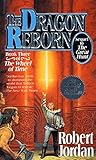
Editors Reads Verdict
The Dragon Reborn is the novel in which Jordan steps back from his protagonist to let the supporting cast carry the story — a bold structural decision that pays off in the richest characterisation the series has yet offered. Mat Cauthon's transformation from comic relief to fully drawn protagonist is one of the great character developments in the Wheel of Time.
What We Loved
- Mat Cauthon's storyline is the strongest in the series to date — a full character arc compressed into a single novel
- The bold choice to keep Rand largely off-page until the finale makes the climax hit with unusual force
- Perrin's storyline introduces Tel'aran'rhiod — the World of Dreams — which becomes one of the series' most fascinating elements
- The city of Tear and the Stone are richly realised; the world continues to expand in compelling directions
Minor Drawbacks
- The multi-strand structure means some storylines move slowly while others race
- Rand's interior state — the mounting weight of his destiny — is less accessible when he is largely absent from the page
- Some readers find the novel's pacing uneven compared to books one and two
Key Takeaways
- → A protagonist who accepts destiny destroys himself in a different way than one who refuses it
- → Luck that cannot be controlled is not a gift — it is a different kind of burden
- → The World of Dreams (Tel'aran'rhiod) makes Jordan's thematic point concrete: the unconscious shapes reality
- → The best ensemble fiction lets secondary characters carry the story long enough to become primary
| Author | Robert Jordan |
|---|---|
| Publisher | Tor Books |
| Pages | 675 |
| Published | October 15, 1991 |
| Language | English |
| Genre | Fantasy, Epic Fantasy, Fiction |
| Difficulty | Intermediate |
| Best For | Readers working through the Wheel of Time series sequentially; particularly valuable for readers who have not yet taken Mat Cauthon seriously as a character — this is the novel that changes that. Not a starting point — begin with The Eye of the World. |
How The Dragon Reborn Compares
The Dragon Reborn at a glance against 3 similar books readers weigh alongside it.
| Book | Author | Rating | Best for |
|---|---|---|---|
| The Dragon Reborn (this book) | Robert Jordan | ★ 4.4 | Readers working through the Wheel of Time series sequentially |
| The Lord of the Rings | J.R.R. Tolkien | ★ 4.9 | Fantasy readers of all kinds, Peter Jackson film fans ready to experience the |
| The Hobbit | J.R.R. Tolkien | ★ 4.8 | First-time fantasy readers of any age, children being introduced to Tolkien, |
| The Name of the Wind | Patrick Rothfuss | ★ 4.6 | Literary fiction readers willing to try fantasy, existing fantasy readers who |
The Hero Steps Back
The Dragon Reborn makes a structural choice unusual enough to be worth noting before the story itself: Robert Jordan removes his protagonist from the narrative for most of the novel’s length. Rand al’Thor, who has accepted — or been overwhelmed by — his destiny as the Dragon Reborn, sets off alone for Tear, driven by prophecy. We follow him occasionally, at a distance, through others’ eyes. But this is not Rand’s book. It is Mat’s. And Perrin’s. And Egwene’s and Nynaeve’s. And in making this choice, Jordan opens the Wheel of Time up into the full ensemble structure that would carry it across fourteen volumes.
The result is one of the most character-rich novels in the series — a book in which the supporting cast is given room to develop into the fully three-dimensional people they will remain for the rest of the sequence. If The Eye of the World introduced the world and The Great Hunt expanded it, The Dragon Reborn populates it.
Mat Cauthon’s Transformation
The novel’s most significant achievement is Mat Cauthon. In the first two books, Mat served primarily as comic relief and a source of plot complications — someone to be worried about and occasionally rescued. Here, healed of the Shadar Logoth dagger’s corruption, he becomes something far more complex: a man whose extraordinary luck is not a gift but a defining characteristic he cannot control and has not chosen, whose memories from previous Ages give him knowledge he did not earn, and who is capable of genuine heroism despite — or because of — his complete unwillingness to acknowledge it.
Mat’s storyline in Tar Valon and then Tear is the strongest extended sequence Jordan had written to this point, and it foreshadows the character who would become many readers’ favourite in the series. His relationship with chance and probability anticipates the Ta’veren mechanics Jordan uses throughout, but in Mat it is personal and specifically felt rather than cosmically abstract.
The World of Dreams
Perrin’s storyline introduces Tel’aran’rhiod — the World of Dreams — a parallel existence in which thoughts shape reality and the unconscious mind of the world can be accessed directly. It is one of Jordan’s most richly imagined concepts, and its introduction here provides both a new narrative layer and a thematic deepening: a world in which the unacknowledged shapes the real.
The Amazon Prime series, which adapts the first two books across its first two seasons, will need to find its own approach to the third novel’s material. The TV series’ structural departures from the books are most consequential here — readers who have watched the show will find the novels a substantially different experience in ways that are worth exploring.
Convergence at Tear
The novel’s final section — the convergence on Tear, the Stone, and the sword Callandor — is one of Jordan’s finest set-pieces, made more powerful by the structural patience that precedes it. Rand’s acceptance of the sword, and the title, and what they mean, lands with the weight of inevitability that good prophecy-based fiction earns across hundreds of pages of careful preparation.
By the end of The Dragon Reborn, the Wheel of Time has established itself as something more than very good epic fantasy. It is a world with its own internal weather, its own cultural memory, its own way of seeing time — and a cast of characters who have become genuinely indispensable.
Our rating: 4.4/5 — A bold structural gamble that pays off: by stepping back from Rand to let the ensemble carry the story, Jordan reveals the full depth of a cast that will sustain fourteen novels, and delivers one of the series’ most satisfying climaxes.
Reading Guides
The Series’ Structural Ambition
By its third novel, the Wheel of Time had established itself as something more ambitious than even its opening suggested. The decision to remove Rand from the foreground while the ensemble carries the story is not simply a structural experiment but a statement of intent: this is a series in which no single character’s perspective exhausts the world, and in which the people around the protagonist are as worth knowing as the protagonist himself.
This ensemble commitment would sustain the series across fourteen novels and millions of words. Characters like Mat Cauthon, Perrin Aybara, Egwene al’Vere, Nynaeve al’Meara, and Elayne Trakand are not supporting cast in the conventional sense; they are protagonists in their own right, with storylines that carry their own momentum and significance independent of Rand’s arc. The Dragon Reborn is the novel that makes this unambiguously clear.
Robert Jordan’s Craft
Jordan (1948–2007) had written extensively before the Wheel of Time — Westerns under pseudonyms, Conan novels under the house name Robert Jordan — and his technical skill in managing multiple simultaneous storylines reflects this experience. The challenge of keeping readers engaged across six or seven concurrent plot threads, each moving at a different pace and in a different tone, is one that defeats many epic fantasy novelists. Jordan manages it through a combination of careful chapter placement, strong individual character voices, and the patience to trust that readers who are confused by the structure in the moment will be rewarded for their trust later.
Callandor and What It Means
The convergence at Tear — with Rand claiming the sword Callandor from the Stone of Tear in fulfillment of an ancient prophecy — is one of Jordan’s finest set-piece endings to that point in the series. The sword itself is both literal and symbolic: a sa’angreal of enormous power that magnifies a male channeller’s ability to draw on saidin, and the specific object whose location in the Stone of Tear the Prophecies of the Dragon named as the sign of his coming. When Rand takes it, every faction in the world that has been watching for that sign knows simultaneously that the Dragon Reborn has declared himself. The series’ scale expands from a personal story into something geopolitical in a single scene.
Frequently Asked Questions
What is "The Dragon Reborn" about?
Rand al'Thor abandons his companions and sets out alone for Tear, drawn by prophecy toward a destiny he can no longer postpone — while Egwene, Nynaeve, and Mat are pulled by separate threads toward the same inevitable convergence.
Who should read "The Dragon Reborn"?
Readers working through the Wheel of Time series sequentially; particularly valuable for readers who have not yet taken Mat Cauthon seriously as a character — this is the novel that changes that. Not a starting point — begin with The Eye of the World.
What are the key takeaways from "The Dragon Reborn"?
A protagonist who accepts destiny destroys himself in a different way than one who refuses it Luck that cannot be controlled is not a gift — it is a different kind of burden The World of Dreams (Tel'aran'rhiod) makes Jordan's thematic point concrete: the unconscious shapes reality The best ensemble fiction lets secondary characters carry the story long enough to become primary
Is "The Dragon Reborn" worth reading?
The Dragon Reborn is the novel in which Jordan steps back from his protagonist to let the supporting cast carry the story — a bold structural decision that pays off in the richest characterisation the series has yet offered. Mat Cauthon's transformation from comic relief to fully drawn protagonist is one of the great character developments in the Wheel of Time.
Ready to Read The Dragon Reborn?
Check the current price on Amazon.
Check Price on Amazon (paid link)Prices and availability are subject to change. See Amazon for current price.
Review last updated: