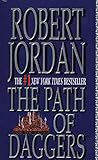
Robert Jordan was an American epic fantasy author whose fourteen-volume Wheel of Time series ranks among the most ambitious and beloved fantasy series ever written.
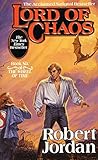
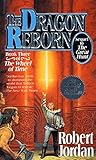
Robert Jordan began the Wheel of Time series in 1990 and spent the following two decades building one of the most complex and fully realized secondary worlds in the history of fantasy fiction. The series — fourteen books in our catalog, including The Dragon Reborn, The Shadow Rising, The Gathering Storm, Towers of Midnight, and A Memory of Light — spans thousands of characters, multiple continents, and an intricate magic system grounded in a detailed cosmological framework. Jordan’s ambition was extraordinary, and at his best he delivered on it.
The first few books feel most like classic epic fantasy, with strong echoes of Tolkien but with Jordan’s own mythological architecture. As the series progresses, it becomes increasingly vast — some middle volumes, widely acknowledged even by fans, suffer from pacing problems and narrative diffusion that test the patience of all but the most committed readers. Jordan died in 2007 before completing the series; Brandon Sanderson finished it in three volumes (The Gathering Storm, Towers of Midnight, A Memory of Light), capturing Jordan’s world with impressive fidelity while writing with somewhat different rhythms.
For readers willing to invest the thousands of hours required, the Wheel of Time rewards patience with a world and set of characters that genuinely live. It is a commitment unlike almost any other in genre fiction, and readers who complete it tend to describe it as a formative experience.
The Creator of The Wheel of Time
Robert Jordan, the pen name of James Oliver Rigney Jr., was the American author behind The Wheel of Time, one of the largest, most ambitious, and most influential epic fantasy series ever written. Spanning fourteen massive volumes (plus a prequel), the saga became a defining work of modern fantasy, beloved by millions for its immense scope, its intricate world-building, and its vast cast of characters. Jordan set out to create an epic on the scale of Tolkien but distinctly his own, and the world he built — with its detailed history, cultures, and meticulously structured system of magic — set a benchmark for the doorstop epic fantasy that came after him.
An Epic of Immense Scope
The Wheel of Time is renowned for the sheer breadth of its vision. Jordan constructed a world with thousands of years of backstory, dozens of distinct nations and peoples, and a sprawling narrative following a huge ensemble of characters whose individual arcs interweave across continents and volumes. Central to the series is the Aes Sedai, an order of powerful female channelers, and Jordan’s world is notable for placing women at the heart of its magic and politics. The scale is both the series’ greatest strength and, for some readers, its challenge, as the middle volumes expand into an enormous, slow-building tapestry of plotlines.
Themes and World-Building
Jordan drew on a wide range of mythologies and philosophies, weaving in cyclical conceptions of time, the balance of opposing forces, and echoes of legends from many cultures to give the saga a sense of mythic depth. His magic system, divided along gender lines and governed by detailed rules, stands as one of the most carefully constructed in the genre, and his attention to the texture of his world — its customs, garments, hierarchies, and histories — gives the series an immersive density that rewards dedicated readers. This richness inspired an exceptionally devoted fan community.
An Unfinished Epic, Faithfully Completed
Jordan died in 2007 before he could finish the saga, but he left extensive notes and outlines, and the final three volumes were completed by Brandon Sanderson, who brought the series to a conclusion widely regarded as faithful and satisfying. That the epic was finished at all, and finished well, is a remarkable story in itself. For newcomers, The Eye of the World, the first volume, is the necessary starting point, though readers should approach the series knowing it is a vast, long-term commitment. Jordan’s legacy endures as one of the foundational pillars of modern epic fantasy, an author whose ambition reshaped what the genre could attempt.
A Lasting Influence on the Genre
The influence of The Wheel of Time on modern fantasy is difficult to overstate. Jordan helped define the template for the sprawling, multi-volume epic that came to dominate the genre, and his combination of vast scope, detailed world-building, and large ensemble casts shaped the expectations of a generation of readers and writers. Authors who followed, including many of today’s leading fantasists, have acknowledged his impact, and the series remains a touchstone against which other epics are measured. Its long-running popularity has been further renewed by a major television adaptation, bringing Jordan’s world to new audiences.
The Reader’s Commitment and Reward
Reading The Wheel of Time is a substantial undertaking, and Jordan’s work is best appreciated by readers who relish total immersion in a richly imagined secondary world. The series asks for patience, particularly through its expansive middle volumes, but it rewards that investment with a depth of world and character that few works of fantasy can match, and with a climactic resolution that pays off threads laid down across thousands of pages. For those willing to make the journey, the saga offers one of the most complete and immersive experiences in all of epic fantasy — the achievement of an author whose ambition helped define the modern genre and whose vision, completed by another hand, reached the conclusion he had always intended. Decades after the first volume appeared, the saga continues to win new readers, a testament to the enduring power of the world he created.
Reading Guides