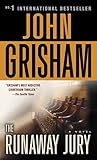
Editors Reads Verdict
The Runaway Jury is Grisham's most intricate plot construction — a thriller built entirely within the jury selection and trial process, exposing how both plaintiffs and defendants in high-stakes litigation attempt to engineer verdicts before the first witness is sworn in. Clever, cynical, and consistently surprising.
What We Loved
- The jury-manipulation premise is genuinely original and executed with procedural precision
- Nicholas Easter is one of Grisham's most intriguing and opaque protagonists
- The novel's cynicism about the litigation industry feels earned rather than cheap
- The tobacco industry backdrop gives the conspiracy real moral weight
Minor Drawbacks
- The resolution reveals a plan so elaborate it strains plausibility slightly
- Some of the corporate villain characterizations are broad
- The pace slows in the middle section during the extended jury deliberation sequences
Key Takeaways
- → High-stakes litigation is as much about jury engineering as it is about evidence and argument
- → Both sides of a legal conflict may be equally willing to subvert the process they claim to trust
- → The appearance of randomness in jury selection conceals enormous deliberate effort
- → Moral motivation and strategic calculation are not mutually exclusive — people act from both simultaneously
| Author | John Grisham |
|---|---|
| Publisher | Doubleday |
| Pages | 480 |
| Published | May 1, 1996 |
| Language | English |
| Genre | Thriller, Legal Thriller, Fiction |
| Difficulty | Beginner |
| Best For | Legal thriller fans; readers interested in the litigation industry's darker mechanics; Grisham readers who want his most structurally inventive novel. |
How The Runaway Jury Compares
The Runaway Jury at a glance against 3 similar books readers weigh alongside it.
| Book | Author | Rating | Best for |
|---|---|---|---|
| The Runaway Jury (this book) | John Grisham | ★ 4.2 | Legal thriller fans |
| Big Little Lies | Liane Moriarty | ★ 4.3 | Readers who enjoy domestic fiction with comic elements and genuine depth, |
| Gone Girl | Gillian Flynn | ★ 4.2 | Readers who want their thrillers to also function as literary fiction and |
| The Da Vinci Code | Dan Brown | ★ 3.8 | Readers who want propulsive, puzzle-driven thrillers with art-historical and |
The Trial as Battlefield Before It Begins
By 1996, John Grisham had already published five legal thrillers. The Runaway Jury represented his most sophisticated structural gambit: a novel in which the real action is not the trial itself but the attempts by both sides to control it before testimony begins. The widow of a lifelong smoker is suing a tobacco company in Biloxi, Mississippi. The stakes are enormous — a plaintiff’s verdict could open the floodgates to nationwide tobacco litigation, while a defense verdict would help the industry fight off the coming legal wave.
Both sides have deployed professional jury consultants. Rankin Fitch, working for the tobacco defense consortium, is a brilliant and ruthless operative who has helped win eleven consecutive tobacco trials through systematic jury manipulation: investigating every prospective juror, identifying and removing those sympathetic to plaintiffs, feeding intelligence to the defense team in real time. The plaintiff side has its own, less experienced consultants. Both are playing the same game.
Into this ecosystem steps Nicholas Easter — a young, apparently unremarkable juror who survives the selection process and ends up on the panel. And then things start going wrong for both sides in ways they cannot explain.
Fitch Versus Easter: The Cat-and-Mouse at the Heart of the Novel
The Runaway Jury is structured as a duel between Rankin Fitch’s considerable resources and Easter’s mysterious agenda. Fitch’s investigators cannot find a paper trail for Easter that goes back more than a few years. Easter, meanwhile, is sending notes to both legal teams — notes that suggest he can deliver the jury either way, for a price. His accomplice, a woman named Marlee who appears to be working with him, contacts both sides with an offer: pay, and you win.
Grisham maintains Easter’s true motivation as a genuine mystery through much of the novel, and this opacity is his central achievement. Is Easter corrupt? Is this an elaborate blackmail scheme? Or is there something else entirely at work? The answer, when it comes, reframes everything that preceded it.
The Tobacco Industry as Villain
The novel’s background — the legal siege laid against the tobacco industry through the 1990s — gives it a documentary texture that Grisham’s purely fictional conspiracies sometimes lack. The industry’s internal memos about what it knew and when, the decades of obfuscation, the coordinated legal strategy funded through enormous resources: Grisham renders all of this with detailed accuracy.
This grounds the moral stakes of the plot. Whatever Easter’s methods, the tobacco companies have killed people knowingly and systematically denied it. Fitch’s jury manipulation exists to protect that enterprise. The reader’s sympathies are complicated precisely because the novel refuses to make the plaintiff side entirely clean either.
A Cynical Masterwork of Legal Plotting
No Grisham novel before or after is quite so relentlessly focused on the machinery of litigation itself — the voir dire, the jury instructions, the in-chamber negotiations, the competing jury consultants running psychological profiles on twelve citizens who believe they were randomly selected. The procedural cynicism is the point: the system is not what it presents itself to be.
Our rating: 4.2/5 — Grisham’s most structurally clever novel, The Runaway Jury exposes the shadow war over American juries with wit, precision, and a genuinely satisfying twist.
Reading Guides
- John Grisham Books in Order: The Complete Reading Guide (2026)
- John Grisham Books Ranked: Best Legal Thrillers to Read First (2026)
The Tobacco Litigation Context
The Runaway Jury was published in 1996, at the height of the legal siege against the American tobacco industry. State attorneys general across the country were filing suits seeking reimbursement for Medicaid costs associated with smoking-related illness. Individual plaintiffs were bringing product liability cases. The internal documents that major tobacco companies had suppressed for decades — showing they had known about the health consequences of smoking and had systematically concealed that knowledge — were beginning to surface.
Grisham was writing into a live story, and the novel’s fictional tobacco litigation in Biloxi, Mississippi reflects real cases that were proceeding simultaneously. The detail about the industry’s internal documentation, the legal strategy coordinated across multiple company defendants, and the resources deployed to win individual cases: all of it was grounded in public record. The novel ends before the real tobacco litigation’s historical conclusion — the 1998 Master Settlement Agreement in which the major tobacco companies paid $206 billion to state governments — but its portrait of the industry’s legal posture is accurate.
Jury Consultants and the Shadow Voir Dire
The novel’s central subject — the professional manipulation of jury selection — reflects a real industry that had grown significantly by the 1990s. Jury consulting, once a marginal practice, had become a multimillion-dollar business by the time Grisham was writing. Major corporations routinely retained consultants who would develop psychological profiles of prospective jurors, conduct mock trials, and advise on the narrative framing of cases to particular demographic groups.
Rankin Fitch, Grisham’s tobacco-side jury consultant, is a fictional character, but his methods are based on documented practices. The shadow voir dire he runs — comprehensive background investigation of every prospective juror, real-time intelligence fed to the defence team, strategic use of peremptory challenges — is an accurate portrait of what well-funded litigants were doing in high-stakes cases. What Grisham adds is the fictional escalation: Nicholas Easter’s counter-operation, which turns the consultant’s own methods against him.
The 2003 Film Adaptation
The Runaway Jury was adapted into a film in 2003, with the tobacco industry replaced by the gun industry as the subject of the fictional litigation. The film starred John Cusack as Nicholas Easter, Rachel Weisz as Marlee, Gene Hackman as Rankin Fitch, and Dustin Hoffman as the plaintiff’s lead attorney. The change of industry was made for contemporary relevance — gun litigation had become a live political issue by 2003. The core manipulation plot translated successfully to the new context, and the film was generally well-received as an efficient, well-acted thriller.
Grisham has noted that the jury-manipulation premise works regardless of the industry at stake: what the novel is really about is the vulnerability of the jury system to organised, well-funded interference, and that vulnerability is not industry-specific.
Frequently Asked Questions
What is "The Runaway Jury" about?
In a landmark tobacco liability trial in Mississippi, a mysterious juror named Nicholas Easter appears to be manipulating the outcome from inside the jury box — while his accomplice outside works both sides of the case for an enormous payout.
Who should read "The Runaway Jury"?
Legal thriller fans; readers interested in the litigation industry's darker mechanics; Grisham readers who want his most structurally inventive novel.
What are the key takeaways from "The Runaway Jury"?
High-stakes litigation is as much about jury engineering as it is about evidence and argument Both sides of a legal conflict may be equally willing to subvert the process they claim to trust The appearance of randomness in jury selection conceals enormous deliberate effort Moral motivation and strategic calculation are not mutually exclusive — people act from both simultaneously
Is "The Runaway Jury" worth reading?
The Runaway Jury is Grisham's most intricate plot construction — a thriller built entirely within the jury selection and trial process, exposing how both plaintiffs and defendants in high-stakes litigation attempt to engineer verdicts before the first witness is sworn in. Clever, cynical, and consistently surprising.
Ready to Read The Runaway Jury?
Check the current price on Amazon.
Check Price on Amazon (paid link)Prices and availability are subject to change. See Amazon for current price.
Review last updated: