John Grisham Books Ranked: Best Legal Thrillers to Read First (2026)
John Grisham has written over 30 legal thrillers. Here are the best Grisham novels ranked, with recommendations for where to start and which books define the genre.
All Featured John Grisham Books at a Glance
| # | Title | Year | Type |
|---|---|---|---|
| 1 | A Time to Kill | 1989 | Standalone (Jake Brigance) |
| 2 | The Firm | 1991 | Standalone |
| 3 | The Pelican Brief | 1992 | Standalone |
| 4 | The Runaway Jury | 1996 | Standalone |
| 5 | The Client | 1993 | Standalone |
| 6 | A Time for Mercy | 2020 | Jake Brigance series |
| 7 | The Guardians | 2019 | Standalone |
| 8 | The Appeal | 2008 | Standalone |
John Grisham did not invent the legal thriller, but he made it the dominant popular fiction genre of the 1990s — and in doing so, sold more than 300 million books worldwide. Before Grisham, courtroom fiction was a niche concern. After him, every publisher in New York was looking for the next legal thriller, and readers who had never opened a law review found themselves absorbed by the mechanics of depositions, jury selection, and corporate discovery.
What Grisham understood — and understood earlier than almost anyone — is that the law is one of the richest dramatic settings available to a novelist. It is a world where ordinary people are suddenly exposed to enormous institutional power, where the truth is not always what matters, and where a single lawyer in a small office can end up fighting a corporation with a thousand employees and unlimited resources. That structure, repeated across 30-plus novels with variations in locale and legal subspecialty, has proven remarkably durable.
Here are the four Grisham novels we cover, ranked from best to most accessible, with a guide to where to start.
Where to Start
If you want depth and moral seriousness: Start with A Time to Kill. It is his best book, the one that announces the full range of what he can do, and the one that stays with you longest.
If you want pace and pure propulsion: Start with The Firm. It is the novel that made Grisham a phenomenon, and it remains one of the most compulsively readable legal thrillers ever written. You will not stop at chapter breaks.
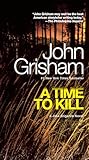
#1 — A Time to Kill: His Best Book
Best for: Readers who want a legal thriller with genuine moral weight and literary ambition.
A Time to Kill was actually Grisham’s first novel, published in 1989 before The Firm made him famous — and it is, by a considerable distance, his most serious and most accomplished work. The setup is a test of everything readers believe about justice: ten-year-old Tonya Hailey is brutally raped and beaten by two white men in rural Mississippi. Her father, Carl Lee Hailey, kills both men in the courthouse before they can be tried. His lawyer is Jake Brigance, a young white attorney in Canton who takes the case knowing it may destroy his career and endanger his family.
The novel works because Grisham refuses to make it easy. Carl Lee is not simply sympathetic — he is a man who planned a calculated act of violence and carried it out in cold blood. Jake is not simply heroic — he is ambitious, sometimes reckless, and not always certain he is doing the right thing. The racial politics of the Mississippi Delta pervade every page without being reduced to simple allegory. The courtroom climax is one of the great scenes in American popular fiction.
This is the Grisham novel that proves he could have been a purely literary writer had commercial success not pointed elsewhere.
#2 — The Firm: His Most Famous
Best for: Readers who want relentless pace, paranoia, and a protagonist trapped by his own ambition.
The Firm is the novel that turned Grisham from a regional author into a global brand. Mitch McDeere is everything the legal establishment wants: top of his class at Harvard Law, athletic, handsome, married to Abby, and smart enough to know that the Bendini, Lambert & Locke firm in Memphis is offering him far more than any other. He takes the job. He settles in. And then, gradually, he begins to understand why no lawyer has ever left the firm alive.
What makes The Firm work is not its plot mechanics — though the plot is ingenious — but the way Grisham uses Mitch’s situation to dramatise a universal anxiety about professional life. Mitch chose the firm because it offered everything he was supposed to want: money, security, status. The trap is not an accident; it is the logical endpoint of those aspirations. The FBI, the Mob, and his own employers are all competing for control of him, and every choice he makes narrows his options further.
The pace is exceptional — this is a novel that makes 450 pages feel short. The Sydney Pollack film adaptation with Tom Cruise captures the paranoia well, but the book is sharper.
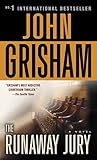
#3 — The Runaway Jury: The Underrated One
Best for: Readers interested in how jury manipulation, corporate power, and inside games collide in a single courtroom.
The Runaway Jury is Grisham’s most underrated novel and, in many ways, his most prescient. A widow is suing a major tobacco company for her husband’s death from lung cancer. The tobacco industry, knowing that a single jury verdict could open a floodgate of litigation, has deployed a shadowy consulting firm to infiltrate and control the jury pool. What they have not accounted for is Nicholas Easter, a juror who seems to have his own agenda — and a mysterious woman named Marlee who is running a parallel operation from outside the courthouse.
The novel works on two levels simultaneously: as a courtroom thriller tracking the actual trial, and as a cat-and-mouse procedural about who is really controlling what inside the jury room. The tobacco industry’s machinations — jury consultants, background investigations, juror surveillance — were pulled from genuine industry practices and read as outrage journalism as much as fiction.
The 2003 film adaptation shifted the target from tobacco to gun manufacturers, which diluted the specificity of Grisham’s argument. Read the book for the original, sharpest version.
#4 — The Pelican Brief: The Most Cinematic
Best for: Readers who want a conspiracy thriller that moves like a film and delivers sustained suspense.
The Pelican Brief is the most overtly cinematic of Grisham’s novels — not coincidentally, since it became a 1993 Alan J. Pakula film with Julia Roberts and Denzel Washington that remains one of the better Grisham adaptations. A second-year law student, Darby Shaw, writes a speculative brief connecting the assassination of two Supreme Court justices to a Louisiana oil baron with interests in a protected wetland. She shares it with a professor. Then the professor turns up dead, and Darby realises the brief was too close to the truth.
What The Pelican Brief does exceptionally well is the logic of escalating danger — the way that being right, in a story about power, puts you in more immediate danger than being wrong. Darby is smart and resourceful, but she is also a law student in her twenties, not an action hero, and Grisham is careful to keep her vulnerability real. The Washington Post journalist Thomas Callahan adds a second perspective that grounds the conspiracy in journalistic procedure.
This is not Grisham’s deepest novel, but it is his most efficient — a high-velocity thriller that never wastes a chapter.
What Makes Grisham Work
Strip away the specific plots and a common architecture emerges across virtually all of Grisham’s best novels. Understanding that architecture explains why he has sustained a readership across three decades.
The every-lawyer protagonist. Grisham’s heroes are almost always young lawyers — smart, capable, but not yet powerful — who find themselves facing an opponent with vastly more resources. They are not superhuman. They make mistakes, feel fear, and are regularly outmanoeuvred. This is central to the emotional contract: readers identify with the lawyer precisely because the lawyer feels like an ordinary person in an extraordinary situation.
The David vs. Goliath structure. The antagonists in Grisham’s novels are institutional: the Mob, a tobacco company, a corrupt law firm, the federal government. They have money, lawyers, and the capacity for violence. His protagonists have intelligence, ethical commitment, and occasionally luck. This asymmetry is the engine of tension in every book.
Procedural detail that creates authenticity. Grisham spent years as a practising attorney in Mississippi before he became a writer, and his fiction is dense with the actual texture of legal work — the discovery process, the pretrial motions, the voir dire of jury selection. This detail is not window dressing; it is the source of the reader’s trust. When Grisham says something is how the law works, it usually is.
Beyond These Four
Our catalog covers four Grisham novels, but his output extends well beyond them. The Client, featuring a child witness caught between federal prosecutors and the Mob, is among his best. The Rainmaker — a young lawyer’s first case against a corrupt insurance company — is his most purely populist novel and possibly his most emotionally satisfying. The Innocent Man is his only work of true crime and a different kind of devastating read: a nonfiction account of a wrongful conviction in a small Oklahoma town. A Time for Mercy returns to Jake Brigance — the hero of A Time to Kill — and continues the story of Ford County, Mississippi, with the assurance of a writer who has been living with these characters for decades. All are worth your time.
Who Should Read Grisham
Readers who loved The Silence of the Lambs but want less psychological horror and more institutional menace will find Grisham a natural transition. The procedural intensity is similar; the violence is present but rarely foregrounded.
Fans of The Lincoln Lawyer — Michael Connelly’s Los Angeles criminal defence attorney Mickey Haller — will find a direct analogue in Grisham’s Jake Brigance: a morally complex defence lawyer working the margins of the system. Both series share a DNA of legal realism and moral ambiguity.
What to Read After Grisham
Once you have read the Grisham novels that interest you, the following are natural next reads:
- The Lincoln Lawyer — Michael Connelly’s defence attorney series, with more moral complexity and Los Angeles grit
- The Silence of the Lambs — Thomas Harris’s FBI procedural, a masterclass in institutional dread
- Gone Girl — Gillian Flynn’s domestic thriller, which applies Grisham’s interest in legal procedure to a marriage investigation
- The Girl with the Dragon Tattoo — Stieg Larsson’s Swedish thriller, with corporate corruption and investigative journalism at its centre
Frequently Asked Questions
What is John Grisham’s best book?
A Time to Kill is his most accomplished novel in terms of literary ambition and moral seriousness. The Firm is his most famous and arguably most rereadable thriller. Most readers who have worked through his catalog put one of these two at the top.
Should I read John Grisham in order?
Grisham’s novels are almost entirely standalone — you can read any of them without having read the others. The exception is his Ford County / Jake Brigance series (A Time to Kill, A Time for Mercy, and a few others), where reading in order adds context. For everything else, start wherever you like.
Is John Grisham a good writer?
Grisham’s prose style is functional rather than literary — his sentences are clear and efficient but rarely beautiful. What he can do better than almost anyone working in commercial fiction is construct and sustain tension across 400 pages. That is its own considerable skill.
For the Best Thriller Books
For the definitive guide to thriller fiction — psychological thrillers, legal thrillers, and spy novels — see our Best Thriller Books of All Time list.
More Crime and Thriller Reading Guides
- John Grisham Books in Order: Complete Reading Guide
- James Patterson Books in Order: Alex Cross and More
Affiliate disclosure: Links to Amazon on this page are affiliate links. We earn a small commission at no extra cost to you. This does not influence our editorial recommendations.
Frequently Asked Questions
What is the best John Grisham book?
The Firm is Grisham's best novel by most measures — tightly plotted, relentlessly paced, and the book that defined his career and the legal thriller genre. A Time to Kill is his most emotionally powerful. The Runaway Jury is his most technically clever. Most readers rank these three at the top of his bibliography.
What John Grisham book should I start with?
Start with The Firm for the quintessential Grisham experience — it established every element of the formula he perfected. A Time to Kill works as an alternative first book if you prefer courtroom drama with moral complexity. Both are standalone novels that do not require knowledge of any other Grisham books.
Do John Grisham books need to be read in any order?
Most John Grisham novels are standalone thrillers and can be read in any order. The Jake Brigance series (A Time to Kill, A Time for Mercy, Sycamore Row, Sparring Partners) has continuity and should be read in publication order. The Mitch McDeere character from The Firm returns in The Exchange, the sequel.
What is John Grisham's most popular and most sold novel?
The Firm is John Grisham's bestselling novel and the book that broke him into the mainstream. It spent 47 weeks on the New York Times bestseller list. A Time to Kill was actually his first novel, self-published in limited print before The Firm's success created demand for it.