Editors Reads Verdict
One of the bestselling self-help books of all time, offering a simple and seductive message that has brought genuine inspiration to millions. The scientific claims are unfounded, but the practical encouragement toward positive thinking has real value for many readers.
What We Loved
- Simple, accessible message that many readers find genuinely motivating
- Encourages focus on what you want rather than what you fear
- Has inspired millions of readers to take action toward their goals
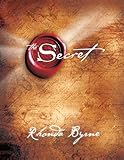
- The production quality and visual design are distinctive
Minor Drawbacks
- The Law of Attraction has no scientific basis
- The victim-blaming implications (you attracted your misfortune) are ethically troubling
- Oversimplifies the genuine complexity of success and failure
- Promises outcomes that positive thinking alone cannot deliver
Key Takeaways
- → Focused attention on desired outcomes influences behavior in ways that produce results
- → Positive thinking has genuine psychological benefits regardless of cosmic mechanism
- → Gratitude practice has documented mental health benefits
- → Visualization can be a useful motivational tool when combined with action
- → The book's claims should be read as metaphor rather than physics
| Author | Rhonda Byrne |
|---|---|
| Publisher | Atria Books |
| Pages | 198 |
| Published | November 26, 2006 |
| Language | English |
| Genre | Self-Help, Spirituality |
| Difficulty | Beginner |
| Best For | Self-help readers; people seeking motivation and a sense of agency over their circumstances. |
How The Secret Compares
The Secret at a glance against 3 similar books readers weigh alongside it.
| Book | Author | Rating | Best for |
|---|---|---|---|
| The Secret (this book) | Rhonda Byrne | ★ 3.7 | Self-help readers |
| The Power of Now | Eckhart Tolle | ★ 4.6 | Anyone struggling with anxiety, overthinking, or searching for a practical |
| The Subtle Art of Not Giving a F*ck | Mark Manson | ★ 4.4 | Anyone exhausted by relentless optimism culture who wants a blunter, more |
| Think and Grow Rich | Napoleon Hill | ★ 4.5 | Aspiring entrepreneurs and anyone studying the psychology of achievement and |
The Bestselling Phenomenon
Rhonda Byrne’s “The Secret” has sold over 30 million copies since its 2006 publication, making it one of the most successful self-help books in history. It presents the Law of Attraction — the idea that thoughts and emotions literally attract corresponding physical realities, that the universe is a kind of cosmic ordering system that delivers what you focus on — as an ancient secret rediscovered. The message is simple: think positively, visualize what you want, act as if you already have it, and the universe will provide. Byrne distills the method into a three-step process — Ask, Believe, Receive — and returns to it relentlessly.
From a Film to a Phenomenon
The Secret began not as a book but as a film. Grieving and at a low point in 2004, Byrne was given a copy of Wallace Wattles’s 1910 New Thought tract The Science of Getting Rich, and the encounter sent her in search of what she came to see as a hidden, age-old principle. She assembled a slickly produced 2006 documentary built from interviews with some fifty-five self-styled Law of Attraction “teachers” — among them Bob Proctor, Joe Vitale, Jack Canfield, and John Assaraf — and released the book the same year. The accelerant for both was Oprah Winfrey, who devoted episodes to the phenomenon and declared that its message was the one she had been trying to share for twenty-one years; by 2009 the book and film together had grossed some $300 million. It is, in other words, less an original work of thought than a polished repackaging of a century-old American tradition for the YouTube age.
What Works
The practical encouragement “The Secret” provides has genuinely helped millions of readers. Directing attention toward what you want rather than what you fear is, regardless of cosmic mechanism, practically useful. Gratitude practice — one of the book’s consistent recommendations — has a substantial evidence base in positive psychology. Visualization, used correctly, can increase motivation and goal-directed behavior. The message of agency — that you have more control over your circumstances than you think — is more accurate than its opposite.
What Doesn’t
The book’s problems are significant. The “Law of Attraction” as Byrne presents it — a physical law of the universe that responds to thoughts and feelings — has no scientific basis, and her frequent invocations of quantum physics have been flatly rejected by scientists, including the Harvard physicist Lisa Randall and, in the New York Times, the psychologists Christopher Chabris and Daniel Simons. Writing for the Center for Inquiry, critics summed the book up as “a time-worn trick of mixing banal truisms with magical thinking and presenting it as some sort of hidden knowledge.” More troubling than the bad physics is the moral logic. If thoughts attract reality, then people who experience illness, poverty, or catastrophe must, on some level, have attracted them through negative thinking — an implication that drew particular outrage when the book’s framework was applied to mass tragedies. This victim-blaming is rarely stated outright but is logically unavoidable, and it is the deepest reason to treat the book with caution.
The Kernel Worth Keeping
It would be too easy to dismiss The Secret entirely, because tangled up in the magical thinking are a few genuinely sound psychological principles. Deciding clearly what you want, holding it in focus rather than fixating on what you dread, expecting good outcomes, and feeling gratitude for what you already have are all habits with real support in the research on motivation and well-being. People who adopt them often do see their circumstances improve — not because the cosmos rearranged itself, but because clarity, optimism, and gratitude change how a person notices opportunities, makes decisions, and takes action. Byrne’s fatal move is to strip out the one ingredient that actually does the work — action — and credit the results to vibration and the universe. Stripped of that overreach, the underlying advice is unremarkable but not wrong.
The book also spawned an entire industry — sequels such as The Power and The Magic, a 2020 dramatic film adaptation, and a generation of “manifestation” influencers — confirming that its real innovation was less philosophical than commercial: it packaged an old idea with irresistible polish and timing.
Reading It Honestly
Readers who approach “The Secret” as a motivational text rather than a scientific one may find it useful. Its core practical message — focus on what you want, cultivate gratitude, take action, believe in the possibility of success — is not bad advice. The cosmic mechanism it invokes to explain why this works is not credible, but the advice can be separated from the explanation. The honest verdict is that this is a book to mine rather than to follow: keep the gratitude and the clarity of intention, add the hard work and realism Byrne omits, and discard the pseudoscience and the cruel implication that the suffering brought their suffering on themselves. Read with that critical filter firmly in place, it can still spark a useful sense of agency; read literally, it sells a comforting fantasy that no amount of positive thinking can make true. Its enormous success says as much about our collective hunger for simple, reassuring answers as it does about the merits of the book itself — which is, perhaps, the most revealing secret of all.
Our rating: 3.7/5 — A global self-help phenomenon with genuine motivational value and significant intellectual problems — best read as a metaphor for the psychology of focus.
Frequently Asked Questions
What is "The Secret" about?
Rhonda Byrne presents the Law of Attraction — the idea that positive thinking and focused desire literally attract corresponding circumstances from the universe — as the secret to achieving health, wealth, and happiness.
Who should read "The Secret"?
Self-help readers; people seeking motivation and a sense of agency over their circumstances.
What are the key takeaways from "The Secret"?
Focused attention on desired outcomes influences behavior in ways that produce results Positive thinking has genuine psychological benefits regardless of cosmic mechanism Gratitude practice has documented mental health benefits Visualization can be a useful motivational tool when combined with action The book's claims should be read as metaphor rather than physics
Is "The Secret" worth reading?
One of the bestselling self-help books of all time, offering a simple and seductive message that has brought genuine inspiration to millions. The scientific claims are unfounded, but the practical encouragement toward positive thinking has real value for many readers.
Ready to Read The Secret?
Check the current price on Amazon.
Check Price on Amazon (paid link)Prices and availability are subject to change. See Amazon for current price.
Review last updated: