
Editor's PickCooking & Food
An Everlasting Meal
by Tamar Adler
4.5
Tamar Adler's extraordinary collection of essays on cooking with economy, intelligence, and pleasure — a book about cooking philosophy as much as cooking technique.
The essay is the most flexible form in nonfiction — equally at home in memoir, criticism, reportage, and argument. From Montaigne, who invented it, to modern masters like Joan Didion, James Baldwin, and Zadie Smith, these collections show how much thinking can be done in twenty unhurried pages.
25 expert-reviewed books — page 1 of 2
by Tamar Adler
Tamar Adler's extraordinary collection of essays on cooking with economy, intelligence, and pleasure — a book about cooking philosophy as much as cooking technique.

by Michel de Montaigne
Montaigne retired to his tower in 1571 and spent the next twenty years writing essays — a form he essentially invented — on subjects ranging from cannibals to friendship, cruelty to experience. The subject of every essay, regardless of its nominal topic, is Montaigne himself: how he thinks, what he knows, what he doubts.

by Cheryl Strayed
A selection of Cheryl Strayed's advice columns written under the pseudonym 'Sugar' for The Rumpus. Honest to the point of pain, these essays — part advice, part memoir — have become one of the most loved pieces of American non-fiction writing of recent decades.

by Annie Dillard
Dillard spent a year at Tinker Creek in Virginia's Roanoke Valley, watching. The book is a record of that watching — insects, muskrats, water, light, death, and the theological question of what kind of God would make a world this brutal and this beautiful.
Check Price on Amazon (paid link)
by Nan Shepherd
Nan Shepherd's masterpiece of nature writing, written in the 1940s but unpublished until 1977. A lifetime's intimate knowledge of Scotland's Cairngorm mountains distilled into luminous, sensuous, philosophical prose — not a tale of conquest but of being with a mountain, attending to it completely.
Check Price on Amazon (paid link)
by Rebecca Solnit
A series of linked essays on the value of getting lost — geographically, psychologically, historically. Solnit ranges across landscape, memory, art, and personal experience to argue that losing one's way is not a failure but a condition for discovery.
Check Price on Amazon (paid link)
by Chimamanda Ngozi Adichie
Adapted from her viral TEDx talk, Chimamanda Ngozi Adichie makes a passionate and personal case for feminism rooted in the realities of both African and Western experience.
Check Price on Amazon (paid link)
by Roxane Gay
A collection of essays on culture, politics, race, and feminism by Roxane Gay, who refuses the pressure to be a perfect feminist and argues for the political power of imperfect, contradictory humanity.
Check Price on Amazon (paid link)
by Rebecca Solnit
Seven essays on sexism, language, and power — anchored by the title essay, which coined the term 'mansplaining' (though Solnit never uses the word), and ranging to cover the epidemic of violence against women, Virginia Woolf's relationship to the sea, and the politics of silence.
Check Price on Amazon (paid link)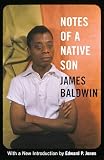
by James Baldwin
Baldwin's first essay collection, published when he was thirty-one, established him as one of the essential voices in American literature. The ten essays — including the title piece, written after his father's death during the Harlem riots — examine race in America, Black American identity in Europe, and the relationship between art and social responsibility with a clarity that has not dated.
Check Price on Amazon (paid link)
by Joan Didion
Joan Didion's landmark collection of essays on California and American culture in the 1960s, centering on her report from Haight-Ashbury during the Summer of Love — a portrait of a society losing its grip on coherent meaning.
Check Price on Amazon (paid link)
by Joan Didion
Joan Didion's second essay collection, covering the end of the 1960s through the 1970s — including pieces on the Manson murders, the women's movement, Georgia O'Keeffe, and the experience of nervous breakdown as a diagnostic tool for a decade.
Check Price on Amazon (paid link)
by David Foster Wallace
Essay collection including 'Consider the Lobster' on the Maine Lobster Festival and animal pain, a 60-page essay on a usage dictionary, 'Up, Simba' on John McCain's 2000 presidential campaign, and 'Roger Federer as Religious Experience.'
Check Price on Amazon (paid link)
by Ralph Ellison
Ellison's collection of essays on literature, music, and American identity — written over twenty years — is the essential companion to Invisible Man. The essays on jazz and blues argue that African American music is the central achievement of American culture; the literary essays situate Ellison's novel within the tradition of Hemingway, Faulkner, and Dostoevsky; and the autobiographical pieces account for the Oklahoman who became one of the great American novelists.
Check Price on Amazon (paid link)
by John Green
John Green reviews the human-centered planet on a five-star scale — from sunsets and Diet Dr Pepper to the QWERTY keyboard and his own anxiety. His first nonfiction book turns the absurd premise of rating everything into a moving meditation on hope, wonder, and being alive.
Check Price on Amazon (paid link)
by Ta-Nehisi Coates
A collection of Ta-Nehisi Coates's most important essays from the Obama years, each introduced with a new personal reflection, tracing both the trajectory of his thinking about race in America and the arc from Obama's election to Trump's — arguing that white supremacy was the connective tissue between both.
Check Price on Amazon (paid link)
by David Foster Wallace
Wallace's first essay collection includes his piece on the Illinois State Fair, an extended essay on David Lynch, 'E Unibus Pluram' on television and American fiction, and the title essay on a Caribbean cruise — the funniest and most formally inventive piece of literary journalism of the 1990s.
Check Price on Amazon (paid link)
by Anne Lamott
Anne Lamott's follow-up to Traveling Mercies — personal essays on faith, doubt, aging, the Iraq War, her son's adolescence, and the ongoing attempt to live with grace when plan A has clearly failed.
Check Price on Amazon (paid link)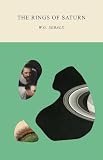
by W. G. Sebald
W. G. Sebald's hypnotic account of a walking tour along the Suffolk coast. As the narrator wanders a landscape of ruin and decline, his mind ranges across history, memory, and catastrophe — from silkworms to colonialism to the herring fisheries — in an unclassifiable meditation on time and loss.
Check Price on Amazon (paid link)
by Alain de Botton
A philosophical meditation on why we travel, what we hope to find, and why the reality so rarely matches the anticipation — structured around de Botton's own journeys and the writers, artists, and thinkers who have illuminated the meaning of travel.
Check Price on Amazon (paid link)
by Paul Auster
Paul Auster's first major work in two parts: A Portrait of an Invisible Man, written after his father's sudden death, an attempt to understand a man he never truly knew; and The Book of Memory, an autobiographical meditation on solitude, fatherhood, memory, and the act of writing.
Check Price on Amazon (paid link)
by Bill McKibben
Bill McKibben's landmark 1989 book, the first work on climate change written for a general audience. McKibben argues that human activity has so altered the atmosphere that 'nature' as an independent force has ended — a prophetic, philosophical meditation on what we have done to the planet.
Check Price on Amazon (paid link)
by Fernando Pessoa
A selection of Pessoa's critical essays, philosophical reflections, and shorter prose — including pieces by both Pessoa and his heteronyms, showing the full range of his intellectual world.
Check Price on Amazon (paid link)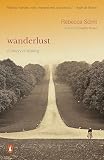
by Rebecca Solnit
Rebecca Solnit's wide-ranging history and philosophy of walking. From peripatetic philosophers and Romantic poets to pilgrims, protesters, and flâneurs, Solnit explores how walking has shaped thought, culture, politics, and the body — a discursive, erudite meditation on putting one foot in front of the other.
Check Price on Amazon (paid link)Disclosure: Amazon links on this page are affiliate links. If you purchase through them we earn a small commission at no extra cost to you.