A generation ship carrying over two thousand colonists departs Earth for Tau Ceti, seven generations and 160 years away. Told partly from the perspective of the ship's evolving artificial intelligence, Aurora is a rigorous, moving exploration of what interstellar travel would actually cost.
Theo Byrne, an astrobiologist searching for signs of life on other planets, raises his neurodivergent son Robin alone after his wife's death. When Robin's emotional dysregulation threatens his school placement, Theo enrolls him in an experimental neurofeedback program that maps his brain against recordings of his late mother — with transformative and devastating results.
In a ruined city dominated by a giant flying bear named Mord, a scavenger named Rachel finds a strange creature she calls Borne attached to Mord's fur — and raises it in secret as it grows and changes beyond anything she expected.
Dwayne Hoover is a successful car dealer having a mental breakdown. Kilgore Trout is a science fiction writer no one has ever heard of who is about to meet Dwayne. Vonnegut himself wanders through the novel as a character watching his own creations. Breakfast of Champions is a satirical attack on American culture so broad it becomes a self-portrait.
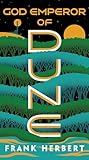
Paul Atreides is gone. His twin children, Leto II and Ghanima, inherit both his bloodline and his terrifying prescience — while a crumbling empire and Alia's increasingly erratic regency threaten to consume everything Paul built and sacrificed.
The second novel in Gibson's Sprawl trilogy follows three intersecting storylines — a young hacker, a mercenary, and an art dealer — across a near-future world where the AIs of Neuromancer have fragmented into something resembling the voodoo loa.
After nuclear war destroys civilization, Lilith Iyapo wakes aboard an alien ship. The Oankali offer humanity survival — but at the cost of genetic merger. Butler's Xenogenesis trilogy opener explores consent, power, and what it means to remain human.
Dirk Gently, self-styled holistic detective, investigates a case involving a ghost, an electric monk, a time machine, and Samuel Taylor Coleridge — all of which, he insists, are fundamentally connected.
Andy McGee and his eight-year-old daughter Charlie are on the run from a shadowy government agency called The Shop after years of experiments have left Charlie with pyrokinetic abilities she can barely control. The more frightened Charlie becomes, the larger and less predictable her fires.
Decades after the events of Red Mars, the terraforming debate intensifies as the planet's surface slowly changes. Robinson's Hugo Award-winning middle volume deepens the political and ecological complexity of the trilogy while advancing its multi-generational saga.
Set in a near-future North America where years are sponsored by corporations, David Foster Wallace's sprawling novel interweaves two main locations — the Enfield Tennis Academy and the Ennet House Drug and Alcohol Recovery House — around the search for a film so entertaining that viewers lose all will to do anything else.
Set in the same universe as the Imperial Radch trilogy but following different characters, Ingray Aughskold steals a prisoner from a secure facility as part of a scheme to impress her mother, and finds herself in the middle of a diplomatic crisis involving the authenticity of her people's historical artefacts.
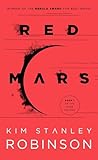
One hundred colonists arrive on Mars in 2026 to begin humanity's first permanent settlement — and the political and philosophical fault lines that will define the planet's future immediately emerge.
When the moon inexplicably breaks apart, scientists calculate that Earth will become uninhabitable within two years. The surviving remnant of humanity must learn to live in space — and the seven women who survive a catastrophic orbital crisis become the mothers of all future humanity.
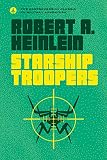
Rico joins the Terran Mobile Infantry to fight in an interstellar war against insectoid aliens. Heinlein's Hugo-winning novel is a passionate defence of civic virtue, military service, and the idea that citizenship must be earned — one of SF's most celebrated and most debated books.
A satellite crashes in rural Arizona, and everyone in the nearest town is dead within minutes. A team of scientists races to a secret underground lab to identify and contain an extraterrestrial microorganism before it escapes — and before the government's nuclear failsafe triggers and makes everything catastrophically worse.
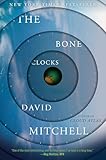
A girl's impulsive act in 1984 draws her into a centuries-long conflict between two secret factions; the novel spans her entire life across six decades.
Set in a twenty-first century England that has adopted republican government, Mary Shelley's visionary 1826 novel follows Lionel Verney as a plague sweeps across the world, wiping out humanity one country at a time, until he walks the earth alone — the last human survivor. One of the earliest and most devastating pandemic novels ever written.
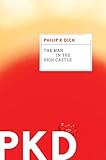
An alternate history set in an Axis-occupied America where the Allies lost WWII — Philip K. Dick's Hugo Award-winning masterwork of speculative fiction.
In a brutal near-future America, desperate man Ben Richards enters a televised game show where contestants are hunted across the country and killed for entertainment — and prize money his family cannot survive without.
Horselover Fat — a thinly veiled version of Philip K. Dick — receives a beam of pink light that reveals divine information to him in 1974. VALIS is Dick's attempt to rationalise this experience through science fiction, Gnostic theology, and painful self-examination. Part novel, part theological treatise, part mental breakdown.
Meg Murry must journey inside her brother Charles Wallace's cells to battle a cosmic evil called the Echthroi, accompanied by a Teacher named Blajeny and a strange creature called Proginoskes, in a quest that turns on the power of naming and love.
A tech consortium races into the Congo rainforest to find a lost city — and the deposits of industrial diamonds it holds. They are joined by a primatologist and her signing gorilla named Amy, who may hold the key to what killed the previous expedition. Crichton combines African adventure, corporate espionage, and animal intelligence research.
In 2043, American soldiers fight a distant war by remotely operating robotic killing machines called soldierboys — linked neurally in teams of ten — while a physicist discovers a plot to recreate the Big Bang that would destroy the universe.