Cormac McCarthy was an American novelist whose unsparing, biblically cadenced prose made him one of the most celebrated and challenging writers of the twentieth century.
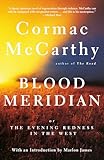
Cormac McCarthy spent decades writing largely outside mainstream attention before Blood Meridian, published in 1985, began to build his literary reputation among readers willing to engage with its extraordinary, terrifying vision. Set on the Texas-Mexico border in the 1840s, it follows a band of scalp hunters into an ever-deepening descent into violence, presided over by the Judge, one of the most compelling — and most debated — villains in American fiction. The novel’s prose, stripped of conventional punctuation and soaked in biblical cadence, reads unlike anything else. It is a brutal, demanding book that rewards close reading with real philosophical depth.
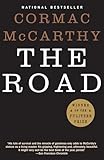
All the Pretty Horses, the first of the Border Trilogy, is more accessible — a coming-of-age story of a Texas teenager who crosses into Mexico in 1949 with his friend, only to find the romantic world of the cowboy already fading. No Country for Old Men is McCarthy at his most controlled and contemporary, a cat-and-mouse thriller in which a welding war veteran stumbles onto drug money in the Texas desert and is hunted by the implacable Anton Chigurh. The novel is terse and relentless; its ending refuses the consolations the genre usually provides. The Road, his Pulitzer Prize winner, follows a father and son across a post-apocalyptic America in prose of extraordinary bleakness and love.
McCarthy is not a writer for all tastes. His female characters are often peripheral, his violence can feel like an end in itself rather than a means, and his refusal of sentimentality can shade into coldness. But his command of the language, his moral seriousness, and his ability to inhabit American landscape and darkness put him in a small group of twentieth-century novelists who genuinely extended what the form could do.
A Giant of American Letters
Cormac McCarthy was one of the greatest American novelists of his era, a writer of biblical grandeur and unflinching darkness whose work explored violence, mortality, and the human condition with a seriousness and beauty matched by few of his contemporaries. Famously reclusive and indifferent to literary fashion, McCarthy pursued his singular vision across decades, producing novels of harrowing power and stark moral weight. His distinctive prose, his uncompromising subject matter, and the philosophical depth of his work earned him comparison to Melville and Faulkner and secured his place among the essential figures of modern literature.
Blood Meridian
His masterpiece, Blood Meridian, is widely regarded as one of the greatest American novels of the twentieth century, a savage and hallucinatory account of a band of scalp-hunters on the Texas-Mexico borderlands in the 1850s. Relentless in its violence and apocalyptic in its vision, dominated by the monstrous and enigmatic Judge Holden, the novel confronts the reader with an unsparing meditation on the nature of war, evil, and human destiny. Demanding and disturbing, Blood Meridian is the fullest expression of McCarthy’s dark vision and a cornerstone of his towering reputation.
A Distinctive Prose Style
McCarthy’s prose is among the most recognisable in American literature, a style of stark, incantatory power that fuses spare, declarative sentences with passages of soaring, almost scriptural intensity. He famously dispensed with quotation marks and much conventional punctuation, creating a dense, immersive texture that demands and rewards careful reading. His language can render both the brutal and the sublime — a landscape, an act of violence, a moment of grace — with equal force, and this distinctive voice is inseparable from the moral and emotional weight of his work.
Violence and Morality
At the heart of McCarthy’s fiction is a sustained confrontation with violence and the question of whether the universe contains any moral order. His novels stare unflinchingly at human cruelty and the indifference of nature, refusing easy consolation, yet they are also profoundly concerned with morality, endurance, and the possibility of goodness in a brutal world. This tension — between bleak vision and moral seriousness — gives his work its tragic grandeur, and his unwillingness to look away from the darkest aspects of existence is precisely what lends his rarer moments of tenderness their power.
The Border and the Road
Beyond Blood Meridian, McCarthy reached a wider readership with the Border Trilogy, beginning with the National Book Award-winning All the Pretty Horses, and with later works that became cultural touchstones. No Country for Old Men and The Road — the latter a Pulitzer Prize-winning vision of a father and son in a devastated post-apocalyptic world — brought his bleak beauty to a mass audience and inspired acclaimed films. The Road, in particular, distilled his concerns with mortality, love, and endurance into a spare and devastating parable that moved millions of readers.
A Singular Career
McCarthy’s career was marked by long silences and a refusal to court publicity, and he wrote without compromise on his own terms throughout his life. Late in his career, he returned with the paired novels The Passenger and Stella Maris, demonstrating that his ambition and his preoccupation with the deepest questions of existence endured to the end. His integrity and independence, his indifference to trends, and his lifelong commitment to a difficult and uncompromising art are central to his stature and his mystique.
Why Cormac McCarthy Endures
Cormac McCarthy’s influence on American literature is immense, and his death in 2023 was mourned as the loss of one of the country’s last literary titans. For newcomers, The Road offers the most accessible entry point, while All the Pretty Horses and No Country for Old Men are excellent gateways before approaching the formidable Blood Meridian. For readers seeking fiction of the highest seriousness and beauty — unflinching, profound, and unforgettable — McCarthy remains an essential and incomparable voice in modern literature.
Reading Guides