Where to Start with Cormac McCarthy: A Reading Guide
Where to start with Cormac McCarthy — whether to begin with The Road, No Country for Old Men, Blood Meridian, or All the Pretty Horses. A complete reading guide.
Cormac McCarthy (1933–2023) is the most significant American novelist of the late twentieth century — the writer whose prose style, drawing on Faulkner and the King James Bible, achieves an elevation and authority unlike anyone else writing in English. His novels — Blood Meridian, the Border Trilogy, No Country for Old Men, The Road — are simultaneously genre fiction (Western, thriller, post-apocalyptic) and works of metaphysical seriousness that use their genre conventions to explore questions about violence, mortality, and the possibility of goodness in a world organized around suffering.
Where to Start
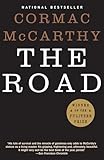
The Best Entry Point: The Road (2006)
The best first McCarthy for most readers — his most emotionally direct novel and the most immediately accessible without being less than entirely serious. The father and the boy moving through the gray, ash-covered landscape of a dead America carry what the father calls ‘the fire’: the willingness to remain good, to protect one another, when there is no longer any social or institutional reason to do so. The novel does not explain what caused the catastrophe; it does not need to. The love between father and son, rendered through dialogue of extraordinary restraint and tenderness, is the novel’s entire argument. Winner of the Pulitzer Prize.
The Thriller: No Country for Old Men (2005)
The most accessible McCarthy in terms of plot — a three-way pursuit across the Texas-Mexico border involving Llewelyn Moss, who finds a briefcase of drug money; Anton Chigurh, the implacable killer who is coming for him; and Sheriff Ed Tom Bell, who is trying to understand what kind of country produces men like Chigurh. The novel is a meditation on the nature of evil and the inadequacy of conventional moral frameworks to address it. Bell’s chapters — his philosophical monologues — are the novel’s philosophical core; Chigurh is one of the great villains in American fiction. The Coen Brothers’ film is a faithful and excellent adaptation.
The Border Trilogy: All the Pretty Horses (1992)
The best starting point for McCarthy’s Border Trilogy and, for many readers, the most beautiful of his novels. John Grady Cole, a sixteen-year-old Texas boy, rides south into Mexico after his grandfather’s death, finds work on a hacienda, falls in love with the owner’s daughter, and encounters violence and imprisonment that end his innocence. The novel is a love story, a Western, and an elegiac account of a world — of horses, of a certain kind of masculine grace — that is disappearing. The prose is at its most lyrical; the violence is present but not overwhelming.
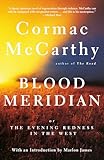
The Masterpiece: Blood Meridian (1985)
McCarthy’s greatest and most demanding novel — and the one that requires readers to have already experienced his method. The Kid, a nameless teenage boy, joins the Glanton Gang on their scalp-hunting campaign through the Chihuahua desert in 1849. The Judge — a vast, hairless, impossibly learned figure who seems to represent violence as a metaphysical principle — is the novel’s centre. McCarthy’s prose is at its most elevated and most demanding; the violence is at its most sustained and most philosophically purposeful. Harold Bloom called it the greatest American novel since Moby-Dick. Come to it only after reading at least two of the novels above.
The Crossing (1994)
The second volume of the Border Trilogy and, for many readers, the most ambitious. Billy Parham, a New Mexico teenager, catches a pregnant wolf and attempts to return it to the mountains of Mexico; what follows is an odyssey through a Mexico that is simultaneously real and mythological. The novel contains extended dialogues with strangers — a priest, a gypsy, an old man — that are McCarthy’s closest approach to explicit philosophical statement. Longer and more digressive than All the Pretty Horses; best read in sequence as the second volume of the trilogy.
Why The Road Is the Ideal First Book
For a reader new to Cormac McCarthy, The Road is the ideal first book because it is his most emotionally direct and accessible novel and a powerful expression of his distinctive gifts, the spare, stark prose, the unflinching vision, and the profound moral and emotional depth. The Road follows a father and son journeying across a devastated, post-apocalyptic landscape, struggling to survive and to hold on to their humanity, in a bleak, beautiful, and deeply moving novel. As an entry point it is ideal, for it is more emotionally direct and accessible than his other major works while fully displaying his gifts. It welcomes the newcomer with its powerful story, its spare prose, and its profound emotional depth, drawing the reader into his distinctive vision. It is among his most celebrated works and a fine representation of his gifts, so the new reader encounters McCarthy at his most accessible. For the newcomer, then, The Road is the natural and ideal starting point, on bleak and harrowing subject matter.
What to Expect as a New Reader
As a new reader, you can expect The Road to be a bleak, beautiful, and deeply moving novel. You can expect spare, stark prose, for McCarthy writes with a distinctive, pared-down, often unpunctuated style of great power. You can expect a powerful story, for a father and son journey across a devastated, post-apocalyptic landscape, struggling to survive. You can expect an unflinching vision, for McCarthy confronts a bleak, ruined world without flinching. You can expect profound emotional depth, for the love between father and son gives the novel overwhelming emotional power. You can expect profound moral depth, for the novel explores survival, hope, and what it means to hold on to one’s humanity. You can expect a haunting, beautiful, and devastating read. You should be prepared for bleak and harrowing material. Expect, in short, a bleak, beautiful, and deeply moving novel, a powerful introduction to McCarthy’s gifts.
Going Deeper After Your First Book
Once The Road has introduced you to McCarthy’s gifts, the reader who wishes to go deeper can explore his other novels, which continue his spare, stark prose, his unflinching vision, and his profound moral depth, often in harsher and more demanding forms. His acclaimed border novels, including his beloved coming-of-age story of a young cowboy, offer a more lyrical entry into his vision of the American West, while his masterpiece of violence on the frontier is his most challenging and powerful work, and his crime novel turned into a famous film offers gripping, taut storytelling. These works are often harsher than The Road, but the reader who has been moved by it is well prepared. Reading these deepens your appreciation of McCarthy’s distinctive gifts, the spare prose, the unflinching vision, and the profound moral depth. Building your reading journey through McCarthy is a matter of following his fiction from The Road into his border novels and his other major works. The reader who begins here and continues will encounter one of the most powerful and distinctive American novelists.
McCarthy’s Style
McCarthy’s prose is immediately recognisable: long sentences built from compound clauses joined by ‘and’ rather than subordinated by ‘although’ or ‘because’; no quotation marks for dialogue (attributions are usually clear from context); rare or archaic vocabulary deployed with precision; a biblical cadence that gives even violent passages a quality of lamentation rather than excitement. The style can seem alienating on first encounter; readers who persist find that it creates a reading experience quite unlike any other — immersive, incantatory, and impossible to skim.
Frequently Asked Questions
Where should I start with Cormac McCarthy?
The Road (2006) is the best starting point for most readers — a post-apocalyptic novel about a father and his young son walking south through a burned America, carrying 'the fire' as the father describes it, which is their moral identity in a world where most survivors have abandoned morality. It is McCarthy's most emotionally direct novel, his shortest major work, and the one that demonstrates all his gifts — the prose, the violence, the love between characters — without requiring tolerance for his maximally demanding style. All the Pretty Horses is the best starting point for readers who want the Border Trilogy; No Country for Old Men for those who want his thriller mode.
What is The Road about?
The Road (2006) follows an unnamed man and his young son through a post-apocalyptic America — blasted, gray, without animals, without growing things — as they travel south toward the coast. The novel has almost no plot in the conventional sense: they walk, they find food, they hide from other survivors, they talk. Its subject is the love between a father and child in conditions of absolute scarcity and danger, and the question of what moral identity means when civilization has ended. The final pages are among the most devastating and most quietly hopeful in contemporary fiction. McCarthy's Pulitzer Prize winner.
Is Blood Meridian too violent to read?
Blood Meridian (1985) is the most violent novel in serious American literature — a fictionalized account of the historical Glanton Gang's scalp-hunting expedition through the Texas-Mexico border in 1849–50, which ends in massacre after massacre, rendered in McCarthy's most elevated prose. The violence is not gratuitous in the sense of being designed for entertainment; it is McCarthy's theological argument about the nature of human violence and the figure of the Judge, who represents something close to evil as a metaphysical force. Many readers find it unreadable; many others find it the greatest American novel since Moby-Dick. Do not begin with it; come to it after The Road and All the Pretty Horses.
What order should I read the Border Trilogy?
The Border Trilogy — All the Pretty Horses (1992), The Crossing (1994), and Cities of the Plain (1998) — should be read in order, though All the Pretty Horses works independently and is the most widely read. John Grady Cole, the protagonist of All the Pretty Horses, appears in Cities of the Plain; Billy Parham, the protagonist of The Crossing, also appears in Cities of the Plain. The three novels are connected thematically (all concern young men confronting violence and loss in the borderlands between the United States and Mexico) but are each self-contained. All the Pretty Horses is the most accessible; The Crossing is the most ambitious.