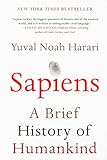
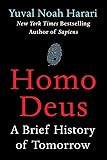
Yuval Noah Harari is an Israeli historian and public intellectual whose Sapiens, Homo Deus, and 21 Lessons for the 21st Century have made him one of the most widely read non-fiction authors of the past decade.
Yuval Noah Harari is a professor at the Hebrew University of Jerusalem who became an unlikely global celebrity through Sapiens: A Brief History of Humankind (2011 in Hebrew, 2014 in English), a book that offers a compressed and provocative history of the human species from its biological origins to the present day. Harari’s central organising argument — that Homo sapiens succeeded because of a cognitive revolution that enabled us to believe in fictions (religions, nations, corporations, money) and thereby cooperate in large groups — is a genuinely useful explanatory framework that gives the book its structural coherence.
Homo Deus (2015) extends the argument forward: if Sapiens explained how humanity conquered the world, Homo Deus speculates about what we might do with that power — pursuing immortality, happiness, and divinity while potentially rendering most humans economically and politically irrelevant through artificial intelligence and biotechnology. 21 Lessons for the 21st Century (2018) collects essays on contemporary challenges from climate change to political disillusionment. All three books share the quality of being extremely readable and thought-provoking at the expense of scholarly caution: Harari synthesises across enormous fields with a confidence that many specialists find glib, and his generalisations are frequently more sweeping than the underlying evidence warrants.
The critical reception from historians and social scientists has been substantially more reserved than the public reception. Specific objections have been raised about his handling of agriculture (Sapiens presents it as an almost unambiguous disaster for human wellbeing), his characterisations of Buddhism and other philosophical traditions, and his tendency to present speculative scenarios as likely futures. These are legitimate criticisms. Harari is best read as a stimulating synthesiser and provocateur rather than as a reliable authority on any of the fields he traverses, and his books work best when they prompt the reader’s own thinking rather than supplant it.
Reading Guides