Best Books About Work and Career: Essential Reading for Professionals
The best books about work and career — from Deep Work and So Good They Can't Ignore You to Range and Four Thousand Weeks. Essential professional reading.
By Marcus Webb

The best books about work and career share a willingness to challenge the conventional wisdom about success — the advice to follow your passion, to specialise early, to optimise your time relentlessly. The most honest books recognise that the relationship between effort, talent, and career satisfaction is more complicated than the success literature typically acknowledges, and that the conditions of a working life that is genuinely meaningful require more than productivity hacks.
The books listed here range from practical guides to philosophical arguments about the nature of work and time.
The Essential List
Deep Work — Cal Newport (2016)
The most practically influential career book of the past decade. Newport’s central argument — that the ability to focus without distraction for extended periods is both increasingly rare and increasingly valuable, and that cultivating this ability is the most important thing a knowledge worker can do — is supported by evidence from the research literature and illustrated through case studies from writers, scientists, and professionals. The book is divided into two parts: the argument for depth, and the practical rules for implementing it. The most actionable of the books listed here.
So Good They Can’t Ignore You — Cal Newport (2012)
Newport’s earlier book, and the one that challenges the ‘follow your passion’ advice most directly. Newport argues that passion follows mastery rather than preceding it — that the feelings of autonomy, competence, and connection to purpose that people associate with ‘doing what they love’ are the results of becoming genuinely good at something, not the precondition. The practical implication: invest in developing rare and valuable skills, then use the career capital those skills provide to negotiate the working conditions (autonomy, relatedness, interesting problems) that produce satisfaction.
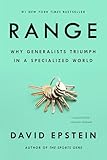
Range — David Epstein (2019)
The most effective counter-argument to the 10,000-hours-of-deliberate-practice thesis. Epstein demonstrates that in most domains — science, art, management, medicine — breadth of experience, late specialisation, and the ability to transfer concepts across domains is more adaptive than early narrow specialisation. Tiger Woods is the anomaly; Roger Federer (who played multiple sports as a child and came to tennis relatively late) is more representative. The book is most useful for people who have not found their ‘one thing’ — and for people who are suspicious of advice that tells them they should have.
Four Thousand Weeks — Oliver Burkeman (2021)
The most philosophically honest book about time and work. Burkeman’s starting premise — that the productivity industry’s implicit promise that you can, if sufficiently efficient, do everything you want to do is mathematically impossible — leads him to the conclusion that the correct relationship with finite time is not optimisation but choice. Every commitment is a renunciation; every yes is hundreds of implicit nos. The book recommends not better time management but a more honest relationship with the impossibility of completing everything, and a more deliberate relationship with what matters enough to choose.
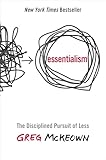
Essentialism — Greg McKeown (2014)
McKeown’s argument — that the disciplined pursuit of less, of ruthlessly eliminating the inessential in favour of the very few things that matter most, is more productive than the undisciplined pursuit of more — is a sustained application of the 80/20 principle to professional life. The book is less philosophically interesting than Newport or Burkeman but more immediately actionable: its framework (Explore, Eliminate, Execute) provides a practical system for deciding what deserves your effort. The most useful of the books listed here for people whose main problem is overcommitment.
Grit — Angela Duckworth (2016)
Duckworth’s argument — that the distinguishing characteristic of high achievers is not talent but perseverance (the combination of passion and persistence she calls ‘grit’) — is based on two decades of research in psychology and presents a more egalitarian model of success than talent-based accounts. The book is more descriptive than prescriptive: it identifies what grit looks like in practice rather than providing a simple formula for developing it. Its most important contribution is the distinction between the two components — you need both passion (direction) and perseverance (sustained effort) — and the evidence that talent without grit rarely produces achievement.
The Lean Startup — Eric Ries (2011)
The most practically influential business methodology book of the past fifteen years. Ries’s ‘build-measure-learn’ cycle — the principle that startups (and any organisation operating under uncertainty) should test assumptions against reality as cheaply and quickly as possible rather than planning extensively before execution — has been adopted across industries and professional contexts. Less a career book than a book about how to work intelligently under conditions of uncertainty. Valuable for anyone working in environments where the right approach is not predetermined.
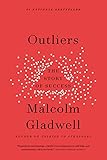
Outliers — Malcolm Gladwell (2008)
Gladwell’s account of success is the most widely read argument that individual achievement is more contingent on circumstance — time of birth, access to opportunity, cultural background — than on talent or effort alone. The 10,000-hours thesis (that mastery requires approximately 10,000 hours of practice) has been qualified substantially by subsequent research, but the book’s broader argument (that ‘self-made’ success stories systematically underestimate the structural advantages that enabled them) remains valuable and underacknowledged.
The Honest Truth About Career Books
The most useful career books are the ones that challenge the mythology of meritocratic individual achievement rather than reinforcing it. Deep Work and So Good They Can’t Ignore You are useful because they identify skills that can be deliberately cultivated. Four Thousand Weeks and Essentialism are useful because they acknowledge the necessity of choosing rather than optimising. Range is useful because it challenges the premature specialisation that most career advice recommends. None of them promises that following their advice will guarantee success — and that honesty is the mark of a book worth reading.
Frequently Asked Questions
What is the best book about work and career to read first?
So Good They Can't Ignore You (2012) by Cal Newport is the best starting point — Newport's argument that career satisfaction comes from mastery (becoming so good at something that you have leverage to shape your working life) rather than from following passion is the most practically useful piece of career advice available. Deep Work (2016), also by Newport, is the operational complement — how to build the concentrated practice that mastery requires. Together they form the most coherent and evidence-based career philosophy available in book form.
What is Deep Work about?
Deep Work (2016) by Cal Newport argues that the ability to perform focused, cognitively demanding work — without distraction, for extended periods — is both increasingly rare and increasingly valuable in the modern economy. Newport distinguishes 'deep work' (cognitively demanding, distraction-free) from 'shallow work' (administrative, easily replicated) and argues that career success depends on cultivating the capacity for the former. The book provides both the argument for prioritising depth and practical strategies for building the habits that make it possible.
What is Four Thousand Weeks about?
Four Thousand Weeks (2021) by Oliver Burkeman is a radical reconsideration of time management — starting from the observation that four thousand weeks is roughly the average human lifespan and that the productivity industry's implicit promise (that you can, if sufficiently organised, do everything you want to do) is a lie. Burkeman's argument is that the correct response to finite time is not to optimise but to choose: to accept that any commitment is a renunciation of other possibilities, and to make peace with that finitude. The most philosophically honest book about time and work.
What is Range about as a career book?
Range (2019) by David Epstein challenges the 10,000-hours rule popularised by Malcolm Gladwell and argues that breadth of experience — sampling different fields, developing diverse skills — is more valuable than early specialisation in most domains. Epstein distinguishes 'kind' learning environments (chess, golf — where rules are fixed and feedback is immediate) from 'wicked' environments (most human domains, where the rules are unclear and feedback is delayed) and argues that range is more adaptive than depth in wicked environments. A direct challenge to the 'find your one thing' school of career advice.