Best LGBTQ+ Fiction: Essential Novels and Stories
The best LGBTQ+ fiction — from Giovanni's Room and The Hours to A Little Life and On Earth We're Briefly Gorgeous. Essential queer literature and gay fiction.

LGBTQ+ fiction encompasses some of the most important novels of the twentieth and twenty-first centuries — from the midcentury classics (Baldwin, Woolf) in which queer identity could only be addressed obliquely or tragically, through the AIDS-era literature that confronted loss directly, to the contemporary novels that can take queer identity as given and explore the full range of human experience. The novels below are the essential starting points.
The Classics
Giovanni’s Room — James Baldwin (1956)
The most concentrated classic in queer literature — David’s refusal to acknowledge his love for Giovanni, and the catastrophe that results, is Baldwin’s argument that dishonesty about one’s identity is more destructive than the identity itself. Written in Paris, published in 1956 by an American publisher who almost rejected it, the novel is 160 pages of extraordinary precision. Baldwin was African American, and his decision to write about white characters (David is American, Giovanni is Italian) was a deliberate choice that allowed him to address sexuality without the complication of race — a separation he knew was artificial but that he used strategically.
Orlando — Virginia Woolf (1928)
Woolf’s most playful novel — Orlando lives for four hundred years, begins as a young Elizabethan nobleman, and becomes a woman somewhere in the seventeenth century. The novel is a love letter to Vita Sackville-West, a satire of English attitudes to gender and class, and a meditation on how identity persists across time and transformation. The lightest entry into Woolf’s work and the most accessible to readers new to modernism.
Sula — Toni Morrison (1973)
Morrison’s second novel — the friendship between Sula Peace and Nel Wright in the Bottom, a Black neighbourhood in a small Ohio town, from childhood through to old age. The novel is about female friendship as the central relationship of two women’s lives, and about what happens to Sula — who refuses to conform to any of the roles available to her — in a community that needs her as its scapegoat. The most concise and the most underrated of Morrison’s novels.
Contemporary Fiction
The Hours — Michael Cunningham (1998)
Cunningham’s Pulitzer Prize-winning novel — three women across three time periods (Virginia Woolf in 1923; Laura Brown, a housewife reading Mrs Dalloway in 1949 Los Angeles; Clarissa Vaughan, who is hosting a party for a friend dying of AIDS in 1990s New York), all connected by Woolf’s novel and by the question of what it means to build a life you can actually inhabit. The most emotionally accessible contemporary queer novel and the best introduction to Cunningham’s work.
On Earth We’re Briefly Gorgeous — Ocean Vuong (2019)
Vuong’s novel in letters — a letter from a Vietnamese-American son to his illiterate mother, about his childhood in Connecticut, his relationships, his first love with a boy named Trevor, and his mother’s trauma and addiction. Vuong is a poet; the prose is the most lyrical on this list. The novel is about queer identity but equally about immigration, addiction, masculinity, and what it means to make art out of a language that is not your family’s.
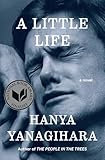
A Little Life — Hanya Yanagihara (2015)
The most ambitious and most emotionally demanding queer novel of the past decade — four men’s friendship from college to middle age, and primarily the story of Jude St. Francis, whose history of childhood abuse shapes everything that follows. The novel is about chosen family, about the capacity of love to fail even when genuine, and about what survival costs. 700 pages; not a starting point; the most extreme reading experience in this list.
Historical Fiction
The Swimming Pool Library — Alan Hollinghurst (1988)
Hollinghurst’s debut novel — Will Beckwith, a young aristocratic gay man in London in 1983, the summer before the AIDS epidemic changes everything. The novel is a portrait of a world on the cusp of catastrophe, aware of its pleasures and unaware of what is about to end them. Hollinghurst’s prose is the most elegant in English queer fiction.
From the Margins to the Mainstream
The trajectory of LGBTQ fiction is one of the most dramatic in modern literature — a movement from the shadows of coded suggestion and tragic obligation toward the full light of mainstream visibility and artistic freedom. For much of the twentieth century, queer experience could be represented in fiction only obliquely, through subtext and euphemism, or under the unwritten rule that gay and lesbian characters must come to bad ends, their stories doomed to punishment, isolation, or death. To read across the tradition is to witness the slow, hard-won expansion of what was sayable: the gradual shedding of the tragic mandate, the emergence of stories in which queer love could be portrayed as ordinary and even joyful, and finally the arrival of a literature confident enough to treat the full range of LGBTQ experience with the same freedom and complexity granted to any other. This history is inseparable from the broader struggle for queer rights and recognition, and the fiction both reflected and advanced it, each new book that dared to portray queer lives honestly expanding the space for those that followed. Understanding this arc deepens the reading of every work on this list, because each occupies a particular point on the journey from silence to voice, from coded margin to open center. The earlier works carry the weight of the constraints they had to write against; the later ones enjoy freedoms their predecessors made possible. Together they trace not only a literary evolution but a social one, the long process by which a body of experience moved from the unspeakable to the celebrated, and by which a marginalized community claimed its place in the literature of its time.
The Universal Within the Specific
A persistent question shadows discussions of LGBTQ fiction: is it a literature only for LGBTQ readers, or does it speak to everyone? The answer the best of these books provide is unequivocal — that the most specific stories are also the most universal, and that the particulars of queer experience open onto emotions and questions common to all human lives. Love, longing, the fear of rejection, the search for acceptance and belonging, the struggle to reconcile one’s true self with the expectations of family and society, the courage required to live authentically — these are not the exclusive property of any group but the deepest concerns of human existence, and LGBTQ fiction explores them with a particular intensity precisely because queer lives have so often had to fight for them. The specificity is the strength, not the limitation: by rendering the concrete realities of a particular kind of love and a particular experience of difference, these books reach the universal through the particular, as all great literature does. A straight reader who enters one of these novels finds not an alien world but a heightened version of feelings they know — the terror and exhilaration of first love, the pain of concealment, the longing to be seen and accepted as one truly is. The finest LGBTQ fiction thus performs the essential work of all literature: it builds empathy and understanding across the lines of difference, allowing readers to inhabit lives unlike their own and to recognize, in those lives, the shared human heart. It is at once a literature of and for a community and a literature for everyone, and its specificity is the very means of its universality.
Visibility, Recognition, and the Power of Being Seen
For LGBTQ readers in particular, this literature performs a function that is difficult to overstate: it offers the profound experience of recognition, of seeing one’s own life, love, and identity reflected and affirmed in art — an experience long denied to queer people and still precious wherever it is found. To grow up without ever encountering oneself in the stories a culture tells is a quiet but real deprivation, breeding isolation and the corrosive sense that one’s existence is somehow unspeakable or shameful. LGBTQ fiction answers this deprivation directly, holding up a mirror in which queer readers can find their experiences taken seriously, their loves portrayed as real and valuable, and their struggles understood. The power of this recognition is immense, especially for young people coming to understand themselves, for whom a single book that portrays a life like their own can be a lifeline, a source of validation and hope, and a proof that the future holds possibility rather than only loss. Beyond the individual, this visibility does cultural work, asserting the reality and dignity of queer lives against a history of erasure and contributing to the broader recognition on which acceptance depends. The books on this list matter, then, not only as literature but as acts of presence — declarations that these lives exist, that they are worthy of art, and that the people who live them deserve to see themselves reflected in the stories of their time. In rendering queer experience visible and affirming its value, this fiction gives its readers a gift that the previously invisible understand most deeply: the simple, transforming power of being seen.
Reading Order
New to queer fiction: Giovanni’s Room → The Hours → On Earth We’re Briefly Gorgeous.
Historical progression: Orlando → Giovanni’s Room → Sula → The Swimming Pool Library → The Hours → A Little Life.
Contemporary: On Earth We’re Briefly Gorgeous → The Hours → A Little Life.
Frequently Asked Questions
What is the best LGBTQ+ novel to start with?
Giovanni's Room (1956) by James Baldwin is the essential starting point — a short, devastating novel about an American man in Paris who falls in love with an Italian bartender while his fiancée travels in Spain, and the consequences of his refusal to acknowledge what he is. At 160 pages and written with extraordinary economy, it is the most concentrated classic in queer literature. The Hours (1998) by Michael Cunningham is the most accessible contemporary choice — three women across three periods, all connected by Virginia Woolf's Mrs Dalloway, all examining what it means to build a life that fits who you actually are.
What is Giovanni's Room about?
Giovanni's Room (1956) by James Baldwin follows David, an American man living in Paris in the 1950s, who falls in love with Giovanni, an Italian bartender, while his fiancée Hella travels in Spain. When Hella returns, David abandons Giovanni and the relationship ends in catastrophe. The novel is narrated in retrospect, as David waits for news of Giovanni's execution. Baldwin's argument — that the refusal of one's identity is more destructive than the identity itself, that dishonesty in love is more damaging than the love being feared — is the central argument of the novel and one of the most powerful statements in queer literature.
What is A Little Life about?
A Little Life (2015) by Hanya Yanagihara follows four men from their college friendship in New York to middle age — Willem, JB, Malcolm, and Jude St. Francis. The novel is primarily about Jude, whose history of childhood abuse is gradually revealed, and Willem's love for him. At 700 pages, it is the most ambitious and most emotionally demanding novel on this list — a novel about trauma, survival, chosen family, and the capacity of love to both heal and harm. It was shortlisted for the Booker Prize and has been both celebrated for its ambition and criticised for its extremity. Not a starting point; read after the others.
What is Orlando about?
Orlando (1928) by Virginia Woolf follows Orlando — who begins as a young Elizabethan nobleman and lives for four hundred years, at some point becoming a woman — through the history of English literature and society. The novel is a love letter to Vita Sackville-West (Woolf's lover and the model for Orlando), a satire of English attitudes to gender and class, and a meditation on the relationship between identity and time. Woolf's lightest and most playful novel; a good introduction to her style for readers put off by the demands of Mrs Dalloway or The Waves.