Books Like The Hunger Games: 13 Dystopian Reads
If The Hunger Games had you racing through pages, these dystopian novels — from Divergent to Red Rising — deliver the same urgency, rebellion, and heart.

Suzanne Collins’ The Hunger Games trilogy did something the dystopian genre rarely manages: it built a genuinely frightening political world and then populated it with characters you cared about so fiercely that the political stakes became personal. Katniss Everdeen is a heroine in the tradition of action, but she is also a traumatized teenager making decisions under impossible pressure, and Collins never lets you forget either dimension. The pacing is relentless. The world-building is efficient and pointed. The critique of media spectacle, class exploitation, and the machinery of oppression is sharp enough to read as journalism.
If you finished Mockingjay and felt the absence, these 13 novels will help. Each one offers a protagonist fighting a system that wasn’t built for them, a world that feels like a warning, and the specific urgency of a story that won’t let you stop reading.
YA Dystopian with Strong Protagonists
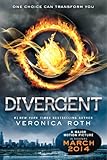
#1 — Divergent by Veronica Roth
In a future Chicago, society is divided into five factions based on personality: Dauntless, Erudite, Candor, Amity, Abnegation. Beatrice Prior, at sixteen, must choose her faction permanently — and discovers she is Divergent, fitting none of them cleanly. Roth’s world has the same efficiency as Collins’: the faction system is immediately legible as a metaphor for how societies fragment and control their members. The action plotting is visceral, the romance is subordinate to the larger conflict, and Tris, like Katniss, is driven by loyalty to family.
#2 — The Maze Runner by James Dashner
Thomas wakes in an elevator with no memories, arriving in the Glade — a clearing in the center of a massive, shifting maze inhabited by creatures that kill at night. The boys who have been there before him have built a functioning society and a systematic attempt to solve the maze. Dashner’s novel has a mystery structure that the Hunger Games lacks, but the same combination of life-or-death urgency and a protagonist who must operate within a system while trying to dismantle it. The reveals compound effectively across the series.
#3 — Legend by Marie Lu
Two teenagers in the future Republic of America: June, the Republic’s most brilliant military prodigy; Day, its most wanted criminal, who grew up in the slums the Republic is happy to let die. Lu tells the story from both perspectives, alternating chapters in a way that structurally echoes Collins’ own dual-POV moments. The collision between their worldviews — one born into privilege, one born into the poverty that privilege requires — is handled with more sophistication than most YA dystopian manages.
#4 — An Ember in the Ashes by Sabaa Tahir
In an empire modeled on ancient Rome, Laia is a Scholar whose brother is arrested. To save him, she becomes a spy inside the military academy that trains the Empire’s most brutal soldiers. One of those students is Elias, who wants nothing more than to be free of the Empire he serves. Tahir’s world is darker and more violent than Collins’, but the same moral framework applies: what is a person willing to do to protect the people they love, and what does that cost them?
Classic Dystopian That Shaped the Genre
#5 — The Giver by Lois Lowry
The novel that made dystopian literature a fixture of middle school curricula — and that still reads as profoundly uncomfortable. In Jonas’s community, everything is regulated: family units are assigned, jobs are assigned, memories of a different past are held by only one person. When Jonas is selected to be the next Receiver of Memory, he begins to understand what his community sacrificed for its stability. The Giver is shorter than The Hunger Games but asks the same central question: what is the cost of order, and who pays it?
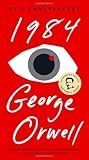
#6 — 1984 by George Orwell
If The Hunger Games is the populist version, 1984 is the source text. Orwell’s Oceania — where history is continuously rewritten, surveillance is total, and the Party maintains power not through prosperity but through manufactured fear — prefigures every YA dystopia that follows. Winston Smith’s rebellion is smaller and more inward than Katniss’s, and the novel ends without the comfort Collins allows. For Hunger Games readers ready to go deeper, this is the necessary next step.
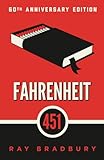
#7 — Fahrenheit 451 by Ray Bradbury
In Montag’s America, books are illegal and firemen burn them rather than fight fires. The critique is slightly different from Collins’ — Bradbury is more concerned with voluntary numbness than with imposed control — but the two novels share a world in which entertainment has been weaponized to prevent thought. Montag’s awakening, his discovery that a life of consumption is not a life, and his eventual rebellion have the same emotional arc as Katniss’s.
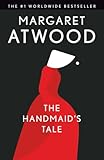
#8 — The Handmaid’s Tale by Margaret Atwood
For older Hunger Games readers: the most politically precise dystopia on this list. Offred narrates from inside the Republic of Gilead, a theocratic dictatorship that has reduced women to reproductive function. Atwood builds her world from historical examples — nothing in Gilead is invented, she has argued, without precedent in real human history — and the result is a novel that functions simultaneously as speculative fiction, political satire, and documentary. The same questions The Hunger Games asks about complicity and resistance are asked here with greater historical grounding.
Psychological Depth and Inner Conflict
#9 — The Knife of Never Letting Go by Patrick Ness
Todd Hewitt is the last boy in Prentisstown, a settlement where a germ has made everyone’s thoughts audible — a constant din of Noise. One month before he becomes a man, he discovers a girl — Viola — the first girl he has ever seen, and the first proof he has that the history he was taught is a lie. Ness’s Chaos Walking trilogy is the most literary YA dystopian on this list: the prose is formally innovative, the moral questions are more complex than most YA attempts, and the violence has genuine weight.
#10 — Shatter Me by Tahereh Mafi
Juliette has been locked in isolation for 264 days because her touch is lethal — or so she has been told. The Reestablishment, which has taken control of a dying world, wants to weaponize her. Shatter Me is more romantic than the other novels on this list, but Mafi’s prose style — highly stylized, with strikethroughs revealing Juliette’s suppressed thoughts — is genuinely original, and the portrait of someone who has internalized their own monstrousness is psychologically richer than most YA manages.
For Readers Who Want a Longer Series
#11 — Matched by Ally Condie
In Cassia’s Society, the government chooses your job, your partner, your food intake, and the hour of your death. At her Matching ceremony — the night she learns who her lifelong partner will be — she sees two faces. Matched is quieter than The Hunger Games and more concerned with interiority than action, but it shares Collins’ understanding that the first act of rebellion is simply wanting something you weren’t assigned to want. The trilogy builds toward open conflict with the same escalating structure Collins uses.
#12 — Delirium by Lauren Oliver
Love has been classified as a disease — amor deliria nervosa — and at eighteen every citizen is cured. Lena counts the days until her procedure, having lost her mother to the disease. When she falls in love before the cure, everything she was taught about her world begins to crack. Oliver’s trilogy is the most romantic on this list, but the critique of a society that pathologizes feeling is directly in The Hunger Games tradition, and the action plotting sharpens considerably across the series.
For Readers Ready to Graduate from YA
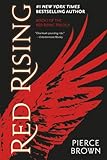
#13 — Red Rising by Pierce Brown
Darrow is a Red, working in the mines of Mars in the lowest caste of a color-coded hierarchy, believing his labor is contributing to the terraforming that will allow humanity to spread through the solar system. When he discovers the terraforming was completed generations ago and his entire civilization is a lie designed to keep the lower castes compliant, his transformation into an agent of revolution begins. Red Rising begins as YA-accessible and escalates into something significantly darker and more politically sophisticated. It is the series most Hunger Games readers eventually find their way to.
How to Choose Your Next Read
If you want the most similar tone and pacing: Divergent or Legend.
If you want the most literary writing: The Knife of Never Letting Go or The Giver.
If you want the most politically serious: 1984 or The Handmaid’s Tale.
If you want to level up from YA: Red Rising.
The Hunger Games Series in Order
For all five Hunger Games novels and novellas in the correct reading sequence, see our Hunger Games Books in Order guide.
Hunger Games vs Divergent
For a direct comparison of the two most popular YA dystopian series — which to read first and how they differ — see our Hunger Games vs Divergent guide.
For the Best Dystopian Novels
For the definitive guide to dystopian fiction — from 1984 and Brave New World to contemporary dystopia — see our Best Dystopian Novels list.
Affiliate disclosure: Links to Amazon on this page are affiliate links. We earn a small commission at no extra cost to you. This does not influence our editorial recommendations.
Frequently Asked Questions
What are the best books like The Hunger Games?
The best books like The Hunger Games are Divergent by Veronica Roth, Red Rising by Pierce Brown, and Maze Runner by James Dashner. All feature young protagonists in dystopian societies fighting for survival against oppressive systems.
What should I read after The Hunger Games trilogy?
After The Hunger Games, most readers move to Divergent by Veronica Roth for similar YA dystopia, Red Rising by Pierce Brown for a more adult take on the same themes, or An Ember in the Ashes by Sabaa Tahir for fantasy with the same high stakes.
Is Red Rising similar to The Hunger Games?
Red Rising shares The Hunger Games premise of a class-based society where people fight for survival, but it is aimed at adults and set in a science fiction world on Mars. It is darker, more complex, and more violent than The Hunger Games.
What dystopian books are appropriate for teens?
The best dystopian books for teens include Divergent, Maze Runner, An Ember in the Ashes, and Legend by Marie Lu. These are all young adult titles with teen protagonists and are appropriate for readers 13 and up.