Where to Start with Atul Gawande: A Reading Guide
Where to start with Atul Gawande — whether to begin with Being Mortal, The Checklist Manifesto, or Complications. A complete reading guide to the surgeon-writer.
By Priya Anand
Atul Gawande (born 1965) is the American surgeon, public health researcher, and staff writer at The New Yorker whose books on medicine, surgery, and mortality have established him as the most important medical writer working in English today. He is a general and endocrine surgeon at Brigham and Women’s Hospital in Boston, a professor at Harvard Medical School and Harvard School of Public Health, and was named one of the hundred most influential thinkers in the world by Time magazine. His books combine clinical precision, philosophical depth, and the narrative drive of literary non-fiction; they address not just how medicine works but what medicine is for.
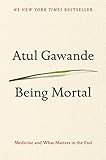
Where to Start: Being Mortal (2014)
The essential Gawande — and one of the most important and most discussed medical books of the past decade. The central argument: modern medicine has largely failed to help people die well. Hospitals treat dying as a medical problem — another disease to be fought, another failure to be prevented — rather than as a human experience to be navigated with the patient’s priorities at the centre. The result: most Americans die in medical settings, on ventilators, in pain, having undergone treatments that did not extend meaningful life but did prevent them from saying what they needed to say or spending time where they wanted to be.
Gawande draws on geriatrics, hospice, and palliative care to describe what an alternative looks like — medicine that asks what matters to the patient, not just what the disease requires. He interviews a geriatrician who built her practice around a single question: ‘What do you understand about your situation, and what do you fear most?’ He follows his own father’s dying, which he helped navigate using the principles he had learned from researching the book.
Being Mortal is both policy argument and personal testimony. It is the book that changed the most conversations about end-of-life care in American hospitals; it has also changed individual decisions in families facing exactly the situations Gawande describes.
The Checklist Manifesto (2009)
Gawande’s most practically influential book — the argument that simple checklists reduce error in complex professional environments. The aviation industry’s use of checklists to eliminate pilot error provides the model; Gawande extends it to surgery (where his own research showed that a 19-item surgical safety checklist reduced complications by 36% and deaths by 47% in eight hospitals globally), construction, and financial regulation. The book is a sustained argument that the limits of human expertise in high-pressure environments are behavioural, not cognitive — we know what to do; we fail to do it consistently.
Complications (2002)
Gawande’s debut — a collection of essays about what it is actually like to be a surgical trainee learning on real patients, and about the fundamental uncertainty of medicine. The essays cover a resident’s first solo operations (performed imperfectly, on real people, as part of the learning process), the systematic failures in how medicine handles error, the strange psychology of surgeons, and specific cases where the right answer is genuinely unknowable. The book that established his voice; essential for readers who want to understand the texture of clinical medicine rather than just its outcomes.
Better (2007)
Gawande’s second collection — three essays on performance in medicine, asking how doctors and surgeons can be better at what they do. Case studies from cystic fibrosis care (a doctor who drove dramatically better outcomes in his patients by obsessively studying variation in results), wartime surgery (how military medicine in Iraq improved outcomes through systematic documentation and feedback), and capital punishment (Gawande’s account of the medical profession’s involvement in executions) constitute the most searching examination of medical ethics in his early work.
Why Being Mortal Is the Ideal First Book
For a reader new to Atul Gawande, Being Mortal is the ideal first book because it is among his most acclaimed and moving works and a fine expression of his distinctive gifts, the clear and humane writing, the deep insight as a physician, and the compassionate engagement with profound questions. Being Mortal explores how medicine and society deal with aging, mortality, and the end of life, arguing for a more humane approach that honors what matters most to people as they near the end. As an entry point it is ideal, for it is one of his best-known books and a perfect example of his clear, humane, and thought-provoking nonfiction. It welcomes the newcomer with its profound subject, its clear writing, and its compassion, drawing the reader into his distinctive perspective. It is among his major works and a fine representation of his gifts, so the new reader encounters Gawande at his most characteristic. For the newcomer, then, Being Mortal is an excellent starting point, on a profound and difficult subject handled with care.
What to Expect as a New Reader
As a new reader, you can expect Being Mortal to be a clear, humane, and deeply moving book about aging and mortality. You can expect a profound subject, for the book explores how medicine and society deal with aging, frailty, and the end of life. You can expect insight as a physician, for Gawande draws on his medical experience and on the stories of patients and his own family. You can expect a compassionate argument, for Gawande makes the case for a more humane approach to the end of life, one that honors what matters most to people. You can expect clear, accessible, and thoughtful writing. You can expect emotional depth and difficult, important questions. You can expect a book that has changed how many readers think about mortality. You should be prepared for an emotionally affecting subject. Expect, in short, a clear, humane, and deeply moving book about aging and mortality, a fine introduction to Gawande’s gifts.
Going Deeper After Your First Book
Once Being Mortal has introduced you to Gawande’s gifts, the reader who wishes to go deeper can explore his other books, which apply the same clear, humane writing and deep insight to further questions about medicine, performance, and how we do our work. His other acclaimed works explore the challenges and improvement of surgical and medical practice, the power of the simple checklist to reduce error, and the realities of being a doctor, each marked by his clear writing and his thoughtful, humane perspective. Reading these after Being Mortal deepens your appreciation of Gawande’s distinctive gifts, the clear and humane writing, the deep insight as a physician, and the compassionate engagement with profound questions. His characteristic strengths run through his work, and the reader moved by Being Mortal will find them across his books. Building your reading journey through Gawande is a matter of following his nonfiction from Being Mortal into his other books. The reader who begins here and continues will find one of the most humane and insightful physician-writers working today.
Reading Atul Gawande
Begin with Being Mortal — it is Gawande’s most important and most moving book, and the one that addresses questions every reader will eventually face directly. Read The Checklist Manifesto for his most practically applicable argument. Complications and Better are best read as collections of essays rather than consecutive books; either can be read as a third step.
Frequently Asked Questions
Where should I start with Atul Gawande?
Being Mortal: Medicine and What Matters in the End (2014) is the most widely recommended starting point — Gawande's account of how modern medicine fails dying patients by treating death as a medical problem to be solved rather than a human experience to be navigated. Drawing on patients' experiences, interviews with geriatricians and hospice workers, and his own father's death, Gawande argues that helping people die well — on their own terms, with their priorities respected — is one of medicine's most important and most neglected tasks. The Checklist Manifesto is the alternative for readers interested in systems and safety rather than death and meaning.
What is The Checklist Manifesto about?
The Checklist Manifesto: How to Get Things Right (2009) is Gawande's argument that checklists — simple, standardised lists of steps — are among the most powerful tools available for reducing error in complex, high-stakes environments. He draws on aviation safety, construction, and his own development of a surgical safety checklist (now used in operating rooms worldwide) to argue that human error in professional settings is not primarily a knowledge problem but a discipline problem: we know what to do, but fail to do it consistently under pressure. The most practically applicable of his books.
What is Complications about?
Complications: A Surgeon's Notes on an Imperfect Science (2002) is Gawande's first book — a collection of essays about the uncertainty, fallibility, and moral complexity of medicine, drawn from his experience as a surgical resident. He writes about the experience of learning to perform surgery on real patients, about the unpredictability of medical outcomes, and about the systematic failures and individual errors that make medicine as much an art as a science. The book that established his reputation as the finest medical essayist of his generation.
Is Gawande's writing accessible to non-medical readers?
Gawande is one of the most gifted science and medicine writers working today; his books are written for educated general readers, not for medical professionals. He uses specific patients and cases as entry points into systemic and philosophical questions, avoiding technical jargon while not oversimplifying the complexity of what he's describing. His New Yorker background is evident in his precision and clarity. Being Mortal in particular requires no medical background; it is a book about dying as a human experience, not a medical textbook.