Where to Start with James Nestor: A Reading Guide
Where to start with James Nestor — how to approach Breath, his essential investigation into the science of how we breathe and why most of us do it wrong. A complete reading guide.
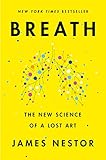
James Nestor is an American science journalist whose previous book Deep covered the science of freediving. Breath: The New Science of a Lost Art (2020) was his breakthrough work — a multi-year investigation into breathing science that spent months on the New York Times bestseller list and attracted a devoted following among readers interested in health, performance, and the overlooked fundamentals of human biology.
Where to Start: Breath (2020)
The essential Nestor — and one of the more surprising health books of recent years. The premise of Breath sounds simple to the point of implausibility: most people breathe wrong, and this causes significant, measurable health problems. But Nestor spent years in libraries, medical archives, and laboratories investigating the evidence, and the case he builds is substantial.
The book begins with a controlled experiment Nestor conducted on himself: he spent ten days breathing exclusively through his mouth — plugging his nose with medical silicone — and documented the results. They were dramatic: blood pressure rose, snoring appeared, sleep quality deteriorated, stress markers increased. When he removed the plugs and switched to nasal breathing, the metrics reversed. The personal self-experimentation frames the larger argument and provides the most immediately compelling evidence for why the method of breathing matters.
The nasal breathing vs. mouth breathing case is the book’s central contribution. The nose does things the mouth cannot: it filters, humidifies, and warms incoming air; it produces nitric oxide, which dilates blood vessels and improves oxygen transfer; it creates back-pressure during exhalation that keeps the airways open. Mouth breathing bypasses all of these functions, and decades of mouth breathing — as many modern humans practice due to chronic congestion, habit, or anatomical changes — produces measurable consequences for dental development, sleep quality, and cardiovascular function.
Nestor contextualises this with anthropological evidence: dental and skeletal records from pre-industrial humans show wider jaws, straighter teeth, and larger nasal passages than modern humans have — suggesting that dietary and environmental changes that produced mouth breathing have also produced structural changes over generations. The contemporary rates of dental crowding, malocclusion, and sleep apnea are, he argues, partly a consequence of breathing mechanics.
The carbon dioxide research is the most counterintuitive section: Nestor argues that many people’s problem is not insufficient oxygen but insufficient carbon dioxide tolerance. Carbon dioxide is not merely a waste product but a signalling molecule — it is what triggers the breathing reflex. Breathing too fast reduces carbon dioxide levels, which paradoxically impairs oxygen delivery and creates anxiety, hyperventilation, and chronic low-grade stress. Techniques that slow breathing — Buteyko, coherent breathing at approximately five to six breaths per minute, box breathing — build carbon dioxide tolerance and have documented cardiovascular and anxiety-reducing effects.
Why Breath Is the Ideal First Book
For a reader new to James Nestor, Breath is the ideal first book because it is his most popular and influential work and the fullest expression of his distinctive gift, the investigation of a fascinating and overlooked subject through engaging, research-driven narrative. Breath explores the science and the lost art of breathing, investigating how the way we breathe profoundly affects our health and well-being, and how modern humans have, in many ways, forgotten how to breathe well. As an entry point, it offers the fullest expression of Nestor’s gifts, the engaging investigation of a fascinating and overlooked subject, the combination of science, history, and personal experiment, and the accessible, narrative-driven style. It welcomes the newcomer with its surprising subject, its engaging investigation, and its practical relevance, drawing the reader into a fascinating exploration of something we do every moment without thinking. It is his best-known book and a fine representation of his gifts, so that the new reader encounters Nestor at his most characteristic. For the newcomer, then, Breath is the natural and ideal starting point.
What to Expect as a New Reader
As a new reader, you can expect Breath to be an engaging, surprising, and research-driven investigation of the science and lost art of breathing. You can expect a fascinating and overlooked subject, for Nestor investigates breathing, something we do every moment without thinking, and reveals how profoundly the way we breathe affects our health and well-being. You can expect an engaging investigation, for Nestor combines science, history, and personal experiment, exploring research, ancient practices, and his own experiences to investigate his subject. You can expect surprising findings, for Nestor reveals how modern humans have in many ways forgotten how to breathe well, and how breathing better can improve health. You can expect practical relevance, for the book offers insight into how we might breathe better and why it matters. You can expect an accessible, narrative-driven style that makes the science engaging and approachable. Expect, in short, an engaging, surprising, and research-driven investigation of the science and lost art of breathing, a fascinating introduction to Nestor’s gifts.
Going Deeper After Your First Book
Once Breath has introduced you to Nestor’s gift for investigating fascinating subjects, the reader who wishes to go deeper can explore his other work, which applies the same engaging, research-driven, narrative approach to other intriguing subjects, including the human relationship to the deep sea. His other work investigates the world of freediving and the mysteries of the deep ocean and the human body’s surprising capacities within it, in the same combination of science, adventure, and engaging narrative that marks his work. Reading this after Breath deepens your appreciation of Nestor’s distinctive gifts, the investigation of fascinating and overlooked subjects through engaging, research-driven narrative combining science, history, and personal experience. His characteristic approach runs through his work, and the reader who has enjoyed Breath will find the same engaging investigation in his other writing. Building your reading journey through Nestor’s work is a matter of following his fascinating investigations from breathing into the deep sea and beyond. The reader who begins with Breath and continues through his work will find an engaging and curious investigator of fascinating and overlooked subjects.
Reading James Nestor
Breath is Nestor’s essential work. It stands alone and requires no prior reading.
For the full James Nestor bibliography, reviews, and biography, visit the James Nestor author page on Editors Reads.
Affiliate disclosure: Links to Amazon on this page are affiliate links. We earn a small commission at no extra cost to you.
Frequently Asked Questions
Where should I start with James Nestor?
Breath: The New Science of a Lost Art (2020) is Nestor's essential book — a thorough investigation of breathing science that argues most people breathe sub-optimally, with measurable health consequences. One of the more surprising and practically useful health books of recent years; the nasal breathing vs. mouth breathing research is well-documented and the practical techniques are clearly explained.
What is Breath about?
Breath investigates how the way we breathe affects our health — and finds that most modern humans breathe too fast, through the mouth, and with too little attention to the mechanics that make breathing most efficient. Nestor covers the historical and anthropological context (skull and dental records showing ancient humans had wider airways than modern ones), the science of nasal vs. mouth breathing, the role of carbon dioxide tolerance, and specific breathing techniques from Buteyko, pranayama, and other traditions.
Is Breath's science reliable?
Breath synthesises research from established sources alongside more speculative material from folk and traditional practices that require more critical evaluation. The nasal breathing vs. mouth breathing findings are well-sourced and supported by good evidence. Nestor's personal self-experimentation (including a controlled experiment in which he spent ten days breathing only through his mouth) adds readable drama and personal credibility. Some claims about the extent of breathing's health effects extend further than the evidence strictly supports.
What should I read after Breath?
After Breath, Matthew Walker's Why We Sleep covers another overlooked health fundamental with comparable depth. Peter Attia's Outlive covers the full longevity picture in which breathing is one component. For the specific techniques Nestor describes, Patrick McKeown's The Oxygen Advantage provides the clinical depth behind the Buteyko method that Breath introduces.