Where to Start with Margaret Atwood: A Reading Guide
Where to start with Margaret Atwood — whether to begin with The Handmaid's Tale, Alias Grace, or Oryx and Crake. A complete reading guide to Atwood's novels.
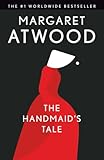
Margaret Atwood (born 1939) is the most internationally celebrated Canadian writer and one of the central figures in contemporary literature — a novelist, poet, and critic whose work spans dystopian fiction, historical fiction, speculative fiction, and literary essay. Her range is extraordinary: The Handmaid’s Tale, The Robber Bride, Alias Grace, The Blind Assassin, and the MaddAddam trilogy represent consistently different approaches to fiction, unified by an unfailing intelligence about power, gender, and narrative. She has won the Booker Prize twice.
Where to Start
The Most Famous: The Handmaid’s Tale (1985)
The best first Atwood for most readers. Gilead — the theocratic state that has replaced the United States — is one of the most fully realised dystopian worlds in fiction, and Offred’s narration (careful, ironic, alert to every danger and possibility) is among the most compelling first-person voices in contemporary literature. The novel’s political argument — about the ways in which women’s freedoms can be systematically dismantled and the complicity required to sustain the dismantling — is stated through dramatic action rather than polemic. The sequel, The Testaments (2019), is set fifteen years later and adds important perspectives on Gilead’s eventual collapse.
The Historical Novel: Alias Grace (1996)
Atwood’s most beautifully constructed novel — and the best starting point for readers who want her literary intelligence without the speculative framework. The question of Grace Marks’s guilt or innocence is never resolved; Atwood’s insight is that the question itself — who determines whether a nineteenth-century Irish servant woman is innocent or criminal, and by what means — is more interesting than any answer. The novel’s structure (alternating sessions with Jordan, Grace’s own narrative, documentary fragments) is Atwood’s most complex; its account of female survival in the nineteenth century is her most historically grounded.
The Speculative Fiction: Oryx and Crake (2003)
The best entry point for readers who want Atwood’s version of speculative fiction. Snowman — the apparent last human alive in a world destroyed by a manufactured plague — narrates the story of his friendship with the scientist Crake and both of their relationships with the mysterious Oryx. The novel’s account of a world organized around corporate genetic engineering (ChickieNobs, RejuvenEsense, OrganInc) is Atwood’s most sustained dark comedy and her most prescient near-future vision. Complete as a standalone; the subsequent volumes of the MaddAddam trilogy add depth and breadth.
The Literary Masterpiece: The Blind Assassin (2000)
Atwood’s Booker Prize-winning novel — and her most technically ambitious. Iris Chase narrates the story of her family, her sister Laura (who drove off a bridge in 1945), and the science-fiction novel that Laura apparently wrote, embedded within the narrative as a story-within-a-story. The novel’s three-layer structure (Iris’s memoir, Laura’s novel, contemporary newspaper clippings) is resolved in the final pages in one of the great structural revelations in contemporary fiction. Best approached after at least one of the novels above; the complexity rewards readers who are already attuned to Atwood’s narrative games.
The Testaments (2019)
The long-awaited sequel to The Handmaid’s Tale, set fifteen years after Offred’s story and told through three narrators: Aunt Lydia, the Gileadean architect of the Handmaid system; Agnes, a girl raised within Gilead; and Nicole, a girl raised in Canada. The novel won the Booker Prize (shared) and resolves the political situation of Gilead with considerably more hopefulness than the original. It is best read after The Handmaid’s Tale but works as a companion rather than a continuation; readers who have seen the television series may find their expectations complicated.
Why The Handmaid’s Tale Is the Ideal First Book
For a reader new to Margaret Atwood, The Handmaid’s Tale is the ideal first book because it is her most famous and influential novel and the fullest expression of her distinctive gifts, the chilling speculative vision, the sharp intelligence, and the powerful engagement with power, gender, and society. The Handmaid’s Tale imagines Gilead, a theocratic state that has replaced the United States and subjugates women, told through the voice of a woman trapped within it, in a chilling, powerful, and influential dystopia. As an entry point it is ideal, for it is her best-known work and a perfect example of her chilling, intelligent, and morally serious speculative fiction. It welcomes the newcomer with its compelling narrator, its chilling vision, and its powerful themes, drawing the reader into her distinctive vision. It is her most famous work and the one that best represents her gifts, so the new reader encounters Atwood at her most characteristic. For the newcomer, then, The Handmaid’s Tale is the natural and ideal starting point.
What to Expect as a New Reader
As a new reader, you can expect The Handmaid’s Tale to be a chilling, intelligent, and powerful dystopian novel. You can expect a chilling vision, for the novel imagines Gilead, a theocratic state that has replaced the United States and brutally subjugates women. You can expect a compelling narrator, for the story is told through the intimate voice of a woman trapped within Gilead. You can expect sharp intelligence, for Atwood writes with precision, insight, and control. You can expect powerful themes, for the novel engages power, gender, oppression, and resistance. You can expect a fully realized, disturbingly plausible world. You can expect emotional power and moral seriousness. You should be prepared for disturbing subject matter. Expect, in short, a chilling, intelligent, and powerful dystopian novel, a superb introduction to Atwood’s gifts.
Going Deeper After Your First Book
Once The Handmaid’s Tale has introduced you to Atwood’s gifts, the reader who wishes to go deeper can explore her other novels, which continue her chilling speculative vision, her sharp intelligence, and her powerful engagement with society and the human condition. Her sequel returns to Gilead decades later, while her acclaimed speculative trilogy imagines a future shaped by genetic engineering and environmental collapse, and her other novels range across historical fiction, literary fiction, and the speculative, each marked by her intelligence and her insight. Reading these after The Handmaid’s Tale deepens your appreciation of Atwood’s distinctive gifts, the chilling speculative vision, the sharp intelligence, and the powerful engagement with power, gender, and society. Her characteristic strengths run through her vast body of work. Building your reading journey through Atwood is a matter of following her fiction from The Handmaid’s Tale into her other novels. The reader who begins here and continues will encounter one of the most intelligent and acclaimed novelists of our time.
Reading Atwood
Atwood’s central concern across all her fiction is the relationship between power and narrative: who gets to tell stories, whose stories are believed, and what happens to women whose stories are suppressed, distorted, or told by someone else. Alias Grace is the most explicit investigation of this question; The Handmaid’s Tale is the most political; The Blind Assassin is the most technically complex. In every case, reading Atwood means attending to who is speaking, why they have been given (or have assumed) the authority to speak, and what they are choosing not to say.
Frequently Asked Questions
Where should I start with Margaret Atwood?
The Handmaid's Tale (1985) is the most widely recommended starting point — a near-future dystopia in which women have been stripped of all rights in the theocratic state of Gilead, told by Offred, a woman assigned to bear children for a Commander. It is Atwood's most immediately accessible major novel: its premise is clear, its narrator is compelling, and its political argument is present on every page. Alias Grace is the best starting point for readers who prefer historical fiction; The Blind Assassin for those who want Atwood's full literary complexity.
What is The Handmaid's Tale about?
The Handmaid's Tale (1985) is set in Gilead, a totalitarian theocracy that has replaced the United States, in which women are divided into functional categories — Wives, Marthas, Aunts, Handmaids — based on their usefulness to the regime. Offred, a Handmaid, narrates her life in the Commander's household, where her role is to bear his child. The novel is simultaneously a feminist dystopia, a study of how authoritarian systems are implemented and maintained, and an account of the ways in which women are complicit in their own oppression. The television adaptation (2017) is excellent and does not replace the novel.
What is Alias Grace about?
Alias Grace (1996) is Atwood's historical novel based on the true story of Grace Marks, an Irish immigrant servant who was convicted in 1843 of the murders of her employer and his housekeeper in Upper Canada. The novel — told through the sessions in which the young doctor Simon Jordan attempts to determine whether Grace is innocent, guilty, or something more ambiguous — is Atwood's most sustained investigation of how women's stories are told, misrepresented, and finally silenced. Its handling of memory, reliability, and narrative is among the most sophisticated in contemporary fiction.
Should I read the MaddAddam trilogy?
The MaddAddam trilogy — Oryx and Crake (2003), The Year of the Flood (2009), and MaddAddam (2013) — is Atwood's most ambitious project: a near-future speculative fiction about genetic engineering, corporate dystopia, and the end of human civilization as it currently exists. Begin with Oryx and Crake, which is complete as a standalone novel, and continue if the world compels you. The trilogy rewards reading in sequence; the later volumes add characters and perspectives that retrospectively enrich the first. It is Atwood's most sustained scientific and ecological imagining.


