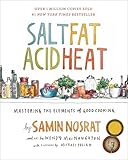
Editors Reads Verdict
The best cookbook written in a generation. Nosrat doesn't give you recipes; she gives you understanding. Once you grasp her four elements, you can improvise, adapt, and cook any cuisine with genuine confidence. Essential for anyone who wants to actually learn to cook.
What We Loved
- Teaches principles, not recipes — you learn to cook rather than follow instructions
- Beautiful, inviting design with illustrations by Wendy MacNaughton
- Works for every cuisine — the four elements are universal
- Won the James Beard Award and National Book Critics Circle Award
Minor Drawbacks
- Not a quick-reference cookbook — it's a book to read, not consult
- The recipes, while excellent, are secondary to the conceptual sections
- Some techniques require practice — it's not magic, just good teaching
Key Takeaways
- → Salt enhances flavour and texture — most home cooks use far too little
- → Fat carries flavour and provides texture — understand which fat to use when
- → Acid brightens and balances — the difference between flat and vibrant food
- → Heat is about transformation — understanding how food changes as it cooks
- → Learn these four variables and you can cook anything from any cuisine
| Author | Samin Nosrat |
|---|---|
| Publisher | Simon & Schuster |
| Pages | 480 |
| Published | April 25, 2017 |
| Language | English |
| Genre | Cooking, Food, Reference |
| Difficulty | Beginner |
| Best For | Home cooks from beginners to intermediate who want to move beyond following recipes to actually understanding cooking. The best gift for anyone who wants to learn to cook properly. |
How Salt, Fat, Acid, Heat Compares
Salt, Fat, Acid, Heat at a glance against 2 similar books readers weigh alongside it.
| Book | Author | Rating | Best for |
|---|---|---|---|
| Salt, Fat, Acid, Heat (this book) | Samin Nosrat | ★ 4.8 | Home cooks from beginners to intermediate who want to move beyond following |
| Atomic Habits | James Clear | ★ 4.8 | Anyone who wants to build better habits, break bad ones, or improve personal |
| Outliers | Malcolm Gladwell | ★ 4.5 | Anyone curious about the sociology of success, parents thinking about their |
The Book That Teaches You to Cook, Not Just Follow Recipes
Most cookbooks give you recipes. Salt, Fat, Acid, Heat gives you understanding.
Samin Nosrat — chef, food writer, and author of the Netflix series of the same name — spent years cooking professionally and teaching home cooks. She noticed that the vast majority of cooking problems, and the vast majority of cooking successes, trace back to four elements: salt, fat, acid, and heat.
Once you understand these four variables, you don’t need a recipe. You can look at any dish from any cuisine and understand why it works — and how to fix it when it doesn’t.
The Four Elements
Salt
Not just “add salt at the end.” Nosrat explains salt as a process: when and how you salt matters as much as how much. Salting meat 24 hours before cooking transforms its texture. Salting pasta water properly transforms the pasta. Salting at different stages creates different effects.
The fundamental problem with most home cooking is under-salting — using salt only to “taste” at the end rather than as an active ingredient throughout the cooking process. This chapter alone will improve your cooking immediately.
Fat
Fat carries flavour. The fat you choose — olive oil, butter, coconut oil, lard, schmaltz — fundamentally shapes the taste of your dish, because different fats carry different flavour compounds from the same ingredients differently.
Nosrat also distinguishes between fats used for cooking (heat application), dressing (finishing, vinaigrettes), and enriching (butter in sauces, cream in soups). Understanding these different roles transforms how you use fat.
Acid
Acid is the element most home cooks neglect and professionals rely on. A squeeze of lemon juice, a splash of vinegar, or a tablespoon of yoghurt can transform a flat dish into something bright and alive.
Nosrat describes acid as a “seasoning” like salt — something you adjust throughout cooking to balance richness, cut sweetness, or brighten depth. Once you start thinking this way, you’ll find yourself reaching for citrus and vinegar instinctively.
Heat
The most complex element: heat determines how food changes. The Maillard reaction (browning), caramelisation, the collapse of collagen into gelatin, the denaturation of proteins — all of these are heat phenomena. Understanding what you’re trying to achieve with heat — and what happens at different temperatures — is the foundation of cooking intuition.
Why It’s a Masterpiece
The book won the James Beard Award and the National Book Critics Circle Award — an unprecedented double for a cookbook. The James Beard Award makes sense (it’s a great culinary work). The NBCC award indicates something rarer: this is also excellent writing.
Nosrat writes about food with the warmth and precision of a great teacher. The book is a pleasure to read, not just consult. The illustrations by Wendy MacNaughton make it a visual pleasure as well.
As a Gift
Salt, Fat, Acid, Heat has become one of the most reliably excellent gifts available. If someone in your life wants to learn to cook — really learn, not just execute recipes — this is the book. It will serve them for decades.
Our rating: 4.8/5 — The most important cookbook published in the last twenty years. Teaches you to think about food, not just follow instructions.
A New Way to Understand Cooking
Salt, Fat, Acid, Heat is Samin Nosrat’s acclaimed and influential cookbook, a work that has transformed how many home cooks think about food by focusing not on rigid recipes but on the fundamental elements that make food delicious. Nosrat’s central insight is that mastering four basic variables, salt for enhancing flavor, fat for richness and texture, acid for brightness and balance, and heat for the transformation of ingredients, empowers cooks to understand and improvise rather than merely follow instructions. The book teaches the principles behind good cooking, giving readers the confidence and knowledge to cook intuitively and well.
Principles Over Recipes
What distinguishes Nosrat’s approach is its emphasis on understanding rather than memorization. Rather than presenting cooking as a matter of following precise recipes, she explains the underlying science and craft, so that cooks grasp why a dish works and how to adjust and correct as they go. This focus on foundational principles is genuinely empowering, freeing home cooks from dependence on recipes and enabling them to taste, season, and improvise with skill. The approach has resonated widely and helped countless readers become more confident and capable in the kitchen.
Warmth, Clarity, and Charm
A great part of the book’s appeal is Nosrat’s warm, enthusiastic, and accessible voice, which makes learning to cook feel joyful rather than intimidating. She explains complex ideas with clarity and infectious passion, and the book is beautifully illustrated, with charming and informative drawings that bring the concepts to life. This combination of genuine teaching with warmth and visual delight has made the book both useful and beloved, and Nosrat’s engaging personality, also showcased in a popular television adaptation, has made her a celebrated and trusted culinary guide.
A Modern Classic of Food Writing
Salt, Fat, Acid, Heat has become a modern classic of food writing, widely praised and recommended as one of the most useful cookbooks for anyone seeking to genuinely improve their cooking. By teaching principles rather than mere recipes, it offers lasting value that extends far beyond any single dish, equipping readers with a framework they can apply to any cuisine or ingredient. For home cooks who want to understand food deeply and to cook with greater skill, confidence, and joy, Nosrat’s book is an essential and transformative resource, and a genuine landmark in contemporary culinary education.
Reading Guides
Frequently Asked Questions
What is "Salt, Fat, Acid, Heat" about?
James Beard Award-winning chef Samin Nosrat teaches the four fundamental elements that make food delicious — salt, fat, acid, and heat — and how to use them to cook confidently without recipes.
Who should read "Salt, Fat, Acid, Heat"?
Home cooks from beginners to intermediate who want to move beyond following recipes to actually understanding cooking. The best gift for anyone who wants to learn to cook properly.
What are the key takeaways from "Salt, Fat, Acid, Heat"?
Salt enhances flavour and texture — most home cooks use far too little Fat carries flavour and provides texture — understand which fat to use when Acid brightens and balances — the difference between flat and vibrant food Heat is about transformation — understanding how food changes as it cooks Learn these four variables and you can cook anything from any cuisine
Is "Salt, Fat, Acid, Heat" worth reading?
The best cookbook written in a generation. Nosrat doesn't give you recipes; she gives you understanding. Once you grasp her four elements, you can improvise, adapt, and cook any cuisine with genuine confidence. Essential for anyone who wants to actually learn to cook.
Ready to Read Salt, Fat, Acid, Heat?
Check the current price on Amazon.
Check Price on Amazon (paid link)Prices and availability are subject to change. See Amazon for current price.
Review last updated: