A collective autobiography of twentieth-century France, told through the pronoun 'one' rather than 'I,' assembling a life from photographs, memories, and the shared experience of an entire generation.
Will Smith's memoir traces his journey from West Philadelphia to global superstardom while exploring the fears, failures, and family dynamics that shaped him.
Malcolm Gladwell argues that what we consider disadvantages — dyslexia, class backgrounds, weak institutions — can become hidden sources of strength in the right circumstances.
Twelve long-form New Yorker pieces from the 1950s and 60s profile corporate disasters, stock market panics, and the human behavior behind landmark business events — including the Ford Edsel failure, the 1962 market crash, and the Piggly Wiggly corner.
Malcolm Gladwell examines how our faulty assumptions about strangers — particularly our default to truth and our coupling of behavior to context — lead to systematic errors with devastating consequences.
Prince Harry's account of his life inside the British royal family, his grief at his mother's death, his marriage to Meghan Markle, and the decision to step back from royal duties.
The third volume of Robert Caro's biography of Lyndon Johnson follows his Senate career from 1949 to 1958 — covering his rise to Majority Leader and the passage of the Civil Rights Act of 1957, the first since Reconstruction.
The private philosophical notebook of the Roman Emperor Marcus Aurelius — written for himself, never intended for publication — containing his Stoic practice across twelve books of thought.
The first volume of Robert Caro's biography of Lyndon Johnson traces his origins in the Texas Hill Country through his early political career and first campaign for the Senate — a portrait of consuming ambition and political genius.
The second volume of Robert Caro's biography of Lyndon Johnson covers the years 1941–1948, centering on Johnson's 1948 Texas Senate race and his fraudulent defeat of Coke Stevenson — one of the most thoroughly documented political thefts in American history.
Robert Caro's memoir of his career as a biographer — how he researches, how he writes, what he believes about the relationship between power and biography, and the decades he has spent trying to understand Lyndon Johnson.
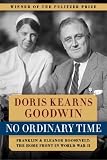
Doris Kearns Goodwin's Pulitzer Prize-winning account of Franklin and Eleanor Roosevelt during World War II — their partnership, their tensions, and their transformation of America into the Arsenal of Democracy.
Nabokov's autobiography covers his aristocratic Russian childhood, his family's flight after the Revolution, and his years as an émigré writer in Europe — in prose of such concentrated beauty that it reads as much as poetry as memoir.
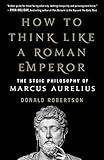
Cognitive behavioral therapist Donald Robertson weaves together Marcus Aurelius's biography with the Stoic philosophy he practiced, showing how ancient techniques map onto modern psychological methods.
Doris Kearns Goodwin examines four American presidents — Lincoln, Theodore Roosevelt, FDR, and LBJ — asking how they developed the qualities of leadership and how they deployed those qualities in moments of crisis.
Barbara Tuchman's Pulitzer Prize-winning biography of General Joseph Stilwell, through whose career she traces half a century of American policy toward China — and the folly of American assumptions about that country.
The story of Michael Oher — a homeless Black teenager taken in by a wealthy white family in Memphis who goes on to become an NFL first-round pick — intertwined with an economic history of how American football came to value the left tackle, the position that protects a quarterback's blind side, above almost any other.
Ryan Holiday and Stephen Hanselman profile twenty-six Stoic philosophers — from Zeno of Citium to Marcus Aurelius — examining how each lived, and how each often fell short of the principles they taught. The book treats the Stoics as flawed human beings rather than marble icons, which makes their philosophy more honest and more usable.
An epic multigenerational saga tracing the rise of two Irish-Catholic Boston families — the Fitzgeralds and the Kennedys — from immigrant poverty to the pinnacle of American political power.
Journalist David Sheff chronicles his son Nic's methamphetamine addiction from the first terrifying signs through years of recovery attempts, relapse, and survival — a memoir that examines addiction from the parent's perspective with unflinching honesty and reportorial rigor.
The untold story of how four friends — Jack Dorsey, Ev Williams, Biz Stone, and Noah Glass — created Twitter and then destroyed their friendships fighting for control of it.
Kazantzakis's spiritual autobiography — addressed to his Cretan ancestor El Greco — tracing his intellectual and spiritual journey from Crete through Athens, Paris, Mount Athos, Russia, and across the battlefields of ideas of the 20th century.
Pasternak's autobiographical prose combines memoir of his own development as a writer with extended meditations on Scriabin, Rilke, and Mayakovsky — the three presences that shaped his aesthetic. The book ends with Mayakovsky's suicide, rendered with grief that is also a kind of self-examination: the poet who chose visibility and the poet who chose obscurity, and what each choice costs.
David Grann investigates the disappearance of British explorer Percy Fawcett, who vanished in the Amazon in 1925 while searching for an ancient lost civilization he called Z.