Crime fiction is the genre of consequence and motive, from puzzle-box whodunits to bleak noir. These are the detectives, capers, and investigations our reviewers recommend most.
Three boys from the Flats in East Buckingham, Boston. When they are eleven, Dave Boyle is pulled into a car by two men and held for four days. Twenty-five years later, Jimmy Marcus's daughter Katie is found murdered. Sean Devine, now a state police detective, investigates. Dave is a suspect.
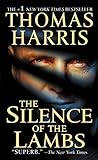
FBI trainee Clarice Starling is sent to interview the imprisoned Dr. Hannibal Lecter — brilliant psychiatrist and cannibalistic serial killer — hoping to gain insight into a new killer called Buffalo Bill, who is making suits of human skin.
The second volume of Don Winslow's epic drug-war trilogy. DEA agent Art Keller and cartel lord Adán Barrera resume their decades-long war as Mexico is engulfed in unimaginable violence — a vast, brutal, meticulously reported chronicle of the modern narcotics trade.
Joe Coutts, thirteen years old, watches his mother return from a violent assault on an Ojibwe reservation in North Dakota. The attacker cannot be prosecuted because of a jurisdictional tangle: the crime may have occurred on tribal land, federal land, or state land, and each has different rules about who can prosecute. Joe sets out to find justice himself.
Alec Leamas, a British spy run ragged in Berlin, is brought back to London and offered one last mission: pose as a defector to bring down an East German intelligence chief. The mission is not what it appears to be. Le Carré's third novel made him famous and established the moral framework of serious spy fiction.
Soviet submarine captain Marko Ramius attempts to defect to the United States with his entire crew and the USSR's most advanced nuclear submarine — and CIA analyst Jack Ryan must convince a skeptical Navy the defection is real before both superpowers open fire.
DEA agent Art Keller's decades-long war against the Sinaloa Cartel, from the 1970s through 9/11. A massive, novelistic account of the Mexican drug trade — cartel politics, US government corruption, CIA involvement, and the human cost on both sides of the border.
George Smiley, retired from British intelligence, is brought back to investigate a Soviet mole at the top of the Circus — the MI6 analogue. The investigation requires him to reconstruct events across a decade and penetrate the loyalties of men he has known his whole career. The first Smiley novel of the Karla trilogy.
The attempted assassination of Bob Marley in Kingston, Jamaica in December 1976 is the still point around which this vast, polyphonic novel turns — following gang members, CIA operatives, journalists, and ghosts across three decades and multiple continents in dense, overlapping Jamaican voices.
An escaped Australian convict arrives in Bombay with a false passport, becomes a slum doctor, makes friends and enemies among the city's criminals, and discovers a city that unmakes and remakes him completely.
Tom Ripley, a charming and resourceful small-time fraudster, is sent to Italy to retrieve a wealthy young American from his life of idleness — and finds it far easier to become his target than to bring him home.
A spectral hound haunts the Baskerville family across the Dartmoor moors, and when the new baronet arrives to claim his inheritance, Holmes sends Watson ahead while working in secret. Conan Doyle's masterpiece fuses gothic atmosphere with rigorous detective logic into the most complete and satisfying Holmes story.
In the city of Camorr — a fantasy Venice — a gang of elite con artists and thieves called the Gentlemen Bastards pull off elaborate heists while a supernatural criminal element threatens everything.
Private detectives Patrick Kenzie and Angela Gennaro are hired to investigate the disappearance of a four-year-old girl from a Boston neighbourhood. The case pulls them into drug trafficking, police corruption, and a moral dilemma at the end that has no right answer.
The epic conclusion to Don Winslow's Cartel trilogy. Now head of the DEA, Art Keller takes his decades-long war against the Mexican cartels to Washington itself, where the corruption he has fought for forty years reaches into politics, banking, and the highest levels of power.
Two years after settling in Ardnakelty, retired Chicago cop Cal Hooper has built a quiet life with Lena and a near-father bond with teenager Trey Reddy. Then Trey's feckless father Johnny returns with an English moneyman and a scheme about gold in the hills — and a death follows that tests every loyalty Cal has.
Detective Cassie Maddox is pulled back into undercover work when a murder victim is found bearing her exact face — and carrying the identity Cassie once used as an alias.
Rebus investigates a murder that connects to the unsolved Bible John killings of the 1960s while simultaneously investigating the oil industry in Aberdeen and a copycat killer. The book that won the Gold Dagger and established Rebus as a major series.
The first of Kate Atkinson's Jackson Brodie novels. Private investigator Jackson Brodie takes on three apparently unconnected cold cases — a missing child, a murdered young woman, an act of family violence — in a literary mystery that braids grief, coincidence, and dark comedy.
Kenzie and Gennaro are hired to protect a psychologist who has received death threats from a patient. As they investigate, they are drawn into a twenty-year pattern of murders in Dorchester and Charlestown — and into personal danger that will alter the series permanently.
Brighton, the 1930s. Pinkie Brown is a seventeen-year-old gang leader, a Catholic who believes in damnation and acts accordingly. After a murder, he marries Rose, a waitress who could testify against him, intending to kill her after she can no longer be called as a witness. Ida Arnold, a cheerful hedonist, pursues him. Greene's darkest and most theologically exact novel.
Lionel Essrog has Tourette's syndrome and works for a small Brooklyn detective agency run by Frank Minna. When Frank is murdered, Lionel — compelled by tics, verbal eruptions, and the inability to leave a pattern unresolved — investigates his mentor's death. A genre novel about the detective impulse as a form of neurological necessity.
Inspector Grant, bedridden after an accident, investigates the murder of the Princes in the Tower — a 400-year-old cold case. Voted the greatest mystery novel of all time by the Crime Writers' Association, Tey's intellectual detective story is a meditation on history, rumour, and how received narratives harden into fact.
In an alternative history, Jewish refugees settled in Sitka, Alaska after World War II instead of Palestine. Now the Federal District of Sitka is about to revert to Alaskan jurisdiction, and detective Meyer Landsman has a body in his hotel room and a chess piece near the corpse. A genre novel that is also a meditation on home, diaspora, and the limits of belonging.
Agatha Christie (The Murder of Roger Ackroyd, And Then There Were None) is the classic entry point for puzzle mysteries. For modern crime, Tana French's Dublin Murder Squad and Michael Connelly's Harry Bosch series are widely recommended.
Crime fiction typically centres on a crime and its investigation, often working backward from a body to a culprit; thrillers focus on forward momentum, suspense, and a looming threat. The categories overlap heavily, and many books qualify as both.
Noir is a darker strand of crime fiction marked by moral ambiguity, fatalism, and flawed or doomed protagonists. Raymond Chandler and Dashiell Hammett defined the classic style; modern noir continues in the work of writers like James Ellroy.
Disclosure: Amazon links on this page are affiliate links. If you purchase through them we earn a small commission at no extra cost to you.
We use cookies to understand how visitors use our site (Google Analytics). No data is collected until you accept.
Privacy Policy