The psychological thriller trades car chases for the slow turn of the screw — unreliable narrators, buried secrets, and the dawning sense that nothing on the page can be trusted. These are the ones that keep you up past the last chapter.
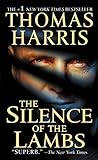
FBI trainee Clarice Starling is sent to interview the imprisoned Dr. Hannibal Lecter — brilliant psychiatrist and cannibalistic serial killer — hoping to gain insight into a new killer called Buffalo Bill, who is making suits of human skin.
A young woman marries the brooding Maxim de Winter and moves to his grand estate Manderley, where the memory of his glamorous first wife Rebecca poisons every room and every relationship.
Emil Sinclair grows up in two worlds: the 'bright' world of his bourgeois family and the 'dark' world he senses underneath. Max Demian—strange, self-possessed, seemingly ageless—appears as his guide, leading him through Jungian psychology, Gnostic Christianity, and Nietzsche toward his own self-realization. Written in 1917, published in 1919.
Tom Ripley, a charming and resourceful small-time fraudster, is sent to Italy to retrieve a wealthy young American from his life of idleness — and finds it far easier to become his target than to bring him home.
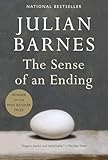
Tony Webster, a comfortably divorced man in late middle age, receives a small bequest from the mother of his first serious girlfriend that forces him to re-examine the version of his youth he has been living with for forty years — and to confront the gap between what he remembers and what he actually did.
Frank Cauldhame, 16, lives on a small Scottish island with his father. He has killed three children in the past — all family members — and maintains the island through an elaborate system of rituals centred on the Wasp Factory, a contraption of fate. His brother Eric has escaped from a psychiatric hospital and is coming home.
Bob Slocum, a mid-level corporate executive in 1970s New York, delivers a relentless, obsessive interior monologue about his fears, his desires, his colleagues, his marriage, and his children — and the slow, suffocating realisation that nothing in his life means what he hoped it would.
Mary Turner, the wife of a failed white Rhodesian farmer, is found murdered by her Black houseboy Moses. The novel opens with this fact and moves backward, tracing how a woman who was bright and independent in the city became isolated, desperate, and dependent on a Black servant in ways neither colonial society nor she herself could acknowledge.
Etsuko, a Japanese woman now living in England, reflects on a summer in postwar Nagasaki when she befriended a strange woman named Sachiko and her troubled daughter Mariko. As Etsuko remembers, the reader begins to suspect that Sachiko may be a projection of Etsuko herself—and that the memory is protecting its keeper from something unbearable.
Dublin judge Andrew Fitzsimons and his wife Lydia kill a young woman named Annie and must maintain their respectable life while concealing the crime — told from multiple unreliable perspectives including Lydia's chilling first-person narration.
A young Romanian woman rides a tram to her regular interrogation by the Securitate—where she is accused of sewing notes into men's suits asking foreign buyers to marry her and take her out of Romania. The entire novel takes place during a single tram ride, the narrator's mind moving between memory, fear, and the peculiar clarity of someone accustomed to terror.
Harriet and David Lovatt build a perfect large family in the 1960s English countryside, filling their house with children and relatives. Then their fifth child, Ben, is born: strange, immensely strong, and not quite human. The novel tracks what happens to a family—and a marriage—when one member refuses all social and emotional norms.
Ryder, a famous pianist, arrives in a Central European city for a concert. But the city's problems keep expanding to include him, his errands take impossible amounts of time, the streets rearrange themselves, and the people he meets keep revealing connections to his own forgotten past. Ishiguro's most formally radical novel, operating entirely in dream logic.
A California scholarship student at a Vermont college is drawn into a group of elite Greek students who have committed a murder — the beginning of something far worse.
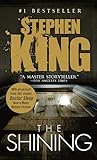
A recovering alcoholic writer takes a winter caretaker job at a remote Colorado hotel where the building's evil history begins to consume his sanity and endanger his family.
A bestselling novelist is nursed back to health by his self-proclaimed number one fan after a car accident, and discovers that his rescue has become his captivity.
A profoundly isolated young woman in Glasgow navigates her rigidly structured life while concealing a devastating past and slowly, almost accidentally, discovering what connection feels like.
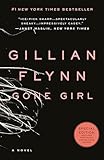
On their fifth wedding anniversary, Nick Dunne's wife Amy disappears, and the investigation reveals two people who may be nothing like who they claimed to be.
A young mother and her boyfriend vanish after a night out, a note is found with a cryptic clue, and the rural English countryside hides more than a missing persons case.
A criminal psychotherapist becomes obsessed with uncovering why a famous painter shot her husband five times in the face and has not spoken a single word since.
Grace and Jack Angel appear to have the perfect marriage, but behind their elegant facade lies a nightmare of control, captivity, and carefully maintained appearances.
A woman inherits a Chelsea townhouse on her twenty-fifth birthday and discovers a mystery inside: three dead bodies were found there when she was a baby, and the house holds secrets about the cult that destroyed two families.
Millie Calloway returns as a housemaid in a new household where she suspects her employer is in danger — but the situation is far more complicated and deadly than it first appears.
Gillian Flynn's Gone Girl, Tana French's In the Woods, and Patricia Highsmith's The Talented Mr. Ripley are among the most acclaimed — each uses the thriller structure to explore character psychology and moral complexity that straightforward crime fiction often doesn't.
A psychological thriller locates its tension inside the characters — memory, perception, guilt, obsession — rather than in external action. The threat is often the unreliability of the narrator or the instability of what the reader can believe.
Gone Girl by Gillian Flynn is the most consistently recommended entry point — it redefined narrative unreliability and influenced an entire wave of domestic thrillers. The Silent Patient by Alex Michaelides is the most popular recent gateway into the subgenre.
Disclosure: Amazon links on this page are affiliate links. If you purchase through them we earn a small commission at no extra cost to you.
We use cookies to understand how visitors use our site (Google Analytics). No data is collected until you accept.
Privacy Policy