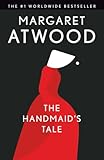
Margaret Atwood is a Canadian author whose The Handmaid's Tale and The Testaments established her as one of the most important political and speculative novelists of the twentieth and twenty-first centuries.
Margaret Atwood has been one of the dominant voices in English-language literature for six decades, publishing across fiction, poetry, literary criticism, and speculative fiction with consistent intellectual energy. She is perhaps most famous for The Handmaid’s Tale, published in 1985, which imagined a near-future theocratic America where women who can bear children are forced into sexual servitude. The novel was drawn explicitly from real historical precedents rather than invented ones — Atwood has consistently insisted that nothing in it didn’t happen somewhere — and its resurgence in cultural prominence after 2016 made it one of the defining texts of contemporary feminist politics.
The Handmaid’s Tale is a cold and precise novel. Its narrator, Offred, tells her story in careful, controlled fragments, and the horror is registered through accumulation of domestic detail and suppressed fury rather than dramatic climax. The Testaments, published in 2019 and winner of the Booker Prize (shared with Bernardine Evaristo), returns to Gilead thirty years later through three female narrators including the formidable Aunt Lydia, and is a more propulsive and accessible book if a somewhat less unsettling one. Together they form a remarkably durable imagining of how authoritarian systems trap women’s bodies while asking women to police each other.
Atwood’s critics have occasionally argued that she subordinates character to political architecture, and that her work can feel more brilliant than felt. Those observations are not entirely unfair. But she has earned her position as essential reading by being right, repeatedly, about the directions history can take — and by being a writer of extraordinary craft and range.
Margaret Atwood ranks among the most important and celebrated writers in the world, a Canadian author whose vast and varied body of work spans fiction, poetry, and essays and has earned her virtually every major literary honour, including two Booker Prizes. Renowned for her intelligence, wit, and moral seriousness, Atwood has produced novels of remarkable range and ambition, from speculative dystopias to historical fiction to sharp contemporary satire. Her work combines formal brilliance with deep engagement in the great questions of power, gender, environment, and survival, securing her place as one of the defining literary voices of her age.
The Handmaid’s Tale
Atwood’s most famous work, The Handmaid’s Tale, is a landmark of dystopian fiction and one of the most influential novels of the late twentieth century. Set in the theocratic republic of Gilead, where women are stripped of their rights and fertile women are forced into reproductive servitude, the novel is a chilling exploration of patriarchy, religious extremism, and the fragility of freedom. Its enduring relevance, renewed by a hugely successful television adaptation and its acclaimed sequel The Testaments, has made it a touchstone of political and feminist conversation and a permanent fixture of the cultural imagination.
Speculative Vision
Atwood prefers the term “speculative fiction” for her dystopian work, insisting that she writes only of things that could actually happen or have already happened somewhere. This commitment gives her imagined futures a frightening plausibility, grounded in real history and present trends. In novels such as the MaddAddam trilogy, she extends her speculative vision to ecological catastrophe, genetic engineering, and corporate power, exploring the possible consequences of humanity’s choices. Her ability to extrapolate from the present into unsettling but credible futures is one of the hallmarks of her genius.
A Feminist Perspective
Gender and power are central preoccupations of Atwood’s fiction, and she stands as one of the most significant feminist voices in modern literature, though her work resists simple categorisation. She examines the lives, choices, and constraints of women with subtlety and unflinching honesty, exploring complicity as well as victimhood, and refusing easy or reassuring conclusions. Her female characters are complex and fully human, and her treatment of gender is always entangled with questions of politics, history, and survival, giving her feminism a depth and rigour that has profoundly influenced contemporary literature.
Range and Versatility
Atwood’s body of work is remarkable for its breadth. Beyond her dystopian fiction, she has written acclaimed historical novels such as Alias Grace, literary mysteries, the Booker-winning The Blind Assassin with its intricate nested structure, and a substantial body of poetry and criticism. She moves fluidly between genres and registers, always bringing her characteristic intelligence and wit, and her willingness to experiment with form keeps her work perpetually fresh. This versatility marks her as a writer of extraordinary range and sustained creative energy across a long career.
Wit and Intelligence
For all the darkness of her subjects, Atwood’s writing is animated by a sharp, mordant wit and a formidable intelligence. Her prose is precise, ironic, and frequently very funny, and she brings a cool, observant eye to even her most harrowing material. This combination of gravity and humour, of moral seriousness and playful intelligence, gives her work its distinctive flavour and its great readability. She is a writer who makes the reader think and feel deeply while never sacrificing the pleasures of style and surprise.
The Margaret Atwood Legacy
Margaret Atwood’s influence on contemporary literature is immense, and her engagement with the urgent questions of our time has made her a public intellectual as well as a great novelist. For newcomers, The Handmaid’s Tale is the essential starting point, with Alias Grace, The Blind Assassin, and Oryx and Crake offering superb routes into the breadth of her achievement. For readers seeking fiction that is intelligent, prophetic, and morally serious yet endlessly readable, Margaret Atwood stands among the most rewarding and essential writers at work today.
Reading Guides