Where to Start with Tim Ferriss: A Reading Guide
Where to start with Tim Ferriss — whether to begin with The 4-Hour Workweek or The 4-Hour Body. A complete reading guide to the entrepreneur and author.
By Lena Fischer
Tim Ferriss (born 1977) is the American author, entrepreneur, and podcaster whose The 4-Hour Workweek (2007) — turned down by twenty-six publishers before finding a home — spent years on the New York Times bestseller list and launched a genre: the anti-hustle productivity book that argues for working less, not more. Ferriss popularised the concepts of ‘lifestyle design,’ the ‘minimum effective dose,’ and ‘the new rich’ (people who prioritise time and mobility over accumulated wealth); his work has influenced a generation of entrepreneurs and was foundational to the digital nomad movement. His podcast, The Tim Ferriss Show, regularly reaches tens of millions of listeners.
Where to Start: The 4-Hour Workweek (2007)
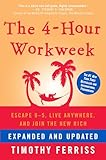
The essential Ferriss — and the book that made him famous. The central argument is that most people operate on an inherited model of work: spend forty-plus years working as hard as possible to save enough to retire at sixty-five. Ferriss argues this model is both inefficient and unnecessary, and offers an alternative: the ‘New Rich,’ who extract the maximum value from the minimum work and distribute what they want — time, mobility, experiences — throughout their lives rather than deferring it to retirement.
The framework is built around four practices that Ferriss abbreviates as DEAL: Definition (clarifying what you actually want), Elimination (removing the work that doesn’t matter — the bottom 80% of activities that produce 20% of results), Automation (building systems and outsourcing so income can continue without constant attention), and Liberation (going where you want and doing what you want).
The book is provocative, specific, and deliberately counterintuitive. Its practical suggestions — negotiating remote work, using virtual assistants for $4 an hour, identifying your target market precisely and testing it cheaply before building — are more applicable than the book’s extreme framing suggests. Even readers who cannot implement the book’s most radical proposals typically find the core frameworks (time blocking, batching, the 80/20 filter) immediately useful.
The 4-Hour Body (2010)
Ferriss’s minimum-effective-dose philosophy applied to health and fitness. More focused and more practically specific than The 4-Hour Workweek; for readers interested in optimising physical performance rather than work and lifestyle.
Why The 4-Hour Workweek Is the Ideal First Book
For a reader new to Tim Ferriss, The 4-Hour Workweek is the ideal first book because it is his breakout work and the fullest expression of his distinctive philosophy, the radical rethinking of work, productivity, and lifestyle design. The 4-Hour Workweek challenges conventional assumptions about work and proposes instead a philosophy of lifestyle design, using automation, outsourcing, and ruthless prioritization to escape the traditional grind and design a life of freedom, mobility, and meaning. As an entry point, it offers the fullest expression of Ferriss’s distinctive approach, the questioning of conventional work, the emphasis on efficiency and automation, and the goal of designing a life on one’s own terms. It welcomes the newcomer with its provocative ideas, its practical strategies, and its appealing vision of freedom, challenging the reader to rethink work and lifestyle. It is his best-known book and the one that best represents his philosophy, so that the new reader encounters Ferriss’s distinctive approach from the first. For the newcomer, then, The 4-Hour Workweek is the natural and ideal starting point, the influential book that launched his philosophy of lifestyle design.
What to Expect as a New Reader
As a new reader, you can expect The 4-Hour Workweek to be a provocative and practical guide to rethinking work and designing a life on your own terms, through efficiency, automation, and ruthless prioritization. You can expect a challenge to conventional assumptions, for Ferriss questions the traditional model of work and proposes instead a philosophy of lifestyle design aimed at freedom, mobility, and meaning. You can expect an emphasis on efficiency and automation, for Ferriss advocates ruthless prioritization, the elimination of the unnecessary, and the use of automation and outsourcing to escape the traditional grind. You can expect practical strategies and tactics, for the book is full of concrete methods, experiments, and approaches, some more practical than others. You can expect a provocative and energizing vision of freedom, though you should engage critically with its bolder claims. Expect, in short, a provocative and practical guide to rethinking work and designing a life of freedom through efficiency and automation, a challenging and energizing introduction to Ferriss’s philosophy.
Going Deeper After Your First Book
Once The 4-Hour Workweek has introduced you to Ferriss’s philosophy, the reader who wishes to go deeper can explore his other work, which extends his approach of efficiency, experimentation, and optimization to other domains, including the body and learning, and which distills the wisdom of high performers. His other books apply his experimental, optimization-driven approach to physical fitness and learning, while his work distilling the habits and wisdom of world-class performers offers a wealth of tools and insights drawn from interviews with high achievers. Reading these after The 4-Hour Workweek deepens your engagement with Ferriss’s distinctive approach, the questioning of convention, the emphasis on efficiency and experimentation, and the optimization of work, body, and mind. His characteristic approach runs through his work, and the reader who has been provoked by The 4-Hour Workweek will find the same experimental, optimization-driven spirit in his other books. Building your reading journey through Ferriss’s work is a matter of following his approach from the rethinking of work into the optimization of body, mind, and performance. The reader who begins with The 4-Hour Workweek and continues through his work will find a consistently provocative guide to efficiency, experimentation, and lifestyle design.
Reading Tim Ferriss
Begin with The 4-Hour Workweek — it contains Ferriss’s core philosophy and is the right foundation for his other work. Read The 4-Hour Body if you want his framework applied specifically to health. His podcast (The Tim Ferriss Show) extends the ideas of both books through extended conversations with high-performing practitioners.
For the full Tim Ferriss bibliography, reviews, and biography, visit the Tim Ferriss author page on Editors Reads.
Affiliate disclosure: Links to Amazon on this page are affiliate links. We earn a small commission at no extra cost to you.
Frequently Asked Questions
Where should I start with Tim Ferriss?
The 4-Hour Workweek (2007) is the essential starting point — Ferriss's manifesto for 'lifestyle design,' the practice of designing your work around the life you want rather than deferring life until retirement. The book's core framework — eliminating unnecessary work, automating income, and outsourcing tasks — was controversial on publication and remains so; its practical ideas about virtual assistants, geographic arbitrage, and mini-retirements have been implemented by many readers, and its influence on the entrepreneur and digital nomad movements is undeniable.
What is The 4-Hour Body about?
The 4-Hour Body (2010) is Ferriss's application of his minimal-effective-dose philosophy to health and fitness — achieving dramatic physical results through the minimum necessary intervention rather than maximum effort. The book covers fat loss, muscle gain, improving sleep, and other health metrics through self-experimentation; Ferriss presents himself as a human guinea pig who has tested these approaches on himself. More controversial and more practically specific than The 4-Hour Workweek; most useful for readers interested in optimising physical performance.
Is The 4-Hour Workweek realistic for most people?
The 4-Hour Workweek has been criticised for presenting an entrepreneurial lifestyle that is only available to a subset of workers — specifically those who can build location-independent businesses or negotiate remote work. Ferriss's examples often involve unusually privileged starting points. The practical framework (identifying the 20% of work that produces 80% of results, batching email, setting hard limits on availability) is applicable more broadly, even to people who cannot implement the book's most radical proposals. The book is most useful as a permission structure and a set of frameworks rather than as a literal implementation guide.
What other books has Tim Ferriss written?
Ferriss's 4-Hour series continues with The 4-Hour Chef (2012), which applies the rapid-skill-acquisition framework to cooking and learning in general. He has also published Tools of Titans (2016) and Tribe of Mentors (2017), which compile advice and frameworks from interviews with high-performing individuals from his podcast. The core Ferriss ideas — minimum effective dose, lifestyle design, rapid learning — are most fully expressed in The 4-Hour Workweek and can be found in distilled form in his later anthology books.