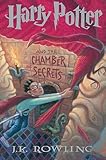
Editors Reads Verdict
The Chamber of Secrets deepens the wizarding world's mythology while introducing its most enduring themes around prejudice and heritage, building on the first book's foundations with a darker mystery and a genuinely frightening antagonist. It is the rare sequel that enriches everything that came before it.
What We Loved
- The mystery structure is tighter and more satisfying than the first book
- Introduces blood-purity prejudice as a theme with remarkable clarity for a children's novel
- Tom Riddle's diary is one of the series' most chilling and effective set pieces
- Ginny, Ron, and Hermione all receive meaningful character development
Minor Drawbacks
- The middle section sags slightly before the Chamber reveal
- Gilderoy Lockhart, while funny, occupies significant page space
- The resolution requires Harry to be passively aided by Fawkes and the Sorting Hat
Key Takeaways
- → Prejudice based on birth and heritage is the series' central recurring evil
- → Identity is shaped by choices, not by the circumstances or family one is born into
- → The past has a way of asserting itself in the present through hidden legacies
- → Loyalty and courage are distinct virtues that work differently under pressure
- → Diary as vessel for a fragmented soul is one of fiction's most inventive conceits
| Author | J.K. Rowling |
|---|---|
| Publisher | Scholastic |
| Pages | 341 |
| Published | June 2, 1999 |
| Language | English |
| Genre | Fantasy, Young Adult, Adventure |
| Difficulty | Beginner |
| Best For | Anyone who loved the first Harry Potter novel and is ready for a darker, more complex mystery; children 9 and up and adults revisiting the series. |
Deeper Into the Wizarding World
Where The Philosopher’s Stone was an act of creation — building Diagon Alley, Hogwarts, Quidditch, the rules of magic from scratch — The Chamber of Secrets is an act of deepening. Rowling uses her established world to ask harder questions, introduce more troubling antagonists, and plant seeds that won’t fully flower until the seventh book.
Harry’s second year begins with a warning from a house-elf named Dobby: do not return to Hogwarts, or something terrible will happen. Harry returns anyway, and Dobby’s warning proves justified. Students are being petrified — turned to stone by an unseen force — and the school’s history whispers of a Chamber of Secrets built by Salazar Slytherin, opened only by his heir, housing a monster that purges Hogwarts of those Slytherin deemed unworthy.
The Prejudice at the Series’ Heart
Chamber of Secrets is where Rowling first articulates the ideology that will drive every subsequent conflict in the series: the belief that magical ability is determined by blood purity, and that those of non-magical parentage — Muggle-borns, slurred as “Mudbloods” — do not truly belong in the wizarding world. Draco Malfoy speaks it casually and viciously; the monster in the Chamber targets it systematically.
For a book marketed to nine-year-olds, this is a remarkably unambiguous statement about where bigotry leads and who it harms. The parallel to real-world ethnic and racial prejudice is not subtle, and it is not meant to be.
Tom Riddle’s Diary
The novel’s central invention — a diary that absorbs its writer’s memories and eventually possesses the reader — is among the series’ most disturbing ideas, and one that the final book reveals to be a structural lynchpin of the entire mythology. That Rowling embedded a Horcrux into the second novel, before the word or concept existed in the series, is either extraordinary planning or extraordinary retroactive construction. Either way, it works.
A Mystery That Earns Its Resolution
The climax in the Chamber itself — Harry facing a sixteen-year-old memory of Voldemort, armed only with a sword pulled from a hat and saved by a phoenix — balances the absurd and the genuinely tense in the way the series does best. The thematic payoff is real: Harry’s choice is what makes him Gryffindor, not his heritage.
Our rating: 4.5/5 — A richer, darker, and more thematically ambitious second installment that plants seeds the entire series will harvest, built around the most important idea Rowling ever put into fiction.
The Horcrux Planted in Book Two
One of the most discussed aspects of The Chamber of Secrets in retrospect is the degree to which Tom Riddle’s diary anticipates the Horcrux mythology that will become central to the final three volumes. The diary is a piece of Voldemort’s soul, preserved in an object and capable of consciousness, communication, and possession. The word “Horcrux” does not appear in this book; the concept is not articulated until The Half-Blood Prince. But the object, the mechanism, and the threat are all present here, planted so naturally that even readers who had read the series multiple times have been surprised to be reminded that Horcruxes begin in book two rather than book six.
Whether this represents extraordinary long-term planning on Rowling’s part, or whether the Horcrux mythology in the later books was designed to be retroactively consistent with the diary’s properties, is a question Rowling has addressed in interviews over the years, generally confirming that the connection was intentional. Either way, it works — and the effect is to make the series feel more tightly designed than almost any comparable children’s franchise.
Dobby and the Question of Slavery
The Chamber of Secrets introduces Dobby, the house-elf bound to the Malfoy family, as comic relief with genuine moral weight. The condition of house-elves — enslaved, bound by magic to serve wizard families, incapable of acting against their masters without self-punishment — is one of the series’ most persistent ethical complications. Dobby’s freedom, purchased by Harry’s trick with the sock, is presented as an unambiguous good. The broader question of house-elf servitude — which Hermione will spend much of The Goblet of Fire and The Order of the Phoenix attempting to address — is more complicated than the series’ resolution of it fully acknowledges.
Critics of the series have noted that the treatment of house-elves, particularly in the later books, represents one of the more ambivalent aspects of the series’ social ethics. The house-elves who fight in the Battle of Hogwarts, and those who profess to enjoy their servitude, sit uneasily alongside the series’ otherwise clear-eyed critique of prejudice. Rowling herself has acknowledged that Hermione’s crusade could have been handled with greater seriousness in the narrative.
The Second-Book Challenge
The Chamber of Secrets is frequently cited as the weakest entry in the Harry Potter series, and the assessment is fair in limited respects: it is a more episodic novel than its predecessor or successor, and its villain — the young Tom Riddle — is less fully developed than later incarnations of Voldemort. What is often overlooked is how much structural and thematic work it accomplishes for the series overall, embedding the blood-purity ideology, the Horcrux methodology, and the Parseltongue connection that will all prove essential in the finale.
Reading Guides
Frequently Asked Questions
What is "Harry Potter and the Chamber of Secrets" about?
Harry Potter's second year at Hogwarts is shadowed by a mysterious voice in the walls and a series of petrifications tied to the legend of a Chamber of Secrets. When the Heir of Slytherin opens the Chamber again, Harry must confront a darkness rooted in the wizarding world's oldest prejudices.
Who should read "Harry Potter and the Chamber of Secrets"?
Anyone who loved the first Harry Potter novel and is ready for a darker, more complex mystery; children 9 and up and adults revisiting the series.
What are the key takeaways from "Harry Potter and the Chamber of Secrets"?
Prejudice based on birth and heritage is the series' central recurring evil Identity is shaped by choices, not by the circumstances or family one is born into The past has a way of asserting itself in the present through hidden legacies Loyalty and courage are distinct virtues that work differently under pressure Diary as vessel for a fragmented soul is one of fiction's most inventive conceits
Is "Harry Potter and the Chamber of Secrets" worth reading?
The Chamber of Secrets deepens the wizarding world's mythology while introducing its most enduring themes around prejudice and heritage, building on the first book's foundations with a darker mystery and a genuinely frightening antagonist. It is the rare sequel that enriches everything that came before it.
Ready to Read Harry Potter and the Chamber of Secrets?
Check the current price on Amazon.
Check Price on Amazon (paid link)Prices and availability are subject to change. See Amazon for current price.
Review last updated: