In the World State of 632 AF (After Ford), human beings are hatched in hatcheries, conditioned from birth for their social function, and kept content by the pleasure drug Soma. There is no disease, no war, no poverty — and no freedom, no art, no genuine love. Bernard Marx begins to question whether happiness without meaning is worth having.
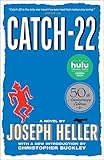
Joseph Heller's darkly comic masterpiece follows bombardier Yossarian through the absurdist bureaucracy of World War II, inventing the most important logical paradox of modern language.
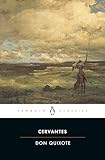
The adventures of the deluded knight Alonso Quijano — who believes himself to be the knight-errant Don Quixote — and his earthy squire Sancho Panza across the plains of La Mancha.
Étienne Lantier arrives at a northern French coalmine and finds a community of miners ground down by poverty and despotism. He organises a strike. The strike fails. The novel follows the miners' world with documentary precision — the mine, the housing, the pub, the hunger — and arrives at a vision of revolutionary potential coiled beneath suffering.
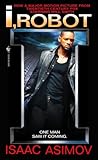
Isaac Asimov's linked short story collection introducing the Three Laws of Robotics and exploring their logical implications in a series of increasingly complex scenarios.
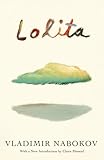
Humbert Humbert's confession of his obsession with and abuse of twelve-year-old Dolores Haze — told in prose of devastating beauty by a narrator who is both brilliant and monstrous.
Two hundred and fifty myths from the creation of the world to the deification of Julius Caesar, unified by the theme of transformation. Apollo and Daphne, Narcissus and Echo, Pygmalion, Actaeon, Orpheus and Eurydice, the Fall of Icarus — the source of more subsequent Western art than any other single text.
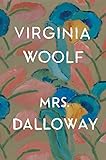
A single day in the life of Clarissa Dalloway, preparing a party in postwar London — intercut with the experiences of Septimus Warren Smith, a shell-shocked veteran she will never meet.
Oedipus, king of Thebes, investigates a plague afflicting his city. The investigation reveals that he himself is the cause — he has unknowingly killed his father and married his mother, fulfilling the prophecy he spent his life trying to avoid.
The fall of Satan, the creation of the world, the temptation and fall of Adam and Eve — in twelve books of blank verse written by a blind man from memory and dictation. Milton's stated aim was to 'justify the ways of God to men', but the poem's Satan is so compelling that Blake argued Milton was 'of the Devil's party without knowing it'.
Bertie Wooster decides to handle matters himself for once, without Jeeves. He will sort out Gussie Fink-Nottle's love life and Tuppy Glossop's engagement without the butler's assistance. The resulting catastrophe — culminating in a prize-giving speech at Market Snodsbury Grammar School — is the funniest extended sequence in English comic fiction.
Shūsaku Endō's masterpiece of faith and doubt. A young Portuguese Jesuit smuggles himself into seventeenth-century Japan during the brutal persecution of Christians, only to confront the apparent silence of God in the face of unbearable suffering.
Bertie Wooster is dispatched to Totleigh Towers, home of the terrifying Roderick Spode and the magistrate Sir Watkyn Bassett, to steal a silver cow creamer and assist various friends with their tangled romantic lives. Only Jeeves can navigate the catastrophe that follows.
Montaigne retired to his tower in 1571 and spent the next twenty years writing essays — a form he essentially invented — on subjects ranging from cannibals to friendship, cruelty to experience. The subject of every essay, regardless of its nominal topic, is Montaigne himself: how he thinks, what he knows, what he doubts.
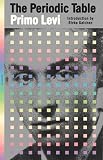
Primo Levi's luminous memoir in twenty-one chapters, each named for a chemical element. A chemist and Auschwitz survivor, Levi weaves the story of his life, his Piedmontese Jewish heritage, his craft, and his survival into a meditation on matter, humanity, and meaning.
A mysterious widow arrives at the crumbling Wildfell Hall with her young son and refuses to explain her past — until her diary reveals she fled an abusive, alcoholic husband in an act of defiance that Victorian society considered scandalous and illegal.
Josef K. is arrested one morning without explanation, prosecuted by an opaque authority for an unnamed crime, and gradually consumed by a legal process he can never understand.
Charlotte Perkins Gilman's landmark 1892 short story. Confined to a room and forbidden to work or write as a 'rest cure' for nervous depression, a woman becomes obsessed with the room's hideous yellow wallpaper, descending into a madness that doubles as a devastating indictment of how women were treated.
Charles Portis's beloved Western. Fourteen-year-old Mattie Ross sets out to avenge her murdered father, hiring the drunken, one-eyed U.S. Marshal Rooster Cogburn to hunt the killer into Indian Territory — a tale told in Mattie's unforgettable, flinty voice.
A prequel and counter-narrative to Jane Eyre that reclaims the voice of Bertha Mason — Rochester's 'mad wife' — reimagined as Antoinette Cosway, a white Creole heiress in post-Emancipation Jamaica caught between two worlds and belonging to neither.
Antigone defies King Creon's decree forbidding the burial of her brother Polynices, a rebel who died attacking Thebes. Creon represents the state's authority; Antigone represents divine law and family obligation. The conflict between them destroys both.
Captain Charles Ryder, quartered in a stately home during the Second World War, recalls his long entanglement with the Flyte family — the beautiful, dissolute Sebastian; his magnetic sister Julia; and the great house of Brideshead itself — and how Catholicism shaped and ultimately claimed them all.
A spiteful, self-contradicting underground man addresses us from his Petersburg apartment — a novella that inaugurated modern psychological fiction and anticipated existentialism by seventy years.