Best Books About Health: Essential Reading List
The best books about health — from Why We Sleep and Outlive to Being Mortal and The Omnivore's Dilemma. Science-based books that change how you understand your body.
By Priya Anand

The best health books are those that make specific, evidence-based claims about what improves health outcomes — and that are honest about the limits of current knowledge. The list below is weighted toward books with strong research foundations rather than popular health trends.
Sleep: The Foundation
Why We Sleep — Matthew Walker (2017)
The most important health book of the last decade, and the one most likely to change your behaviour. Walker, a neuroscience professor at UC Berkeley, synthesises decades of sleep research to demonstrate that sleep deprivation is one of the most significant threats to human health — worsening every chronic disease, impairing cognitive function, shortening life expectancy, and undermining emotional regulation. His account of what happens during sleep (the specific functions of REM vs. non-REM sleep, the memory consolidation process, the immune system repair) is the most complete popular account of sleep science available.
Note: some specific statistics in the book have been contested by researchers; the broad argument is well-supported.
Longevity and Lifespan
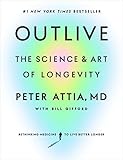
Outlive — Peter Attia with Bill Gifford (2023)
The most ambitious and most comprehensive longevity book. Attia, a physician specialising in longevity medicine, argues for a framework he calls ‘Medicine 3.0’ — proactive, individualised medicine focused on extending the period of good health rather than simply treating disease when it arrives. He examines each of the four major ‘horsemen’ (cardiovascular disease, cancer, metabolic disease, Alzheimer’s) and the exercise, nutrition, sleep, and emotional health interventions that the evidence supports for preventing or delaying them. The chapter on exercise is particularly important: Attia argues it is the single most powerful intervention for healthspan.
Lifespan — David Sinclair (2019)
Sinclair, a Harvard geneticist, argues that aging is not inevitable but a disease — and one that may be treatable within our lifetimes. The book covers the information theory of aging (aging as the loss of epigenetic information), the specific pathways (mTOR, AMPK, sirtuins) that regulate aging, and the interventions (caloric restriction, exercise, specific compounds like NMN and resveratrol) that activate those pathways. More speculative than Outlive but more optimistic about the potential for radical life extension.
Nutrition and the Food System
How Not to Die — Michael Greger (2015)
A comprehensive review of the evidence for plant-based eating in preventing the fifteen leading causes of death. Greger, a physician, organises the book by cause of death (heart disease, cancer, diabetes, etc.) and reviews the nutritional research on each. The book is the strongest evidence-based argument for a predominantly plant-based diet available to general readers. It should be read with awareness that Greger’s specific dietary philosophy (whole-food, plant-based) is more committed than the scientific consensus, but the core argument for eating more vegetables and less processed food is very well supported.
Medicine and Dying
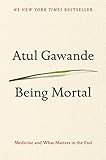
Being Mortal — Atul Gawande (2014)
The most important book about the medical experience of aging and dying — covered in detail in our best books about death and dying guide. Gawande’s examination of how modern medicine fails dying patients, and how a better approach looks, is essential reading for anyone who will age (everyone) or who has aging relatives.
The Pillars of Evidence-Based Health
What unites the strongest books on this list, and separates them from the vast literature of health fads and quick fixes, is a shared foundation in the genuine pillars of health that decades of research consistently support. Strip away the marketing and the miracle cures, and the evidence keeps returning to a small number of fundamentals: sleep, physical activity, nutrition centered on whole foods, and the management of stress and emotional wellbeing. The books here are valuable precisely because they go deep on these fundamentals rather than chasing novelty. Walker’s Why We Sleep makes the case that sleep is not a luxury or a weakness but a biological non-negotiable underpinning nearly every aspect of physical and mental health, a fact long underappreciated even by medicine. Attia’s Outlive synthesizes the evidence on exercise and identifies it as arguably the single most powerful intervention available for extending healthy lifespan, a conclusion that surprises many readers expecting the answer to lie in supplements or technology. Greger’s How Not to Die marshals the nutritional research toward the unglamorous but well-supported conclusion that eating more vegetables and less processed food prevents disease. The consistency is the point: across very different books by very different authors, the evidence converges on the same humble fundamentals. The reader who absorbs this lesson gains something more durable than any single tip — a reliable framework for evaluating every health claim they will ever encounter.
Reading Health Science Skeptically
Health is the area of nonfiction most saturated with overclaiming, conflicting advice, and commercial interest, which makes the skill of critical reading more important here than almost anywhere else — and the best books on this list model it even as they require it. A crucial habit is distinguishing the strength of evidence behind different claims. Some assertions in even the best health books rest on large, replicated studies; others on preliminary research, animal models, or the author’s own enthusiasm. Why We Sleep is a useful case study: its central argument about sleep’s importance is robustly supported, yet some of its specific statistics have been challenged by other researchers, a reminder that even excellent books mix solid science with overstatement. Lifespan is more speculative still, advancing genuinely exciting but far-from-settled ideas about reversing aging, and it should be read as a window onto frontier research rather than established fact. The plant-based argument of How Not to Die is stronger than its critics allow but more committed than the scientific consensus requires. The discerning reader holds all of these at the appropriate level of confidence — embracing the well-supported fundamentals, treating the frontier claims as provisional, and remaining alert to the gap between what the science shows and what the author advocates. This skeptical literacy is itself one of the most valuable things a good health book can teach, and it is the best protection against the next wave of confident, contradictory advice.
Knowledge Versus Behavior
The hardest truth about health books, and the one the best of them quietly acknowledge, is that knowing what to do and actually doing it are entirely different problems. The fundamentals of health are not, at bottom, mysterious — sleep enough, move regularly, eat mostly plants, manage stress, maintain connection — and a reader could extract the essential prescription from this list in an afternoon. Yet the gap between possessing this knowledge and living by it is where nearly everyone struggles, and it is why the shelf of health books never stops growing despite the underlying advice changing remarkably little. The most useful way to read these books, therefore, is not as a search for the one missing fact that will unlock transformation, but as a source of motivation and mechanism. The value of Why We Sleep lies less in the novelty of “sleep matters” than in the way its detailed account of what sleep deprivation actually does to the body can shock a reader into changing behavior. Outlive is strongest not as information but as a framework that connects daily choices to a vivid, motivating vision of one’s later decades. Readers are best served by pairing the science in these books with honest attention to the behavioral question — to habit formation, environment design, and sustainable change — and by recognizing that the goal is not perfect knowledge but consistent practice. The healthiest reader is not the one who has read the most health books, but the one who has translated a few well-chosen fundamentals into a durable way of living.
Reading Order
Start with sleep: Why We Sleep → then Outlive for the full longevity framework.
For nutrition: How Not to Die → The Omnivore’s Dilemma → In Defense of Food.
Complete health foundation: Why We Sleep → Outlive → Being Mortal.
Frequently Asked Questions
What is the best book about health?
Why We Sleep by Matthew Walker is the most important health book of the last decade — its comprehensive account of sleep's effects on every aspect of health (cardiovascular, immune, cognitive, metabolic) has genuinely changed how many readers think about sleep deprivation. Outlive by Peter Attia is the most ambitious longevity book — a comprehensive framework for extending both lifespan and healthspan, written by a doctor who has synthesised decades of research. Being Mortal by Atul Gawande is the most important book about the medical experience of aging and dying.
What is Why We Sleep about?
Why We Sleep by Matthew Walker (2017) is a comprehensive account of sleep science — what sleep does during each of its stages (what happens during REM sleep vs. non-REM sleep), what sleep deprivation does to physical and mental health across every domain, and what the research suggests about how to sleep better. Walker argues, with extensive evidence, that most of the chronic health problems of the modern world (cardiovascular disease, cancer, Alzheimer's, obesity, diabetes, depression) are worsened by the epidemic of insufficient sleep. The book is the strongest argument available for making sleep a priority.
What is Outlive about?
Outlive by Peter Attia (2023) is a framework for optimising healthspan — the period of life spent in good health — rather than simply extending lifespan. Attia, a physician specialising in longevity, argues that the four major diseases that kill most people (cardiovascular disease, cancer, type 2 diabetes/metabolic syndrome, and Alzheimer's) can be significantly delayed or prevented through interventions in exercise (particularly strength and stability training), nutrition, sleep, and emotional health. The book is the most comprehensive synthesis of longevity research for general readers.
Is How Not to Die backed by science?
How Not to Die by Michael Greger (2015) is backed by research but represents a specific dietary philosophy (whole-food, plant-based eating) more strongly than the scientific consensus. Greger reviews evidence that plant-based diets reduce the risk of various chronic diseases, but critics argue he selectively presents evidence and overstates some conclusions. The book is most useful as an evidence-based argument for eating more plants and less processed food — conclusions that are very well-supported — rather than as a comprehensive guide to all the ways diet affects health.