Best Medical Books: Essential Reading on Medicine and the Body
The best medical books — from When Breath Becomes Air and The Emperor of All Maladies to Being Mortal and The Body. Medicine, death, and what it means to heal.
By Priya Anand
The best medical books are those written by practitioners who understand both the science and the human experience of illness — who can explain what medicine knows while being honest about what it cannot do and what it often fails to see. The list below includes medical memoirs, histories of medicine, and popular science accounts of the human body.
Memoirs of Illness and Practice
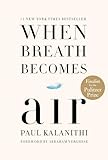
When Breath Becomes Air — Paul Kalanithi (2016)
The most moving of the medical memoirs — a neurosurgeon dying of lung cancer at thirty-seven. Kalanithi occupied both positions simultaneously: a physician who understood his prognosis with precision and a patient experiencing the loss of the future he had planned. The memoir is about the question that medicine cannot answer: given a finite and uncertain time, what makes a life meaningful? It was published posthumously, unfinished; his wife Lucy Kalanithi’s epilogue completes it.
The History of Medicine
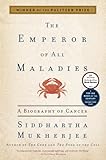
The Emperor of All Maladies — Siddhartha Mukherjee (2010)
The Pulitzer Prize-winning ‘biography of cancer’ — a comprehensive history of how human beings have understood and fought the disease from the ancient world to the molecular biology revolution of the last thirty years. Mukherjee is both a practising oncologist and a deeply literate writer, and the book combines the history of cancer science (the development of chemotherapy, the tobacco lobby, the War on Cancer) with specific patient stories that make the medical history personal. The best single-volume account of how modern medicine actually works.
Medicine and Dying
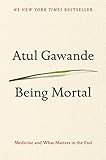
Being Mortal — Atul Gawande (2014)
The most important book about how medicine fails dying patients — and what a better approach looks like. Gawande, a Harvard surgeon, examines how modern medicine’s commitment to treating disease has produced a culture in which dying patients are subjected to aggressive interventions that extend dying rather than improving living, and in which the specific question of what a patient values and fears in their final months is rarely asked. The book is both a critique and a practical guide: what palliative care and hospice actually provide, and why they are often better than continued aggressive treatment.
The Human Body
The Body: A Guide for Occupants — Bill Bryson (2019)
The most readable popular science account of the human body — a systematic tour of how every organ and system works, what makes it go wrong, and what the science has established about human biology. Bryson’s combination of precision and humour makes genuinely complex material accessible and frequently surprising. The best general introduction to what the body actually does, for readers with no scientific background.
What Great Medical Writing Actually Does
The four books above succeed for a reason that is worth naming, because it is the standard against which all medical writing should be judged: each one closes the gap between medicine as a body of knowledge and medicine as something that happens to people. Most writing about health fails in one of two directions — it is either technically accurate and humanly inert, or emotionally vivid and scientifically careless. The books on this list refuse the trade-off. Mukherjee gives you the molecular biology of cancer and the patient in the chair receiving the diagnosis, in the same chapter, each making the other comprehensible. Kalanithi writes about his own tumor with a neurosurgeon’s anatomical precision and a dying man’s urgency simultaneously. Gawande turns statistics about end-of-life intervention into the story of his own father’s final year. This double competence — scientific authority joined to literary seriousness — is rare because it requires authors who have genuinely lived on both sides of the white coat, and it explains why three of these four books were written by practising physicians. The result is a genre at its best unlike any other: nonfiction in which the stakes are never abstract, because the subject is the reader’s own mortal equipment.
The Question Underneath All Four Books
Read together, these books converge on a single uncomfortable theme: modern medicine is extraordinarily good at intervening and surprisingly poor at asking what the intervention is for. This is the explicit argument of Being Mortal — that a profession built to fix problems defaults to treatment even when treatment serves the disease timeline rather than the patient’s actual priorities — but it runs beneath the others too. Kalanithi, who knew exactly what stage IV lung cancer meant, had to decide what his remaining time was for, a question none of his training had equipped him to answer. Mukherjee’s history of cancer is, among other things, a chronicle of medicine repeatedly mistaking aggression for progress — radical mastectomies and brutal chemotherapy regimens pursued past the point of evidence — before learning, slowly, to ask what survival was costing the survivor. Even Bryson’s cheerful tour of the body keeps arriving at the same destination: a machine so intricate that its eventual failure is not a malfunction but the design. The cumulative lesson is not anti-medicine — every one of these authors is a defender of what medicine achieves — but it is corrective: the measure of care is not what can be done, but what should be, and that question belongs to patients, not protocols.
How to Choose Your Starting Point
The right entry depends on what brings you to the subject, and with material this emotionally loaded, the match matters. If you or someone close to you is facing serious illness, start with Being Mortal rather than When Breath Becomes Air — Gawande gives you something to do with the situation (questions to ask, trade-offs to weigh, an actual framework for conversations with doctors and family), whereas Kalanithi’s memoir, for all its beauty, is an experience to absorb rather than a tool, and is best read with some emotional room to spare. If you want to understand how medicine became what it is — its triumphs, blind alleys, and politics — Mukherjee’s history is the spine of the whole subject and makes every other medical book easier to place. If you simply want to be fascinated, Bryson is the painless gateway, and his chapters reliably create the appetite the other three books satisfy. The one ordering mistake to avoid is reading When Breath Becomes Air first out of curiosity about its reputation: it lands far harder once Being Mortal has taught you exactly which conversations Kalanithi and his doctors are having, and why his clarity about his own choices was so remarkable.
Reading Order
Start with memoir: When Breath Becomes Air → Being Mortal → The Emperor of All Maladies.
Historical approach: The Emperor of All Maladies → When Breath Becomes Air → Being Mortal.
Science of the body: The Body → The Emperor of All Maladies → Being Mortal.
Frequently Asked Questions
What is the best book about medicine?
When Breath Becomes Air by Paul Kalanithi is the most moving medical memoir — a neurosurgeon dying of lung cancer reflects on what makes life meaningful. The Emperor of All Maladies by Siddhartha Mukherjee is the best history of medicine through the lens of cancer — a comprehensive account of how humanity has understood and fought the disease. Being Mortal by Atul Gawande is the most important book about what medicine fails to do for dying patients, and what a better approach looks like.
What is When Breath Becomes Air about?
When Breath Becomes Air (2016) by Paul Kalanithi is the memoir of a brilliant neurosurgeon who, just as he is completing his training, is diagnosed with stage IV lung cancer. Kalanithi was simultaneously a physician who understood his prognosis precisely and a patient experiencing it, and the memoir — unfinished at his death at thirty-seven — is about the question that medicine cannot answer: given a terminal diagnosis, what makes life meaningful? It is one of the finest pieces of medical writing in any language.
What is The Emperor of All Maladies about?
The Emperor of All Maladies (2010) by Siddhartha Mukherjee is a 'biography of cancer' — a comprehensive history of how human beings have understood and attempted to treat cancer from the ancient world to the present, including the political history of cancer research (the War on Cancer, the tobacco lobby's suppression of research), the development of chemotherapy, and the revolution in molecular biology that is transforming how cancer is treated. Mukherjee won the Pulitzer Prize for it and it is the best single-volume account of how modern medicine actually works.
What is The Body about?
The Body: A Guide for Occupants (2019) by Bill Bryson is a comprehensive popular science account of the human body — how the heart, liver, brain, immune system, and every other organ work, what they do wrong, and what they represent in terms of biological complexity. Bryson's writing is consistently clear, frequently funny, and packed with the kind of specific facts (how much acid the stomach produces, what happens to hair after death, how the immune system distinguishes self from other) that make the familiar strange. The best general account of human biology for non-specialist readers.