Best Books by Women Authors: Essential Novels Written by Women
The best books by women authors — from Middlemarch and Jane Eyre to Beloved, Normal People, and My Brilliant Friend. Essential novels written by women.

The greatest novels written by women are among the most formally innovative, psychologically complex, and morally serious works in the literary tradition. This is, in part, because women writers have historically had to justify their existence as writers in ways that male writers did not; the pressure produced, in the best of them, an exceptional seriousness of purpose.
The books listed here are the most important and most enduring novels written by women — the ones that have most shaped the literary tradition and that continue to reward reading.
The Essential List
Middlemarch — George Eliot (1871–72)
The greatest English novel and the greatest novel written by a woman. George Eliot (Mary Ann Evans) chose a masculine pen name to be taken seriously; her achievement at Middlemarch demonstrates the irony of that choice — no male novelist of the period produced anything of equivalent psychological depth. Dorothea Brooke’s idealism and its consequences, Lydgate’s medical ambitions destroyed by his unsuitable marriage, Casaubon’s petty scholarly pride, Bulstrode’s religious hypocrisy — these are portraits of human nature studied with a rigor and compassion that have never been surpassed. Virginia Woolf called it ‘one of the few English novels written for grown-up people.‘
Beloved — Toni Morrison (1987)
The most important American novel written by a woman and the most psychologically raw account of slavery’s aftermath in American literature. Sethe, a former enslaved woman living in post-Civil War Cincinnati, is haunted by the ghost of the baby daughter she killed to save from re-enslavement; when a young woman called Beloved appears, claiming to be that daughter, Sethe’s suppressed past returns with full force. Morrison’s prose is fragmented, incantatory, and formally exceptional; the novel’s experimental structure mirrors the fractured consciousness of trauma. Won the Pulitzer Prize; cited when Morrison received the Nobel Prize.
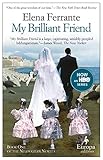
My Brilliant Friend — Elena Ferrante (2011)
The opening volume of the Neapolitan Novels and the most important literary fiction of the 2010s. The friendship between Elena Greco and Lila Cerullo — both brilliant girls from a poor Naples neighbourhood, one of whom uses education to escape and one of whom does not — is studied across sixty years with an intensity that transforms what might have been a social novel into something more like a myth. Ferrante’s prose (in Ann Goldstein’s translation) is dense and immediate; her analysis of the specific constraints on women’s ambition in postwar Italy is the most incisive available.
Normal People — Sally Rooney (2018)
The most important Irish novel of the 2010s and the best contemporary study of young adult love. Connell and Marianne’s on-again, off-again relationship over four years of university is narrated with a flat, observational precision that captures the power imbalances, miscommunications, and specific emotional texture of contemporary intimacy. Rooney is interested in class (Connell from a working-class background, Marianne from a wealthy family; their power dynamics are reversed as they move from school to university) as much as in love; the novel is the most socially analytical of the contemporary romantic novels.
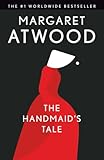
The Handmaid’s Tale — Margaret Atwood (1985)
The defining feminist dystopia. Offred’s account of life in the Republic of Gilead — where women’s rights have been abolished and women assigned to roles (wives, handmaids, Marthas) based on reproductive capacity — is based on historical precedent rather than pure speculation: every aspect of Gilead’s oppression, Atwood has said, has a historical parallel. The novel is simultaneously a political warning, a personal survival narrative, and a formal experiment (the ‘Historical Notes’ at the end, which reveal the novel as a reconstructed document, radically recontextualise what has preceded them).
Jane Eyre — Charlotte Brontë (1847)
The most influential British novel written by a woman and the foundational text of the female Bildungsroman. Jane’s insistence — in the famous scene where she tells Rochester ‘I am no bird; and no net ensnares me’ — on her own equality and independence established the template for feminist romantic fiction. The novel’s engagement with class, religion, and the specific constraints on women’s intellectual and emotional life in Victorian England is as serious as its romance; the Bertha Mason plot is the crack in the novel’s surface through which the suppressed realities of Empire and women’s madness appear.
Their Eyes Were Watching God — Zora Neale Hurston (1937)
The most important American novel of the Harlem Renaissance and the most fully realised portrait of Black womanhood in the American literary tradition. Janie Crawford’s three marriages — and her final love affair with Tea Cake, which brings her the equality and passion she has always sought — are narrated in Hurston’s distinctively musical prose, which draws on the oral traditions of African American culture. The novel was largely forgotten for decades after publication; Alice Walker’s rediscovery of Hurston in the 1970s restored it to its rightful place in the canon.
Wide Sargasso Sea — Jean Rhys (1966)
The most important postcolonial rewriting of a canonical text. Rhys’s prequel to Jane Eyre — told from the perspective of Antoinette Cosway, the Creole woman Rochester marries in Jamaica and subsequently imprisons as ‘the madwoman in the attic’ — reveals the racial, colonial, and economic context that Brontë’s novel silences. Antoinette is not mad but displaced — cut off from her Caribbean identity by Rochester’s refusal to recognise it, destroyed by the colonial system that treats her as property. One of the founding texts of postcolonial literary criticism and the most formally accomplished short novel in the list.
The Canon and its Gaps
The literary canon has historically undervalued women’s writing — through critical neglect, through lack of institutional support, and through the assumption that ‘universal’ experience meant male experience. The novels listed here demonstrate that the canon’s gaps are not the result of women writing less well but of women being read less carefully. Middlemarch, Beloved, and Their Eyes Were Watching God are not ‘women’s novels’ — they are novels of the first importance that happen to have been written by women.
Frequently Asked Questions
What is the best novel written by a woman?
Middlemarch (1871–72) by George Eliot is widely considered the greatest novel written by a woman — Virginia Woolf called it 'one of the few English novels written for grown-up people.' Beloved (1987) by Toni Morrison is the most important American novel written by a woman — Morrison's account of the aftermath of slavery and its impact on Sethe and her family is the most psychologically raw and formally ambitious American novel of the late twentieth century. Both are essential.
What is My Brilliant Friend about?
My Brilliant Friend (2011) by Elena Ferrante — the first of the Neapolitan Novels — follows Elena Greco and Lila Cerullo from their childhood in a poor Naples neighbourhood through more than sixty years of friendship and enmity. The novel is simultaneously about the specific constraints of postwar Italian working-class life and about a universal dynamic: two brilliant women, one of whom escapes the neighbourhood through education and one of whom remains, each measuring herself against the other. The most important literary fiction of the 2010s.
What is The Handmaid's Tale about?
The Handmaid's Tale (1985) by Margaret Atwood is set in the near-future theocratic republic of Gilead, where women have been stripped of rights and assigned roles (wives, handmaids, Marthas) based on their reproductive capacity. Offred, a handmaid who was formerly a woman with a family, a career, and an identity, narrates her survival within this system and her attempts to resist it. The novel is one of the defining political dystopias of the twentieth century; its specificity about the mechanisms of women's oppression — drawn from historical precedent rather than invention — gives it a force that purely speculative fiction lacks.
What is Wide Sargasso Sea about?
Wide Sargasso Sea (1966) by Jean Rhys is a prequel to Jane Eyre — the story of Antoinette Cosway (Bertha Mason in Brontë's novel), the Creole woman from Jamaica whom Rochester marries and subsequently imprisons. Rhys's novel is a postcolonial rewriting: told from Antoinette's perspective, it reveals the colonial economic context that shaped Rochester's marriage, the racial and cultural displacement that disoriented Antoinette, and the process by which a complicated woman was reduced to 'the madwoman in the attic.' One of the founding texts of postcolonial literary criticism.