Best Memoirs of All Time: The Essential Reading List
The best memoirs ever written — from The Year of Magical Thinking and Educated to Born a Crime, Becoming, and When Breath Becomes Air. Memoirs chosen for literary quality and honest witness.
By Natalie Osei

The best memoirs do what the best novels do: they take a specific, particular experience and render it with such precision that it becomes universal. The difference is that the experience actually happened — which adds a layer of moral weight that fiction, however good, cannot quite achieve.
The memoirs listed here were chosen for two qualities: literary execution (how well the author writes) and honest witness (the degree to which the author shows what they actually experienced rather than the version they would prefer to have experienced). These two qualities often pull in opposite directions. The best memoirists manage both.
The Essential Memoirs
The Year of Magical Thinking — Joan Didion (2005)
The masterpiece of grief memoir. Joan Didion’s husband John Gregory Dunne died of a heart attack at the dinner table in December 2003, five blocks from the hospital where their daughter lay in a coma. The book Didion wrote in the year that followed is one of the most extraordinary documents of grief in the English language — precise, unsentimental, relentlessly intelligent about the way the mind resists accepting what it knows to be true.
The “magical thinking” of the title is the irrational belief that death can be undone: if you don’t give away the shoes, if you don’t say it, if you keep acting as if — the person might come back. Didion does not pretend this belief is rational; she also does not pretend she was free of it. This honesty about the mind’s behaviour under extreme stress is what makes the book essential rather than merely moving.
Winner of the National Book Award.
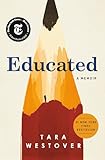
Educated — Tara Westover (2018)
The most widely read memoir of the last decade. Tara Westover grew up in rural Idaho in a survivalist family that did not believe in formal education, medical care, or government. She taught herself enough to take the ACT, gained admission to Brigham Young University, and eventually earned a PhD from Cambridge. Educated is the account of that journey — and, more precisely, of the violence, the religious extremism, and the denial within her family that the journey required her to name.
Westover is a precise and careful writer, and the book is honest about the complexity of her position: she loves the family she is also documenting as dangerous. The tension between loyalty and witness gives Educated its moral weight.
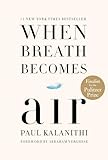
When Breath Becomes Air — Paul Kalanithi (2016)
Paul Kalanithi was a neurosurgeon at Stanford, nearing the end of his residency, when he was diagnosed with stage IV lung cancer at thirty-six. He died before completing the book. His wife Lucy finished it. What he left is an account of the transition from treating death as a professional problem to living with it as a personal reality — written by a man who was simultaneously a physician (understanding his diagnosis fully) and a patient (experiencing what his diagnosis actually meant).
For readers who have lost someone to cancer, or who are facing terminal diagnosis themselves, there is nothing better. For everyone else, it is a meditation on what a life should be measured by.
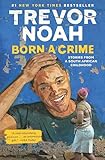
Born a Crime — Trevor Noah (2016)
Trevor Noah was born in apartheid South Africa to a Black Xhosa mother and a white Swiss father — which made his very existence a crime under apartheid law (the Immorality Act forbade interracial relationships). Born a Crime is the account of his childhood in that world and the post-apartheid South Africa that followed — the poverty, the violence, the strange comedy of growing up multiracial in a society organised around racial categories.
Noah is a genuinely gifted writer, and the book goes far beyond the expected comedian’s memoir: it is a meditation on race, on language (Noah’s ability to speak multiple South African languages gave him the capacity to be whoever his environment required), and on the extraordinary woman who raised him.
Becoming — Michelle Obama (2018)
The best political memoir of recent years. Michelle Obama’s account of her childhood on Chicago’s South Side, her marriage to Barack Obama, and her years in the White House is more honest than most political memoirs — she is explicit about the strain the presidency put on their marriage, the specific racism she experienced, and the cost of being the first Black First Lady in a country whose institutions were not designed with her in mind.
The book sold 14 million copies in its first year and remains the bestselling memoir in American publishing history. The sales reflect the quality: it is written with care and without the defensive self-mythologisation that characterises most political memoirs.
More Essential Memoirs
Between the World and Me — Ta-Nehisi Coates (2015)
Written as a letter from Coates to his teenage son, Between the World and Me is an account of what it means to inhabit a Black body in America — the specific vulnerability, the history, the ways in which American institutions have been designed to exploit rather than protect. Modelled on James Baldwin’s The Fire Next Time, it operates at a literary level unusual for contemporary non-fiction. Winner of the National Book Award.
I Know Why the Caged Bird Sings — Maya Angelou (1969)
The first of Angelou’s seven autobiographical volumes, and the most important. It covers her childhood in Stamps, Arkansas, the trauma of her sexual assault at age eight, and the years that followed — the silence, the recovery, the discovery of language and literature as a refuge and a resource. Angelou’s prose is so formally composed that the book reads as autobiographical poetry as much as memoir. It is among the most important American literary documents of the twentieth century.
The Glass Castle — Jeannette Walls (2005)
Walls’s account of growing up with itinerant, charismatic, and frequently irresponsible parents — her father a brilliant alcoholic, her mother a self-described artist who resented the obligations of motherhood — is one of the most readable memoirs of the last two decades. The ambivalence at its centre — Walls’s love for her father and clear-eyed accounting of his failures — is handled with remarkable fairness.
Reading by Theme
Grief: The Year of Magical Thinking → When Breath Becomes Air → Between the World and Me.
Self-reinvention: Educated → Born a Crime → Becoming.
Family and childhood: The Glass Castle → Educated → I Know Why the Caged Bird Sings.
Race and identity in America: Between the World and Me → Born a Crime → I Know Why the Caged Bird Sings.
Frequently Asked Questions
What is the best memoir to start with?
Educated by Tara Westover is the most widely read and most immediately compelling memoir of recent years — an account of a woman who grew up in a survivalist family in rural Idaho with no formal education and eventually earned a Cambridge PhD. It reads with the pace and tension of a thriller. The Year of Magical Thinking by Joan Didion is the most literary memoir on this list — the account of her husband's sudden death and the year that followed, written with a precision that makes it both devastating and essential.
What is the difference between a memoir and an autobiography?
An autobiography covers the full arc of a person's life, typically in chronological order. A memoir is more focused — it examines a particular period, relationship, or theme from the author's life in depth. Most of the books on this list are memoirs: Educated focuses on Westover's childhood and education; The Year of Magical Thinking focuses on the year following Didion's husband's death; Born a Crime focuses on Trevor Noah's childhood in apartheid and post-apartheid South Africa. The memoir form allows greater literary depth than the autobiography because it is not obligated to be comprehensive.
Are celebrity memoirs worth reading?
Some are. Becoming by Michelle Obama is the most carefully written celebrity memoir of recent years — it goes beyond the expected public narrative to examine her childhood, her marriage's tensions, and the specific cost of living as a Black woman in the White House. Born a Crime by Trevor Noah is more literary than most celebrity memoirs because it is primarily about apartheid-era South Africa rather than Noah's comedy career. The best celebrity memoirs use the author's life as a lens on something larger.
What memoirs are best for readers who prefer literary fiction?
The Year of Magical Thinking by Joan Didion is the memoir closest to literary fiction — Didion is first a novelist and journalist, and she brings both crafts to her account of grief. A Moveable Feast by Ernest Hemingway reads as literature rather than memoir. Between the World and Me by Ta-Nehisi Coates is written as a letter to his son and operates at a literary level unusual for non-fiction. I Know Why the Caged Bird Sings by Maya Angelou is so formally composed it might fairly be called autobiographical fiction.