Best Narrative Nonfiction Books: Essential True Stories
The best narrative nonfiction books — from The Devil in the White City and Say Nothing to Empire of Pain and The Warmth of Other Suns. Essential true stories.
By Natalie Osei

Narrative nonfiction — true stories told with the techniques and ambitions of literary fiction — is the most demanding and potentially most rewarding form of nonfiction writing. The best narrative nonfiction has all the pleasures of a novel (character, scene, suspense, discovery) combined with the additional force of knowing that what you are reading actually happened.
The books listed here are unified by their commitment to the individual story as a way of illuminating larger historical or social forces. Each one demonstrates that the most effective way to understand a complex phenomenon — the opioid crisis, the Great Migration, the Troubles — is through the particulars of specific lives.
The Essential List
The Devil in the White City — Erik Larson (2003)
The narrative nonfiction book that introduced the form to the widest readership. Larson alternates between two storylines: Daniel Burnham, the architect charged with building the 1893 World’s Columbian Exposition in Chicago in an impossibly short timeframe, and H.H. Holmes, the serial killer who used the fair’s promise of opportunity to lure victims to his purpose-built ‘murder castle’ nearby. The contrast between creation and destruction, between American ambition and American darkness, is the book’s governing tension.
Say Nothing — Patrick Radden Keefe (2018)
The best single work of narrative nonfiction of the past decade. Keefe begins with the 1972 abduction of Jean McConville — a widow and mother of ten, taken from her Belfast home and never seen again — and uses the investigation into her murder as the organizing thread for a comprehensive account of the Troubles. The portraits of Dolours Price and other IRA members are sympathetic without being exculpatory; the question the book poses — how do you live with what you have done in a cause you believed in? — is unanswered, as it should be.
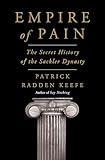
Empire of Pain — Patrick Radden Keefe (2021)
Keefe’s account of the Sackler family and Purdue Pharma is as much a study of American philanthropy as it is of the opioid crisis. The Sacklers used their OxyContin profits to fund museums, universities, and galleries across the world, creating a reputation for generosity that insulated them from accountability for decades. Keefe traces both the development of OxyContin and the family’s cultural strategy with equal rigour; the result is one of the most complete accounts of corporate harm and its concealment available.
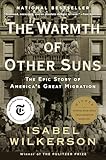
The Warmth of Other Suns — Isabel Wilkerson (2010)
Wilkerson’s account of the Great Migration — the movement of six million Black Americans from the South to the North between 1915 and 1970 — is structured around three individuals: Ida Mae Brandon Gladney, who moves from Mississippi to Chicago in 1937; George Swanson Starling, who moves from Florida to New York in 1945; and Robert Joseph Pershing Foster, who drives from Louisiana to California in 1953. The three stories are drawn from hundreds of interviews; together they constitute the most complete portrait of the Migration available.
The Immortal Life of Henrietta Lacks — Rebecca Skloot (2010)
In 1951, Henrietta Lacks, a Black woman being treated for cervical cancer at Johns Hopkins Hospital, had cells taken from her tumour without her knowledge. Those cells — known as HeLa cells — proved to be uniquely durable and have been used in medical research ever since, contributing to the development of the polio vaccine, cancer research, and countless other advances. Skloot’s account of Lacks’s life, the history of HeLa, and the family Lacks left behind is a study in the relationship between medical progress and racial exploitation.
Educated — Tara Westover (2018)
Westover’s memoir of growing up in a survivalist family in rural Idaho — without formal education, without birth records, without access to conventional medicine — and her journey to Cambridge and Harvard is one of the defining memoirs of the decade. The book raises questions it does not fully resolve: how much of it is verifiable, how much has been shaped by memory and narrative, and what the obligation to one’s family is when telling one’s own story. Those unresolved questions are part of what makes it honest.
Say Nothing and Into Thin Air
Into Thin Air by Jon Krakauer (1997) — the 1996 Everest disaster that killed eight climbers, narrated by Krakauer, who was on the mountain. The first-person account of the disaster is extraordinary in its immediacy; Krakauer’s self-examination — he may have contributed to another climber’s death through misidentification — gives the book its moral seriousness.
Under the Banner of Heaven — Jon Krakauer (2003)
Krakauer’s account of the 1984 murders of Brenda Lafferty and her infant daughter by her brothers-in-law, fundamentalist Mormon brothers who claimed to have received a revelation commanding them to kill, is simultaneously a true-crime account and a history of Mormon fundamentalism. Krakauer moves between the murders and the history of the Church of Jesus Christ of Latter-day Saints with the confidence of a narrator who has done exhaustive research without losing the thriller structure.
Why These Books
Narrative nonfiction at its best is a form of moral reckoning — it takes real events and real people seriously enough to try to understand them fully, without the distortions of nostalgia or ideology. The books listed here share a commitment to complexity: to understanding how ordinary people become capable of extraordinary acts, for good or ill, and how institutions — pharmaceutical companies, governments, hospitals, religious organisations — shape the lives of the individuals within them.
The form requires research as rigorous as history and prose as precise as fiction. At its best, it is indistinguishable from great literature — which is what it is.
Frequently Asked Questions
What is narrative nonfiction?
Narrative nonfiction uses the techniques of literary fiction — scene, dialogue, character development, dramatic structure — to tell true stories. Unlike journalism, it is structured around a narrative arc rather than an inverted pyramid; unlike history, it is built around individuals rather than events. The founding text is Truman Capote's In Cold Blood (1966), which demonstrated that nonfiction could aspire to the same formal and literary ambitions as the novel. Other terms include 'literary journalism,' 'creative nonfiction,' and 'long-form nonfiction.'
What is the best narrative nonfiction book to start with?
The Devil in the White City by Erik Larson (2003) is the most universally accessible — the story of the 1893 Chicago World's Fair and the serial killer H.H. Holmes who operated in its shadow. Larson's technique of alternating between the architect Daniel Burnham's construction of the fair and Holmes's murders creates a thriller structure within rigorously researched history. Say Nothing by Patrick Radden Keefe (2018) is equally gripping — the murder of Jean McConville in Troubles-era Belfast, told as a study of political violence and its aftermath.
What is Say Nothing about?
Say Nothing (2018) by Patrick Radden Keefe follows the 1972 abduction and murder of Jean McConville, a widowed mother of ten, by the IRA in Belfast, and traces the lives of the people involved across the following decades. Keefe's account of the Troubles — the Irish Republican Army, Dolours Price, Brendan Hughes, Gerry Adams — uses the McConville case as a lens for examining the entire conflict: how ordinary people become capable of political violence, what it costs them, and how movements cope with the crimes committed in their names. One of the best works of narrative nonfiction of the past decade.
What is Empire of Pain about?
Empire of Pain (2021) by Patrick Radden Keefe is the history of the Sackler family and Purdue Pharma, the company that created and aggressively marketed OxyContin and contributed directly to the American opioid crisis. Keefe traces the Sackler family's rise from immigrant origins to philanthropic eminence, the development of OxyContin, the decision to market it as non-addictive, and the consequences for the millions of Americans who became addicted. A study of corporate impunity and the relationship between wealth, philanthropy, and accountability.