Fifteen hundred years after the death of the God Emperor, the human race has scattered across the stars and is now returning. Heretics of Dune, the fifth Dune novel, follows the Bene Gesserit as they confront a new power that threatens to end them and a child who may be the key to survival.
Private investigator Holly Gibney takes the case of a missing young woman and follows a trail to a pair of genteel, elderly academics hiding monstrous appetites in their basement. Stephen King gives his most beloved recurring heroine a chilling, twisty case of her own.
Steven Pinker's ambitious synthesis of cognitive science and evolutionary psychology. Drawing on both fields, he attempts to reverse-engineer the human mind — explaining vision, reasoning, emotion, relationships, and the arts as adaptations shaped by natural selection.
Nathan Zuckerman hears the story of Ira Ringold — a Newark ironworker turned radio actor who became a Communist in the 1940s and was destroyed by McCarthyism, betrayed by his wife, the actress Eve Frame, who wrote a memoir exposing him. The second novel of Roth's American Trilogy.
Augusto Roa Bastos's monumental 'dictator novel,' reimagining the rule of Paraguay's Dr. José Gaspar Rodríguez de Francia. A dazzling, fragmentary, polyphonic meditation on absolute power, history, and language itself, it is a landmark of Latin American literature and one of the great novels of tyranny.
Marilynne K. Roach's vivid, illustrated account of the 1692 Salem witch trials. Drawing on deep archival research, it recreates the everyday world of colonial New England — its homes, beliefs, and fears — to illuminate how an ordinary community descended into the hysteria that condemned its own.
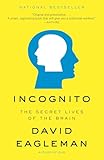
Neuroscientist David Eagleman's accessible tour of the unconscious brain. Drawing on cutting-edge research, he argues that the conscious mind is a small, often misled passenger in a brain that does most of its work below awareness — with provocative implications for selfhood, free will, and the law.
The fourth and final volume of the Inheritance Cycle brings the war against Galbatorix to its end. Eragon and Saphira must find the strength to topple a tyrant who has ruled for a century — and confront the question of what kind of world they want to build from the ruins.
Adam Walker, a Columbia student in 1967, meets the charismatic Rudolf Born at a party — and a single violent act, witnessed and then reported with growing unreliability across four different narrative perspectives, shapes the rest of his life.
In 1936, charismatic demagogue Buzz Windrip wins the US presidency on a platform of patriotism, nostalgia, and contempt for elites, then rapidly dismantles American democracy to establish a fascist state. Seen through the eyes of Vermont newspaper editor Doremus Jessup, Sinclair Lewis's 1935 satire is a manual for recognising authoritarianism written before the word was widely used.
Set in twelfth-century England during the aftermath of the Crusades, Ivanhoe follows the disinherited Saxon knight Wilfred of Ivanhoe as he jousts for honor, navigates treacherous Norman politics, and fights alongside a mysterious Black Knight revealed to be King Richard I.
Wendell Jaffe drowned himself five years ago, leaving behind a collapsed investment fraud and a paid-out life insurance policy. So why has someone just seen him alive in Mexico? Kinsey Millhone is hired to find out — a case that will lead her south of the border and, unexpectedly, to the discovery that she has a living family she never knew.
A white senator who was raised as a Black child by a Black preacher in the American South is shot on the floor of the Senate and, as he lies dying, remembers his childhood with Reverend Hickman. Ellison's posthumously published second novel — assembled from forty years of manuscript — is flawed and incomplete but contains passages equal to anything in Invisible Man, and the central figure of the Black minister who raised a white child is among the most complex moral situations in American fiction.
A grieving mother asks Kinsey Millhone to investigate her daughter's death, ruled undetermined but never explained. As Kinsey digs into Lorna Kepler's hidden life and works the small hours when the city's darker business is done, she's drawn into a nocturnal world — and toward a choice that tests her own moral code.
Edinburgh detective John Rebus investigates a series of murders of young girls while receiving taunting messages from a person who seems to know his past. The first Inspector Rebus novel — shorter and darker than the later series, more psychological thriller than police procedural.
Lilia Albert has been disappearing her whole life — taken by her father as a child, re-disappearing every few years, leaving behind whoever has come to love her. Her most recent boyfriend follows her across the country trying to understand why. Mandel's debut shows the same intelligence as her later work applied to the same questions: identity, memory, the people who vanish.
Arthur Dent and Ford Prefect discover that the people of Krikkit — a planet that had never known there were other stars — have declared war on the entire universe, and it falls to an extremely unlikely group of heroes to stop them.
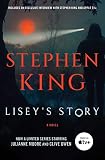
Two years after her famous-novelist husband's death, Lisey Landon must sort through his papers — and confront the secret, otherworldly place he visited in life, where wonder and horror wait side by side. Stephen King's most personal novel, and his own favorite.
Jo March, now married to Professor Bhaer, runs Plumfield School for boys, where she and her husband put their progressive educational ideals into practice with a diverse cast of boys each needing something different from school.
Jo Baker retells Pride and Prejudice from the perspective of the Bennet household's servants — particularly the housemaid Sarah — revealing the physical labor, social vulnerability, and hidden lives that sustained the genteel world Austen depicted.
Sandy and Dennys Murry — the 'normal' twins — accidentally travel back to biblical times, to the era just before Noah's flood, where they encounter nephilim, seraphim, and Noah's family in a story about choice, mortality, and the nature of good and evil.
Peterson's foundational academic work, exploring how myths, religious narratives, and ideological systems function as maps of meaning that orient human beings toward action in a world of complexity and danger.
In a mobile army surgical hospital near the front lines of the Korean War, a team of brilliant surgeons maintain their sanity through elaborate pranks, outrageous insubordination, and black humor in the face of relentless carnage.
The concluding volume of the Sprawl trilogy follows four separate storylines — including a young girl called Mona, a simstim star's bodyguard, and Kumiko, the daughter of a Japanese crime lord — as they converge on the mystery of what Angie Mitchell's direct neural interface connects her to.
Disclosure: Editors Reads is a participant in the Amazon Services LLC Associates Program. When you click an Amazon link and make a purchase, we may earn a commission at no additional cost to you. This helps fund our independent editorial team.
We use cookies to understand how visitors use our site (Google Analytics). No data is collected until you accept.
Privacy Policy