Philosophy's best books are not abstract — they are tools for living. Stoicism gives you a framework for adversity. Ethics gives you language for decisions.
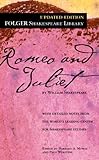
Prince Hamlet of Denmark, confronted by his murdered father's ghost, hesitates on the path of revenge — generating centuries of analysis about the nature of action, consciousness, and death.
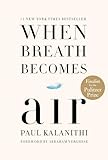
A neurosurgeon diagnosed with terminal lung cancer at 36 confronts the questions he spent his career preparing to face — and writes a book about mortality, meaning, and what makes a life worth living.
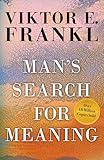
Psychiatrist Viktor Frankl's harrowing account of surviving Auschwitz forms the foundation of logotherapy — the idea that the primary human drive is not pleasure but the pursuit of meaning. One of the most important psychological texts of the 20th century.
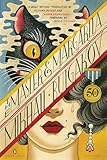
Satan visits Stalinist Moscow, accompanied by a giant black cat, a hitman, and a naked witch — exposing Soviet bureaucracy's absurdities while a novelist's story of Pontius Pilate and Jesus unfolds within the novel.
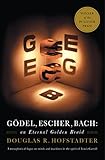
A Pulitzer Prize-winning exploration of how consciousness, self-reference, and meaning emerge from formal systems, through the intertwined work of a mathematician, an artist, and a composer.
The adventures of the deluded knight Alonso Quijano — who believes himself to be the knight-errant Don Quixote — and his earthy squire Sancho Panza across the plains of La Mancha.
Josef K. is arrested one morning without explanation, prosecuted by an opaque authority for an unnamed crime, and gradually consumed by a legal process he can never understand.
Gregor Samsa wakes one morning to find he has been transformed into a giant insect — and the story focuses less on the transformation than on his family's response to it.
Beautiful Dorian Gray makes a Faustian bargain — his portrait ages and corrupts in his place — while Lord Henry Wotton's philosophy of pleasure guides him toward increasingly dark excesses.
A plague descends on the Algerian city of Oran, and Dr. Bernard Rieux leads the medical response — in a novel that is simultaneously a chronicle of epidemic and an allegory for Nazi occupation.
bell hooks argues that our culture has confused love with attachment, need, and control — and that love, properly understood, requires will, intention, and commitment to another person's growth.
Dr. David Hawkins presents a method for releasing the suppressed emotions and negative energies that underlie illness, distress, and limitation — enabling progressive liberation from internal suffering.
A curated collection of Naval Ravikant's Twitter threads, podcast appearances, and interviews on building wealth, achieving happiness, and developing judgment.
A guide to freeing yourself from the voice in your head and the patterns that limit your consciousness — drawing on mindfulness, yoga philosophy, and Vedantic thought.
A former self-help enthusiast argues that conventional time management is based on a false premise — and that accepting the radical finitude of our time is the only path to meaningful life.
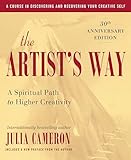
A twelve-week program for recovering and developing creativity through two core practices: Morning Pages (three pages of stream-of-consciousness writing each morning) and the Artist's Date (a weekly solo creative excursion).
A dialogue between a philosopher and a young man across five nights explores Alfred Adler's psychology of freedom — the idea that unhappiness is a choice, trauma is a story, and happiness requires the courage to be disliked.
Legendary music producer Rick Rubin offers a philosophical meditation on creativity — what it is, how it works, and how to live in a way that allows it to flourish.
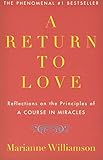
Marianne Williamson draws on A Course in Miracles to offer a vision of love as the only force powerful enough to heal relationships, careers, and the deepest wounds of the self.
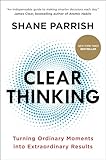
Farnam Street founder Shane Parrish distills the most important principles for making better decisions, identifying and overcoming the defaults that undermine clear thinking.
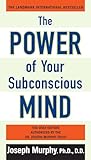
A practical guide to harnessing the subconscious mind for healing, prosperity, and happiness through visualization, affirmation, and the alignment of conscious and unconscious thought.
Gary Zukav argues that humanity is transitioning from a power-based consciousness to an alignment with the soul — and that understanding authentic power is the path to a genuinely meaningful life.