Understanding how the mind works is the foundation of better decisions, relationships, and leadership. These are the psychology books our reviewers recommend most highly.
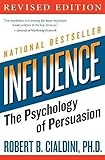
The definitive book on the psychology of persuasion. Cialdini identifies six universal principles — reciprocity, commitment, social proof, authority, liking, and scarcity — that drive human compliance, and shows how they are exploited in sales, marketing, and everyday life.
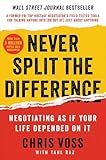
Former FBI lead hostage negotiator Chris Voss reveals the counter-intuitive techniques he developed for life-or-death negotiations — and shows how they apply to salary talks, business deals, and everyday persuasion. The key insight: humans are not rational actors, and the best negotiators use emotional intelligence, not logic.
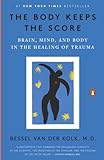
A landmark work in trauma psychology by one of the world's foremost authorities on PTSD. Van der Kolk reveals how trauma reshapes both body and brain, undermining survivors' capacity for pleasure, engagement, self-control, and trust.
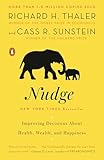
Richard Thaler and Cass Sunstein show how small changes to the way choices are presented can steer people toward better decisions without restricting freedom.
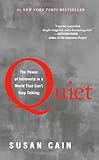
A compelling argument that our society dramatically undervalues introverts and the tremendous power of their deep thinking, focus, and quiet contributions.
A neuroscientist reveals the life-transforming power of sleep. Walker shows why sleep is the single most effective thing you can do to reset your brain and body — and the catastrophic consequences of neglecting it.
A Stanford psychiatrist explains how the flood of dopamine-triggering pleasures in modern society creates compulsive behaviour — and how to reset the pleasure-pain balance.
The groundbreaking book that introduced the concept of emotional intelligence to mainstream audiences and argued that EQ matters more than IQ for life success.
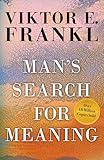
Psychiatrist Viktor Frankl's harrowing account of surviving Auschwitz forms the foundation of logotherapy — the idea that the primary human drive is not pleasure but the pursuit of meaning. One of the most important psychological texts of the 20th century.
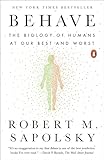
A comprehensive exploration of the biological underpinnings of human behaviour — from the neural firing a second before an act to the evolutionary pressures that shaped our species over millions of years.
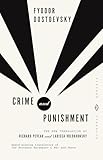
Dostoevsky's psychological masterpiece follows Raskolnikov, a student who murders a pawnbroker to test his theory that exceptional men are above conventional morality — and the psychological disintegration that follows.
Charlie Gordon, a man with intellectual disabilities, undergoes experimental brain surgery that dramatically increases his intelligence — and must grapple with the emotional and social consequences.
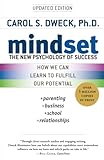
Stanford psychologist Carol Dweck's research on achievement and success reveals that one simple belief about your own intelligence and abilities has a profound effect on outcomes. People with a growth mindset — who believe abilities can be developed — consistently outperform those with a fixed mindset, regardless of starting talent.
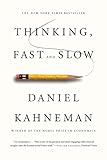
Nobel laureate Daniel Kahneman explains the two systems that drive the way we think — and reveals how our intuitive System 1 thinking leads us astray in predictable, correctable ways.
Nobel laureate Richard Thaler tells the inside story of how behavioral economics upended the rational-actor model and transformed our understanding of human decision-making.
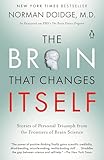
Stories of personal triumph from the frontiers of brain science, revealing how the brain's lifelong capacity to change its own structure — neuroplasticity — offers hope for previously untreatable conditions.
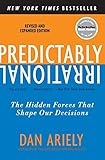
A behavioural economist reveals the hidden forces that shape our decisions — and why we repeatedly make the same irrational choices despite knowing better.